The Burra Story
The Burra History Group Inc.
2008
2
The Burra Story
The Burra Story is a brief history told through a collection of pamphlets on a series of topics of interest for visitors to the townships of Burra.
We hope you will enjoy each encounter with Burra’s past and by taking a while to walk or drive to the various places mentioned, gain some insight and understanding of this town and its people.
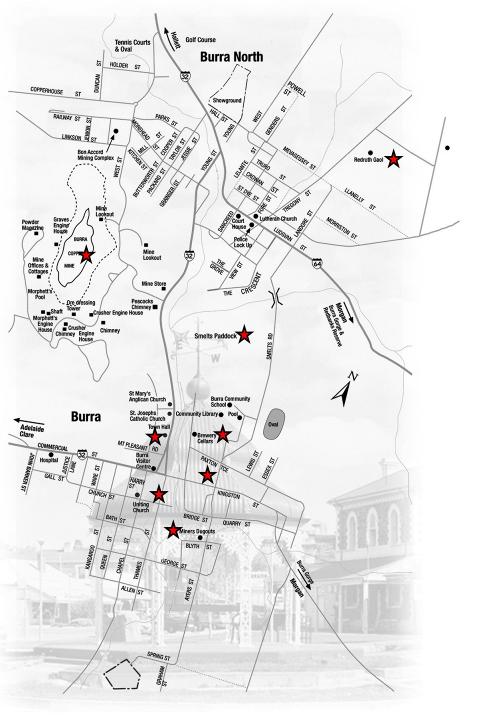
Use the map on page 2 to assist with locating these places of interest.
Whilst Burra’s story starts with a Mine, and this is part of its history, you will see that it is more than that. Like most country towns it has suffered from adversity as well as enjoying good times. Over time it has evolved into an important rural centre servicing the surrounding agricultural and pastoral holdings and more recently a tourist attraction because of its many historic buildings.
In 1993 the township of Burra was placed on the National Heritage Register as a significant historical site, being one of the best preserved mining towns in the state.
© The Burra History Group Inc.
2008
3
Contents
The Early Townships of Burra 5
Miners’ Dugouts 13
The Burra Burra Mine 17
Cornish Beam Engines 29
The Burra Smelter 33
The Thames Street Cottages 37
Paxton Square 41
The Burra Institute & Town Hall 45
Unicorn Brewery 51
Redruth Gaol 55
Burra Floods 59
Fires in Burra 71
Snow in Burra 79
Burra’s Hotels 83
The Churches of Burra 95
4
THE EARLY TOWNSHIPS
OF
BURRA
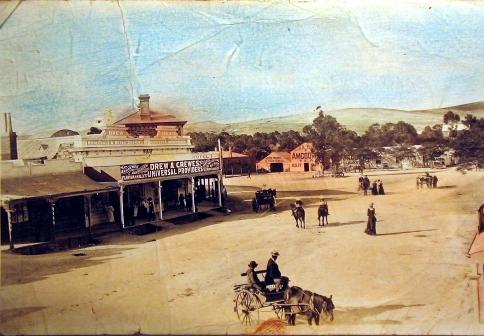
A view of Market Square Kooringa from Commercial Street
c 1900
5
Kooringa (1845) – A Company Town
The township of Kooringa was the first mining company town in Australia, being set entirely within the mining property of the South Australian Mining Association (SAMA). The town takes its name from an aboriginal name Kuri-ngga, meaning “in the circle.”
The layout of the township was planned by George Strickland Kingston, a company director, with the intention of building houses for their employees. The first stone cottages, designed by Kingston, were completed in 1846 in Thames Street near the Burra Burra Creek. More than 100 cottages eventually were built by the company, the most notable being the bluestone cottage rows of Paxton Square, but progress on their construction was slow. Because the company charged rent for these properties and because housing was scarce, the miners resorted to digging their homes into the banks of the creek.
By 1850, these dugouts extended for about two miles along the Burra Creek. It seems that after construction of the cottages, in Thames Street, the company built smaller cottages for miners, presumably at lower rent, in an attempt to entice these “creek dwellers” out of the creek. So the early township grew along the creek from the Mine Bridge down to Mitchell Flat and The Pig and Whistle Hotel (Corner of Thames and Stock Streets).
There were many creek crossings, mostly fords, but there were footbridges at places like The Pig and Whistle Crossing and behind The Miners Arms Hotel, with the only substantial bridge, the Town Bridge, one that could allow a horse and buggy to cross, on Bridge Street. This bridge was financed as follows; SAMA £100, William Paxton, a director of the Mining Company £50 and the remaining £50 by the people of Kooringa. The frequent flooding of the creek often damaged these bridges and the great flood of 1877 swept the Town Bridge completely away.
In the census of 1851 with the mine “in full swing” there were 4000 inhabitants, the largest town in the colony outside of Adelaide. With the discovery of the Victorian gold fields in 1852, a mass exodus of miners
6
left many houses vacant and falling into disrepair. When the miners returned and mining operations resumed in 1855, the town population grew again, peaking in 1859.
Another exodus of miners and their families came when copper mining at Wallaroo and Moonta commenced in 1861, only to see many return as a result of a strike at the Moonta mines in 1864. Before the closing of the mine in 1877, the township of Kooringa boasted several churches, many hotels, two banks, a ‘public’ school, a Grammar school and the Miners’ and Mechanics’ Institute (now the Town Hall).
The township of Redruth that was surveyed in 1849 grew from a collection of government buildings like the police station (1847) and the courthouse, to become the centre of government activity. It took its name from the name of a town in Cornwall. This name derives from the Cornish ‘ridruth’ meaning red ford.
With no freehold property being available within Kooringa, the Government of the Colony was encouraged to layout a new township to the northeast of the mining property, making freehold title available. The Cornish miners were pleased with it being named Redruth. Freehold title was not made available in Kooringa until the 1870s. It was hoped that here people would build permanent homes. In attempt to profit from this development the S.A. Mining Association bought a considerable number of the allotments offered for sale in this new township, pushing up the prices. Nevertheless this town grew to have three churches, one hotel, and other businesses. Even though some of the streets of this township have Cornish names, it was home to a mix of different ethnic groups with a range of occupations. There are some miners’ cottages, built in the Cornish style, still standing today.
In 1856 the Redruth Gaol was built on the outskirts of this town and later it became a Girls Reformatory.
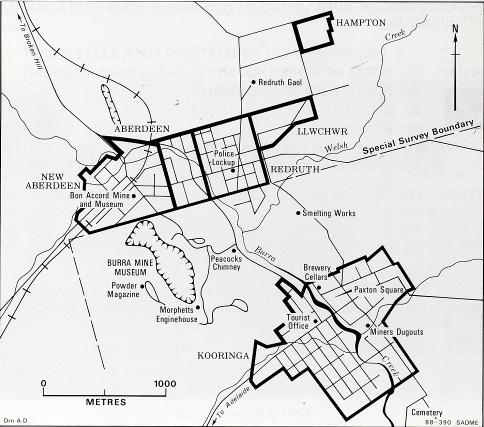
Named after the Scottish city at the mouth of the River Dee (aber meaning mouth)
In 1849, this township was laid out by Robert A.A. Morehead and Mathew Young, the Scottish owners of the failed Bon Accord Mine in an attempt to recoup their loses with a sale of property. Although no copper was found in the deep shafts that were sunk at the Bon Accord Mine site, water was. This was the source of water that supplied the townships of Burra for many years. Although this township initially was slow to
7
Llwchwr (Llwchyr) (1855)
‘Lewsher’, as it is pronounced locally, was named after the town from which the original Welsh smelters migrated in 1849 and 1855. This township came into being through The Patent Copper Co.*, later known as English and Australian Copper Company Ltd., which was the smelter in 1849. With unpronounceable Welsh street names like Penglawdd, Llanelly and Llsynwydd, Llwchwr the township was intended for Welsh immigrants who came to work at the smelter. In fact very few people settled here at this time and most of the permanent inhabitants were Germans who had migrated from the Harz Mountains in Hanover. One large Llwchwr residence, built in the late 1840s was the home of Heinrich Christian Wilhelm Fuss, who was in charge of the Smelting Charge yard from 1848 to the 1860s. It was the Welsh and German settlers who had knowledge of the smelting process.
* This company originated in Swansea ,Wales with John Schneider as its director.
8
develop, it became a commercial area with the arrival of the railway, in 1870, and here Sara and Dustan established a saw mill and timber yards. By the early 1900s it was a self-contained town with its, hotels and shopkeepers clustered around Sara’s Corner. The Burra Railway Station was first known as the Aberdeen Railway Station.
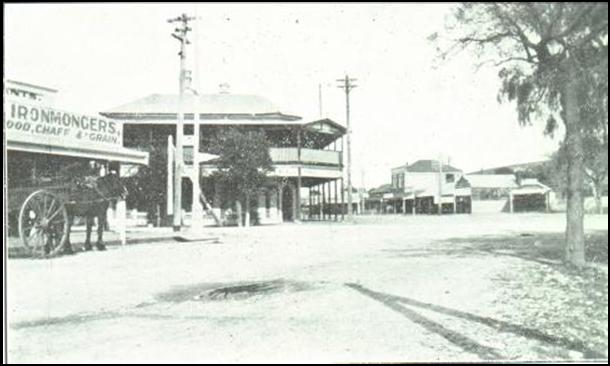
Best Place Aberdeen
9
New Aberdeen
In 1872, New Aberdeen was added to the west of Taylor Street, Aberdeen. It too was slow to grow, but it became an important part of Burra when the Railway Station was built and later the wheat silos. A flour mill, the Drew and Crewes’s bulk store, the Bon accord Hotel, and the stockyards were all a part of this township. It is also where, much later, thecompany SAMIN produced copper concentrates from the mine ore.
Copperhouse and Lostwithiel
Copperhouse and Lostwithiel were adjacent subdivisions of section 52 of the Hundred of Kooringa laid out in 1858 west of the Special Survey. Each comprised a single street of houses – about a dozen in each in the 1870s.
Copperhouse, subdivided by William Oliver a hotelier of Redruth, had a Primitive Methodist Church till the amalgamation of the Wesleyan Churches in 1900, a school that closed in 1949 and a hotel from 1864 till 1866.
Lostwithiel was laid out by John Stevens Reed a hotelier of Aberdeen. Lostwithiel, meaning ‘place in the woods’ was named after Reed’s birthplace in Cornwall. It was home to the Race Course Hotel between 1859 and 1896. Both settlements seem generally to have been known as Copperhouse. Now only ruins and a couple of houses remain.
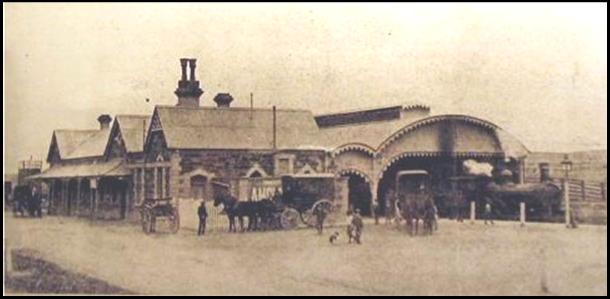
Burra Railway Station New Aberdeen c1900
10
Established by Thomas William Powell, ‘the Kooringa Postmaster’ in 1857, Hampton, which means ‘hometown’, was named after Powell’s wife’s hometown in Middlesex. Described as an ‘English’ village it grew in size until its ‘hey day’ in 1866 when there were 30 dwellings and a population of 200. It had a store ‘supplying all household requirements’ and its own Bible Christian Church of which there is now little trace. It is the site of three quarries, one of which was in existence before the subdivision of the town that were important in providing stone for the houses and roads of Burra. One interesting dwelling was built in one of these quarries and was inhabited until the 1920s.
In 1881 it was described as ‘a less favoured place’, being quite remote from the other townships, with few amenities like water and its inhabitants had to be self-sufficient. There was a well on one property, but the existence of below-ground cisterns indicates that rain water collected from the roofs of houses was the main source of water for this town. By 1891 the population had fallen with houses being abandoned and for the next ten years the number of dwellings remained at around 15.
The people of this town were working class, working in the quarries, building their own homes with this quarry stone and tending gardens enclosed by stonewalls. Some of their occupations were Mine Manager, miller, carpenter, smelter, miner, wheelwright, blacksmith, mason, quarryman, mechanic, labourer and later engine driver, saddler, station
hand, farmer and railway porter.
The Story of The Monster Mine Ian Auhl
The Burra History Group Website www.burrahistory.info/
Burra and Its Townships Lesley Abell
A Less Favoured Place P.J. Birt
Place Names of South Australia G.H. Manning
11
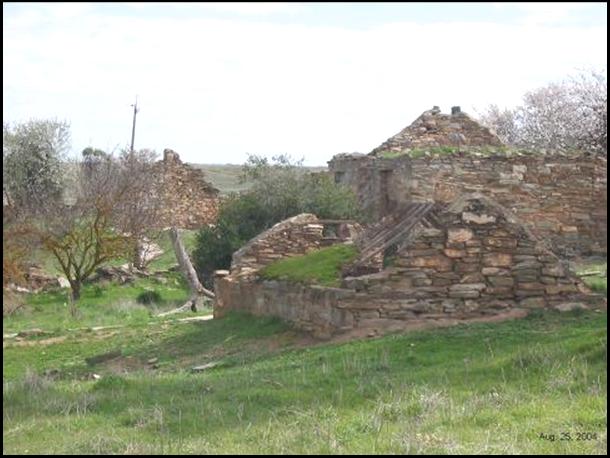
A Less Favoured Place
The Ruins of Hampton
2005
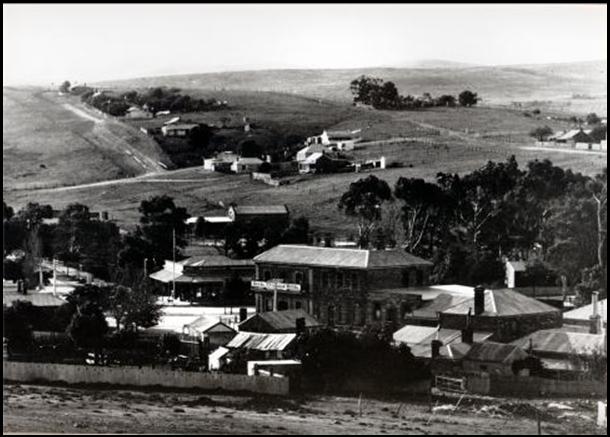
A view of Aberdeen looking towards Redruth and Millerton
1904
12

13
Miners’ Dugouts
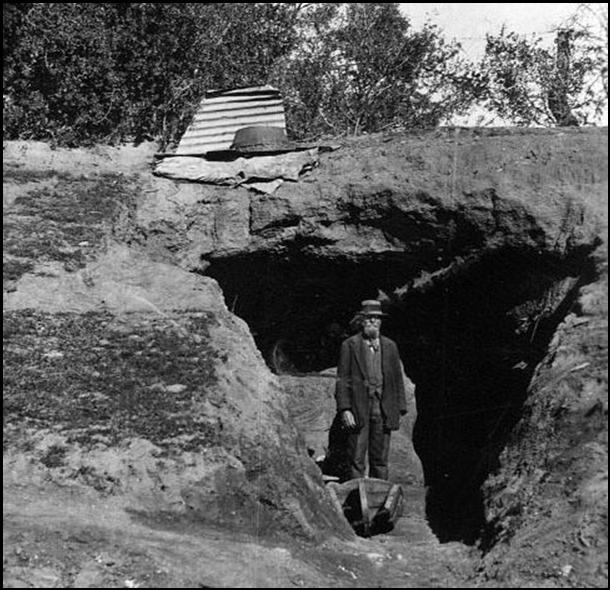
In the early years, the rapid influx of miners who emigrated from Cornwall and Wales to the Burra Burra Mine led to a shortage of housing. This was overcome in a rather inventive way by the miners who dug their homes into the clay banks of the Burra Creek and its tributaries. The first dugout was thought to have been dug by brothers John and Robert Collins in the summer of 1845-46 and when others followed soon after, they proved perfect for the conditions, being close to a source of water and providing shelter from the cold in winter and the heat in the hot summers. Being rent-free and easily constructed, they became a popular way of providing for the burgeoning population. In 1851 about 1800 people out of a total population of 4000 lived in almost 600 of these dugouts that extended along the creek for about 2 miles.
“The Register”, the Adelaide newspaper, reported in 1851 “this creek with its habitation in the banks on both sides forms one of the most singular spectacles ever beheld. The miners have excavated dwellings like rabbit holes, in lines as thickly under the banks of the creek as they could be placed, a foot or two intervening between them, sometimes merely a mud bank as a division wall.”
These dwellings were often single roomed with chimneys, formed on the bank top with beer barrels cemented in mud that looked like tree trunks alongside a roadway running along the banks and over the housetops. Some of these creek dwellings were home to as many as three or four families.
It was reported that practical jokers sometimes removed these barrels leading to passers-by making an unorthodox entry into the homes below. Another story described larrikins fishing for a meal by dropping a hooked line down the chimney of one such home.
These rabbit burrows being variously constructed, some with mere holes for doors and windows: some with substantial doors and even glazed windows: a few have shingled verandahs and many are whitewashed inside and out, with some papered or carpeted within. Many of the inhabitants had animals like fowls, pigs and goats housed in pens at their front door.
As can be imagined the sanitary conditions along the creek rapidly deteriorated with many cases of “fever” (typhus, smallpox and typhoid fever)
14
being reported. As a result the infant mortality rate was unacceptably high, with 153 deaths and 300 births in 1851.
In 1851 three major floods devastated “Creek Street” driving the miners from these dugouts to leave them virtually deserted, for a while. In fact, floods were a constant hazard for “the dugout people.”
The 1851 census indicates that most of the dugouts were occupied by the families of miners who were Cornish, Welsh or Scottish. Other residents included carpenters, masons, shoemakers, saddlers, sawyers, mechanics, builders, clerks and even a doctor. The South Australian Mining Association (“Sammie”) was reluctant to build sufficient housing for their miners but seemed determined to have miners move out of these creek dwellings. Following the 1851 floods, Sammie issued a directive that in future “Creek Dwellers” would not be employed in the mine. Eventually a major flood in 1859 forced the last remaining dugout dwellers from the creek.
During the Back to Burra celebration in 1925, three remaining dugouts adjacent to Blyth Street were renovated and displayed to the public. These dugouts were completely rebuilt in 1950 by the Burra Council and The National Trust as a tourist attraction.
In 1850, when the artist S.T. Gill was sent to document the Burra Burra Mine, rather remarkably, he left out the details of the dugouts from his paintings of Kooringa.
However, in the same year, William Cawthorne did make a drawing of the dugouts, which now hangs in the Mitchell Library, Sydney.
“Burra Creek Dwellers Dugout Conservation Study”–Austral Archaeology Pty Ltd.
15
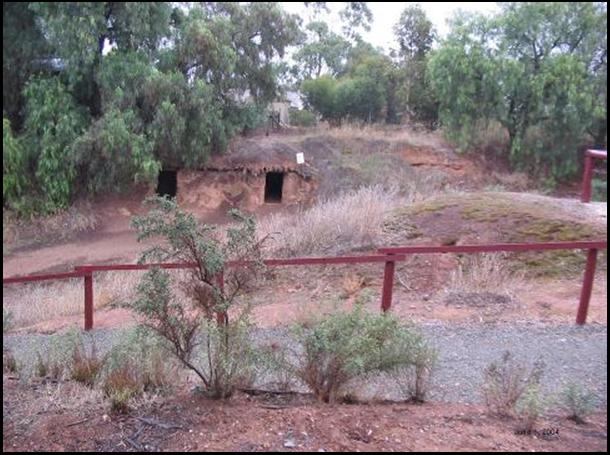
Former Miners’ Dugouts
Blyth Street, Kooringa, Burra SA
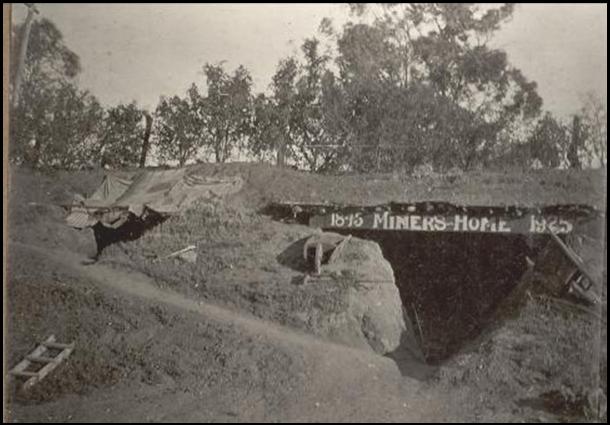
Miner’s Dugout after being restored for the
Back to Burra Celebrations
October 1925
16
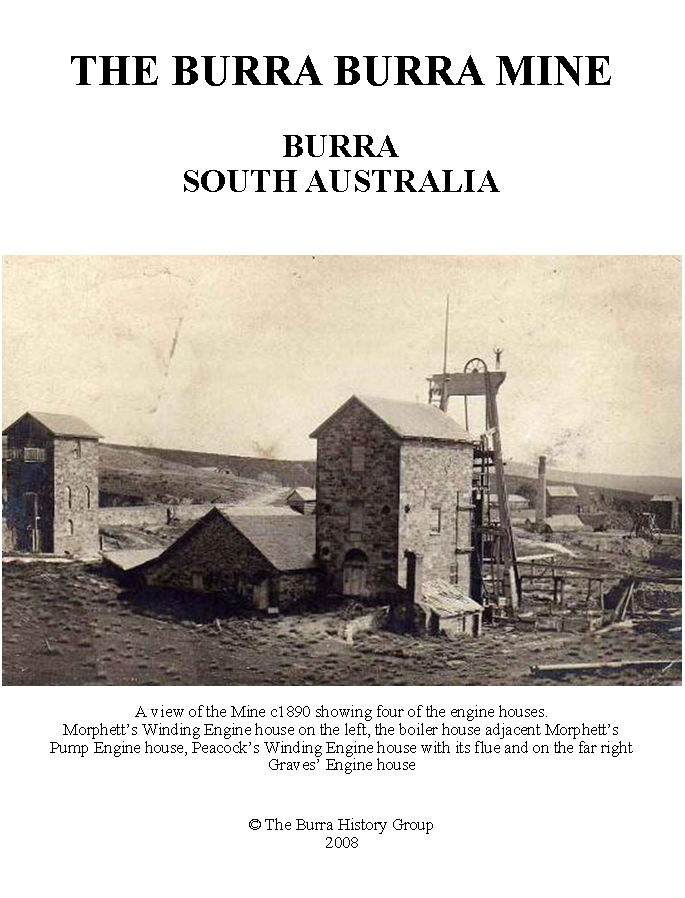
17
The Burra Burra Mine
The Discovery
In 1845 two shepherds, William Streair and Thomas Pickert, discovered copper outcrops at two separate sites along the Burra Burra Creek. When this news reached Adelaide, two rival companies immediately showed interest. The Princess Royal Mining Company known locally as the ‘Nobs’, the company working the Kapunda Copper Mine, and the newly formed South Australian Mining Association (SAMA), the ‘Snobs’. They provided the money for a special government survey of an area of 10,000 acres and at a meeting in Adelaide lots were drawn to decide which half of the special survey would go to each party.
Mixed Fortunes
The South Australian Mining Association drawing the half north of Stein Hill and Princess Royal to the south. William Streair had sold the location of his find, the site of the Princess Royal Mine, to James Bunce, an Adelaide shopkeeper for £8. Although this outcrop was very rich, this mine proved to be a failure when the ore ran out and it ceased operations in 1851.
For his find Thomas Pickert was rewarded with £10 by SAMA and died a pauper. His discovery became the ‘Monster Mine’ an operation that made its shareholders very wealthy men.
‘The Monster Mine’
The ore body, consisting of rich deposits of mainly blue azurite and green malachite in dolomite host rock, was 70 metres wide and 55 metres deep in a strip between two fault lines.
At the outset miners were urgently sought and free passage was given by the government of the new colony for experienced workers to emigrate from Cornwall and later Wales, where employment was scarce.
Early Mining Operations
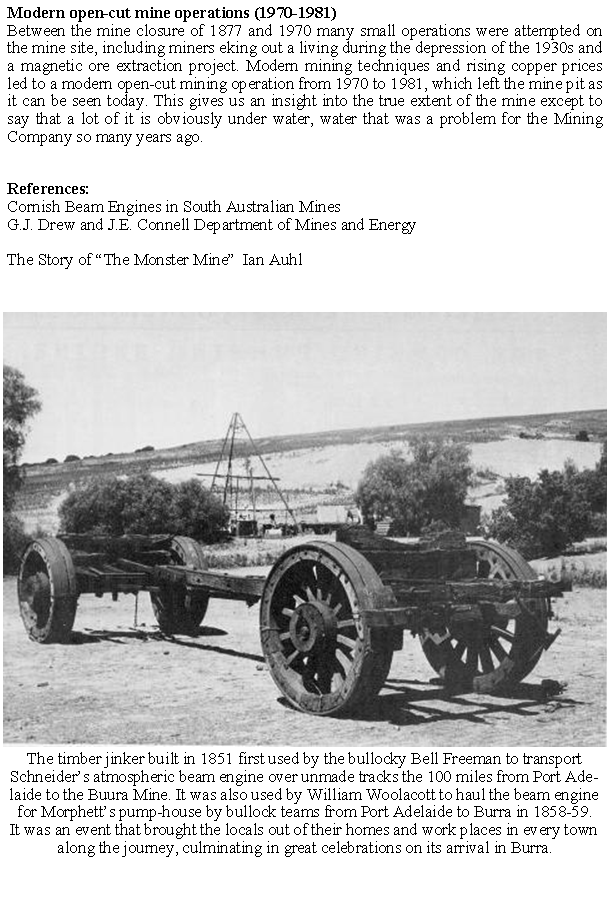
Initially the copper ore in veins, blebs and nodules was mined from near the surface by ‘tributers’, paid a percentage of the value of the ore they recovered from their pitches, with simple implements. Later as shafts were sunk, tutworkers were employed to shore up the mine with timber and remove the mullock. Ton workers, who were paid a fixed rate per ton of ore picked out, separated the ore from the mullock. The ore was transported in drays by bullock teams to Kapunda and then to Adelaide, where it was shipped to Wales for smelting. And when smelting operations commenced in 1849, the ore was carted across the Burra Creek to the smelter and the Gulf Road to Port Henry was opened. The Gulf Road was nothing more than a series of waterholes for the bullock teams that hauled the copper from the Burra Burra Mine to Port Henry, now Port Wakefield.
Of course a mine requires far more than miners. It requires a force of supporting workers like carpenters, blacksmiths, engineers, masons and carters for its efficient operation. The mining operations need to be continuously planned and managed. The erection of buildings, the installation of whims, the harnessing and stabling of horses, the keeping of records and the day to day supervision and organisation of such a large enterprise all require good leadership for a mine to function.
Captain Roach
Samuel Stocks who had been the Resident Director of the Mine resigned that position in 1846 and shortly after arriving at the mining following dismissals of two Superintendents, Henry Roach, an experienced Cornish mine captain, was appointed to the position of General Superintendent of the Mine. Forever known as Captain Roach he was instrumental in the early success of the Mine. He was noted for his mild manner and courtesy and his appreciation of the difficulties of the miners of representing their concerns to the
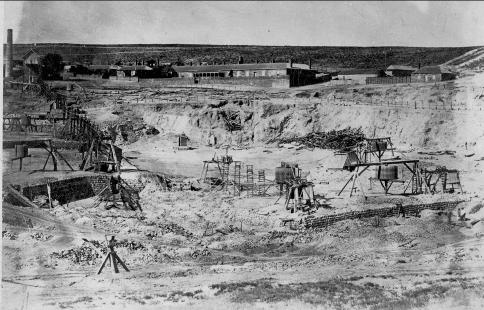
A view of the mine in 1869 immediately prior to changing to an open-cut operation. Note the idle horse whims atop mine shafts
18
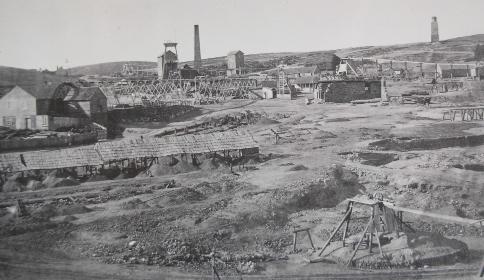
Mine Board. He was also a good organiser and hard working. He lived on the Mine site and was continually inspecting the workings with his Mine Captains.
The Mine Site 1869 showing the crusher water wheel, with the partly demolished Schneider’s Engine house in the background to the right
19
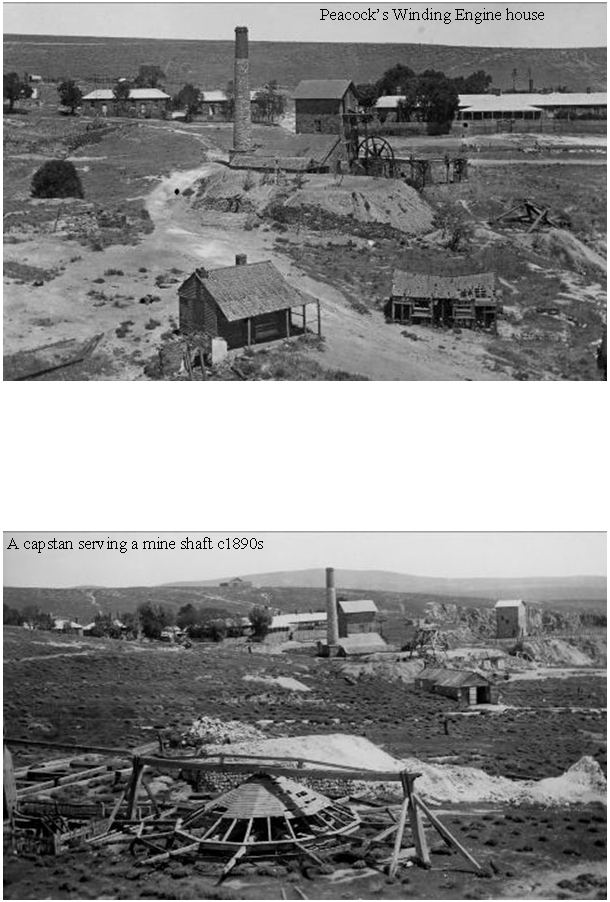
When Thomas Fisher of the Sydney Morning Herald visited the mine in May 1851, he was struck by the amount of activity and the orderliness of the operation. ‘You observe an area of from 80 to 100 acres, crowded with stone buildings, covered shafts leading underground, machinery and engine works, engine-houses, store-houses, tanks and dams of water, innumerable sheds of all sizes and countless piles of copper ore of various assorted qualities, in different stages of dressing, lying in almost every direction. If you arrive after six o’clock in the evening, expecting to find all quiet and the business of the day all over, great will be your surprise at the bustling animated appearance of the place.’ On this occasion he counted 11 shafts.
By 1851, the tributers had moved well below ground level in their pursuit of fresh veins of copper, digging deep shafts, the deepest being Morphett’s shaft reaching 100 fathoms† shortly before the mine closed. The names of these shafts Stocks’, Graham’s, Waterhouse’s, Ayers’, Peacock’s, Roach’s were those of Company Directors or Mine Officials. The ore being hauled to the surface in kibbles* using horse whims or capstans.
A ‘Wet’ Mine
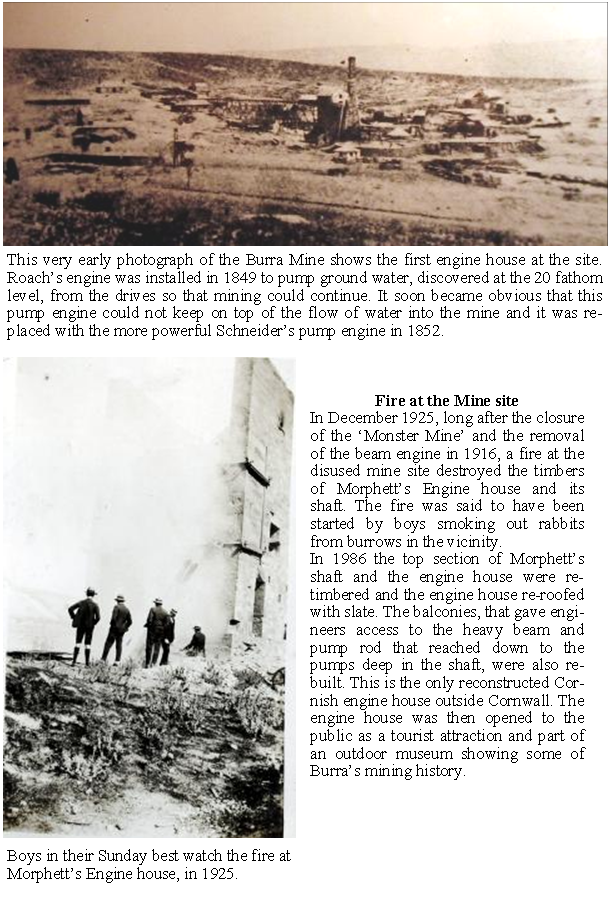
When at the 20 fathom† level ground water began seeping into the mine, Captain Roach ordered the first Atmospheric beam engine to be installed to dewater the mine. It was a 50 inch engine installed in a stone engine house, with its adjacent boiler house, atop Roach’s shaft and began operation in 1849. It was the first and last Cornish beam pumping engine erected in South Australia, having been transferred to the Bon Accord Mine in 1859 and finally to the Bird in Hand Mine in 1886. The water from the mine was sent along wooden launders to a mine pool and used for the steam boilers or to drive a huge 22 foot water wheel that powered a sawmill and an ore crusher. This same water was used to wash the ore in the buddle pits and eventually ran into the Burra Burra Creek.
When Roach’s pumping engine failed to keep pace with the water in the mine, and the engine house began to fall down as its foundations subsided, a new larger engine was ordered.
Schneider’s Pumping Engine
This 80 inch beam engine imported from the Perran Foundry in Cornwall came into operation in 1852. This had been an urgent installation as the water level in the mine was proving difficult to keep in check below the 60 fathom level. Soon after it began operating it was shut down and the mine was flooded when miners deserted Burra to go to the Victorian Goldfields. Eventually it became evident that even this pumping engine was inadequate and by 1857 another 80 inch engine had been ordered. The engine house was demolished during 1867 and its stone was used to build Graves’ Engine house.
The winding engine or “Fire whim” hauled kibbles* containing the ore to the surface from four shafts (Peacock’s main shaft and air shaft, Waterhouse’s, Roach’s shaft.)
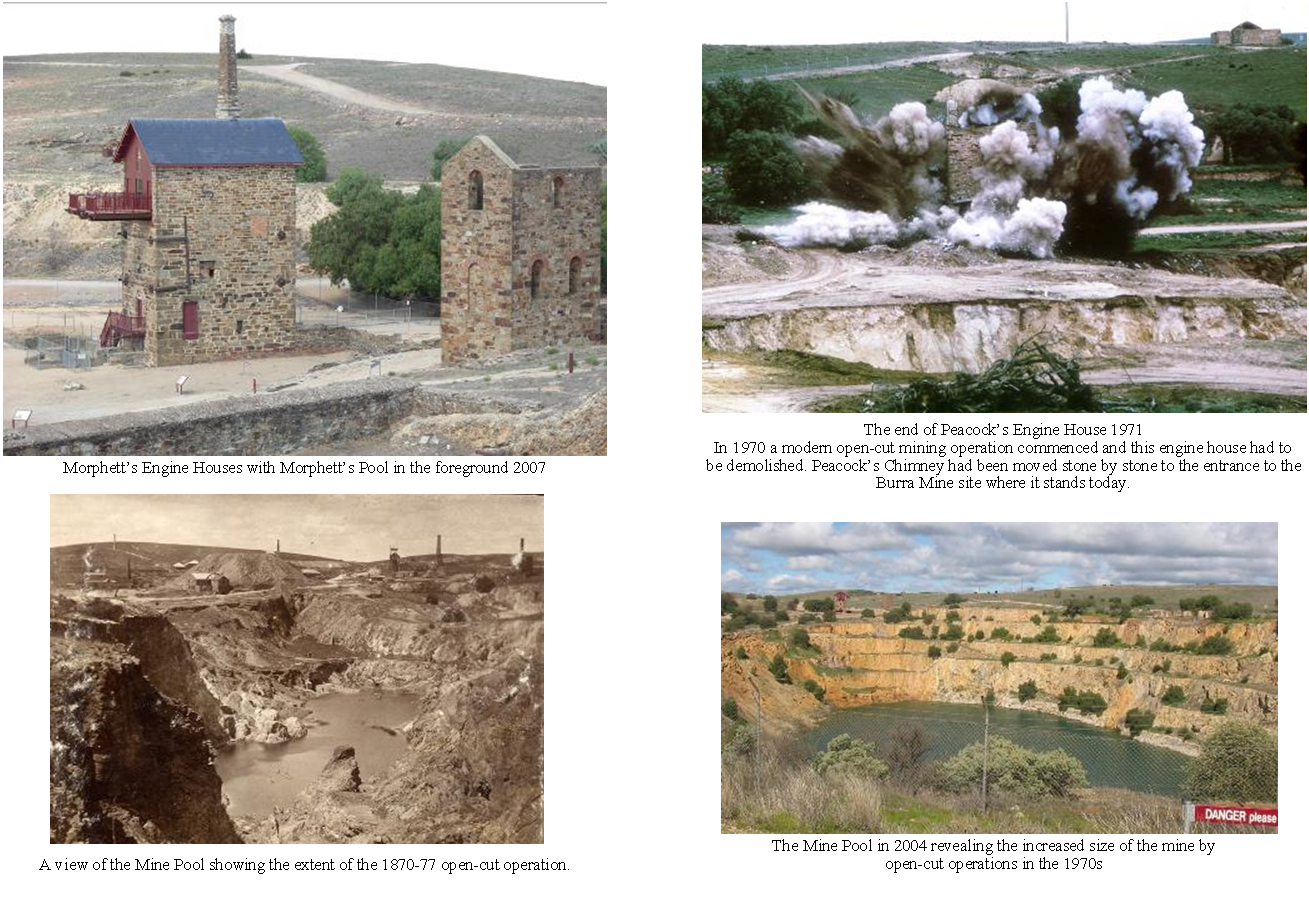
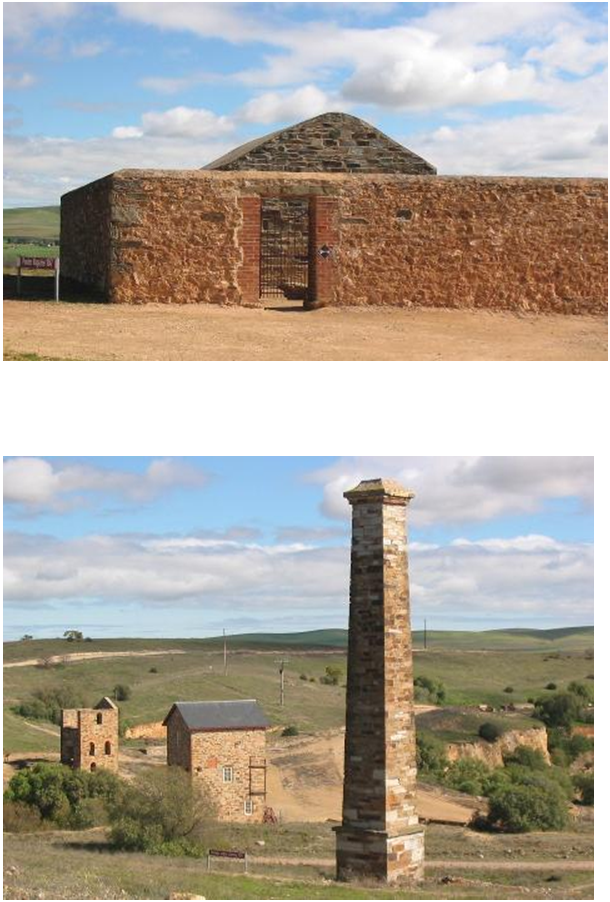
Whilst the foundations for Peacock’s Engine house were commenced in June 1851, the work did not progress because of the greater urgency for the erection of Schneider’s Engine house. Peacock’s Engine house was not shown on the 1853 plan of the mine and the tender for it was awarded to Blackler and Hollow in January 1857, and completed early in 1858. The rotative beam engine began operation in April 1858. It was the longest serving engine on this site, being used to haul ore trucks up an incline during the open-cut operations in 1870 and in 1876 it was converted to pumping water assisting Morphett’s Engine. Its engine was removed for scrap in 1916 and the engine house was demolished in 1972 to make way for the modern open-cut operation.
† 1 fathom = 6 feet (1.83m)
*Kibbles: large egg-shaped buckets used to hold the ore. They were made from strong flat sheets of iron riveted together, and were egg-shaped so that their bulging sides would prevent the top rim from catching in the timbering of the shaft or from fouling
20
each other when they passed in the shaft.
21
22
23
A story from the mining days of the 1850s
“One day I witnessed the breaking of a chain when the kibble was nearly up to the surface and its weight as it descended pulled the loose chain so fast that it was entangling itself about the posts and pulleys breaking timbers and making a great clatter. Men were running in every direction except in the line of the posts. Much damage was done to the gearing, but I have wondered whether the men below could find a safe place when they heard the kibble coming down the shaft. They must have realised that the law of gravity was in its worst mood.”
Morphett’s Pump Engine 1858
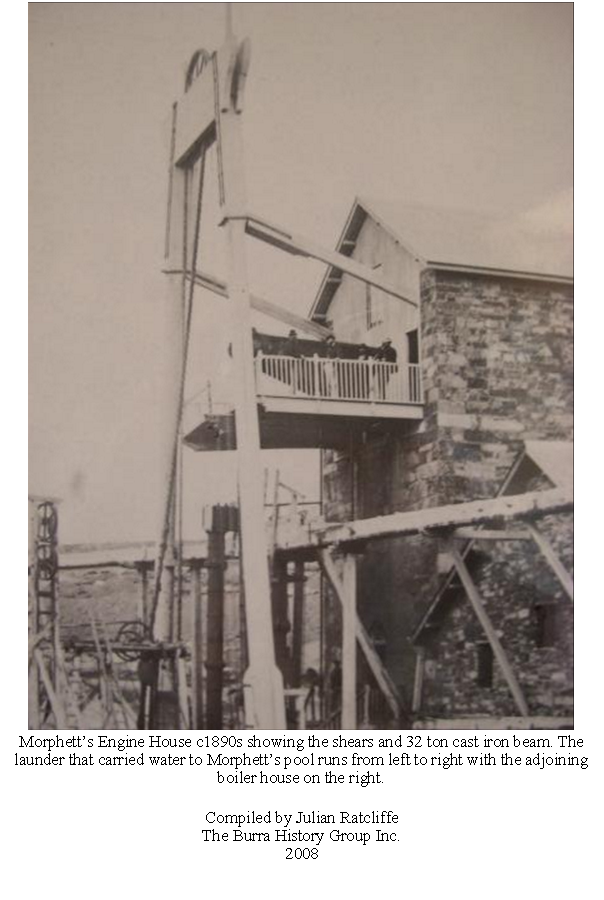
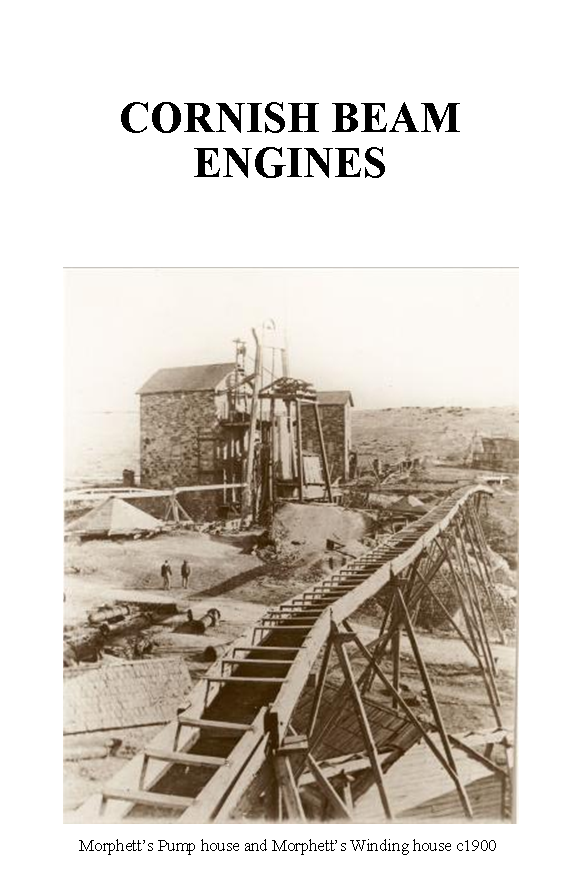
Although the engine was ordered from the Perran Company in 1858, it was not installed and made operational until 1860. This engine with its six Cornish boilers in an adjacent boiler house was the ‘workhorse’ of the mine. It kept the water ‘in fork’ to the 60 fathom level and below. This huge engine like all of its predecessors had been hauled on a jinker by bullock teams from Port Adelaide to its home in an engine house. The cast iron beam for this pump engine weighed 32 tons. Morphett’s Engine-house still stands in place at the mine site today being the only reconstructed engine-house outside Cornwall.
Grave’s Engine house 1868
This engine house was designed to house the old engine from Schneider’s and assist Morphett’s pump engine with dewatering the mine but was never put into operation because the mine was converted to an open-cut operation in 1870.
The End of the ‘Monster Mine’
‘In the last week of October, following the final inspection of the underground workings by the three mine ‘Captains’, the pumping engines were stopped and the mine fell silent. After almost seventeen years of almost continuous working, the great projecting beam high up on the bob-wall of Morphett’s pump-house lay motionless. No breath of smoke emerged from the chimney stacks on the surrounding hillsides. Silently in the levels and shafts far below, the ground waters rose. With its life-support system withdrawn and its heartbeat stopped, the old mine slowly and quietly drowned,’ wrote Ian Auhl. How strange that silence must have been for the townships of Burra.
Over the history of the mine there had been times of frantic activity with work going on around the clock and at other times the mine lying idle and water flooding the mine, as workers left for other mining ventures or men were laid off because of falling copper prices. Nevertheless it was a most successful enterprise, for over the time of the mine’s operation the total ore recovered was 234,648 tons valued at £4,749,234.
Because of falling copper prices and also because the ore was running out, the South Australian Mining Association’s mining operations in Burra, ceased in October 1877.
24
25
26
27
28
29
Atmospheric Beam Engines
A beam engine is a steam engine with a vertically moving steam piston pushing or pulling on one end of a beam, pivoted near its centre. At the other end of this beam a pump or other mechanical device is attached, the rising and falling of the beam powering such devices. At mine sites, beam engines were used for pumping, winding and crushing.
Atmospheric engines worked on the principle that when steam condensed it contracted causing a low pressure inside the cylinder of the engine. When steam was admitted to the cylinder, slightly above atmospheric pressure an injection of cold water into the cylinder caused the steam to condense, lowering the pressure in the cylinder. Atmospheric pressure then forced the piston down to the bottom of its stroke, drawing the beam down. This was the working stroke of the engine, which raised the pump rod connected to the other end of the beam. Because the pump rod was heavier than the piston, it would then drop under gravity, causing the piston to rise to its original position in the recovery stroke. This resulted in steam entering the cylinder again. The beam was usually made of cast iron and weighed from 16 to 30 tons. The cylinder was also an iron casting encased in a steam jacket. A system of valves enabled an operator to control the number of strokes per minute the engine made.
Roach’s 50-inch engine erected at the Burra Mine in 1849 was the first and last Cornish beam pumping engine erected in South Australia, having been transferred to the Bon Accord Mine in 1859 and finally to the Bird in Hand Mine in 1886.
This pumping engine was a replacement for Roach’s engine. It was a larger 80-inch engine, Built in Cornwall by the Perran Foundry Co. and served by three Cornish boilers. At one time it was planned to reinstall this engine in Graves’s engine house but this was shelved when the mine went to an open-cut operation.
Peacock’s Engine
30
Morphett’s 250-horse power, 80-inch engine manufactured in 1857, by Perran and served by six Cornish boilers in the adjacent boiler house, commenced operation in March 1860. Pumping water from a depth of up to 600 feet, it had a 32.5-foot beam weighing 30 tons with a pump stroke of 10 feet. Working at eight strokes per minute, this engine pumped more than two million gallons of water per day, considerably more than Schneider’s Engine and kept the water in fork at the 60-fathom level. Water pumped from the shaft flowed along a launder to the dressing tower or to the engine pool, for use in the boilers. In April 1877 the engine’s piston was cracked and the beam bearings displaced, when the pump rod suddenly broke. Fortunately the cylinder was not damaged and repairs were readily effected.
The engine remained in its house after ceasing operation in November 1877 until it was removed for scrap in 1916. In 1925 a fire gutted the engine house and the upper part of the shaft timbers.
One early reminiscence of the Burra Mine described the pumping engines.
“The most important machine on the mine was the pumping engine. When I was only a small boy I was taken in the boiler-house of Schneider’s engine and was awe-stricken to see the three great boilers with their terrible fires into which they were cramming still more wood. But I got a proper scare when the firemen suddenly turned on the steam and water taps, they made such a noise. Morphett’s engine was erected later and I was older when I was shown over it. The mighty balance ‘bob’ seemed to have irresistible force behind it and the big cylinder encased in wood and packing impressed one as being wonderfully powerful. I liked seeing the bright ironwork with moving rods, up and down movements of handles, the turning of other parts which I cannot name, all seemed perfect in their rhythm and time. And I was told all these movements were necessary to control the valves for steam or control the ingress or egress of steam to the cylinder. It was a marvel of ingenuity and force. Then we went upstairs and here we saw the top of the encased cylinder with the immense piston rod being forced up and moving the great bob up and down. The bearings and axles on which the bob moved were of great size and strength. Watched from outside the bob came down steadily but rose more rapidly bringing up a great quantity of water, which ran through wooden flumes or launders as they were called, into the engine pool, filling it up during the night and by a sluice gate it was run out during the day for dressing purposes. During the summer this pool was used for swimming, but the water was very cold. Nevertheless I have seen many bathers there on a hot evening. I did not like this pool as much as I did the smaller one near the engineer’s workshop. This was a warm pool from the engine condensing water. This warm pool was not so deep either and it swarmed with boys who played about for hours with planks and rafts floating therein.”
Solomon Williams
31
Morphett’s engine house was reconstructed in 1986 as part of South Australia’s Jubilee 150 celebrations and is the only reconstructed Cornish engine house in the Southern Hemisphere. The balconies were restored in 2006.
References:
Cornish Beam Engines in South Australian Mines G.J. Drew and J.E. Connell
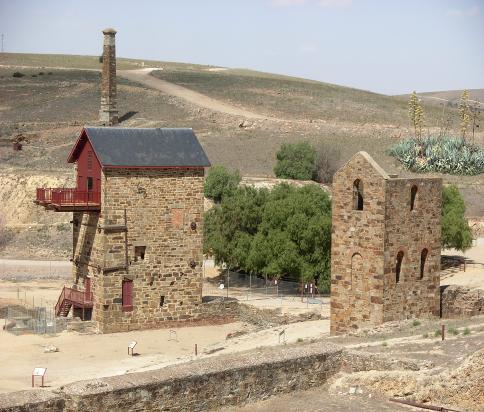
Morphett’s Pumping house, on the left, showing the restored balconies and
Morphett’s Winding house, on the right, with Morphett’s Pool in the foreground.
February 2007
32
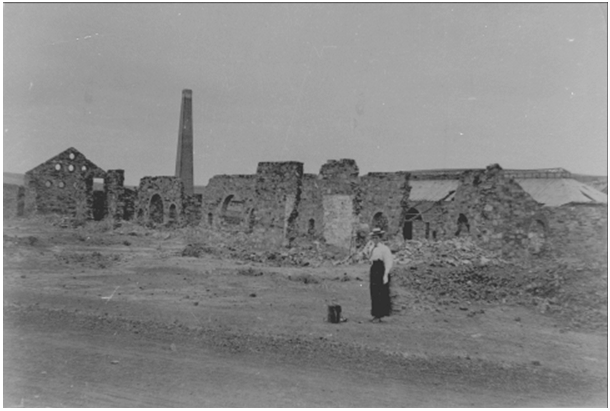
A view of the ruins of the Burra Smelter in the 1890s
33
34
35
In 1861, because the Burra Mine lode was dwindling, the company erected a new smelting plant at Port Adelaide. This was the beginning of the end for the Burra Smelter and it became little more than an ancillary to this new plant, that took ore from all of its contracted mine sites particularly from the Wallaroo and Moonta Mines. After its closure in 1869, the major operational components were either sold off or used at the Company’s Port Adelaide or Newcastle plants, leaving the buildings intact. However over the next twenty five years they were dismantled and their stone and timber was sold to recoup any costs
The glassy slag waste that had accumulated in a huge mound over the years was sold off as road building material but much of it was still left, until in 1891 the Burra Slag Smelting Co. contracted to crush the slag and recover any copper residues. Although initial attempts failed, in 1900 with the aid of better crushers, a stamp battery and a small ore reduction plant over the next seven years, 450 tons of copper were extracted. These smelting operations were eventually wound-up in 1907.
Dismantling Operations
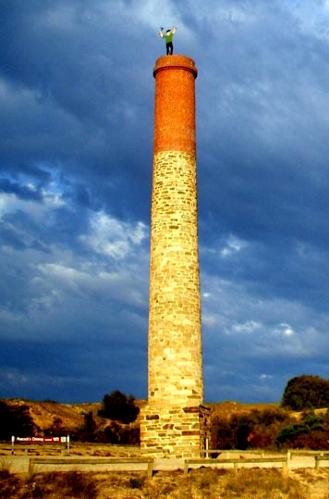
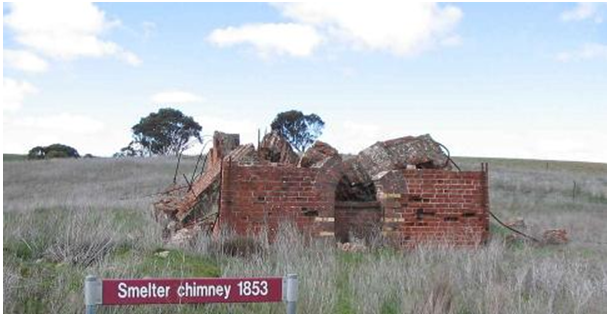
Most of the structures were dismantled in 1929 except for the 80-foot brick chimney and the stables, which still remain today. When it was deemed to be unsafe in 1956 the chimney was dynamited and its bricks salvaged for sale.
With the exception of the Smelts stables, which are privately owned, most of the site is now the property of the Goyder District Council, and is now a tourist site that reminds us of Burra’s past.
The Burra Smelting Works- A Survey of its History and Archaeology
David Bannear (1990)
36
37
38
39
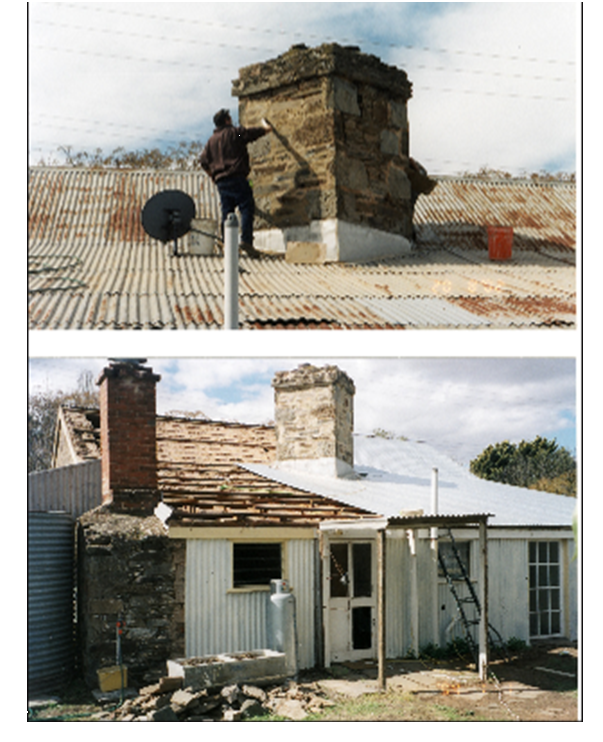
Number 6 Thames Street during its restoration in Sept. 2002 showing the central
chimney that served fireplaces in each of the four rooms.
The bottom photograph reveals the original shingle roofing near the top of the gable.
Note the lean-to, a later addition, with no shingles.
40
41
42
43
A view of Paxton Square from Bridge Terrace
The First Bible Christian Church in Australia
44
45
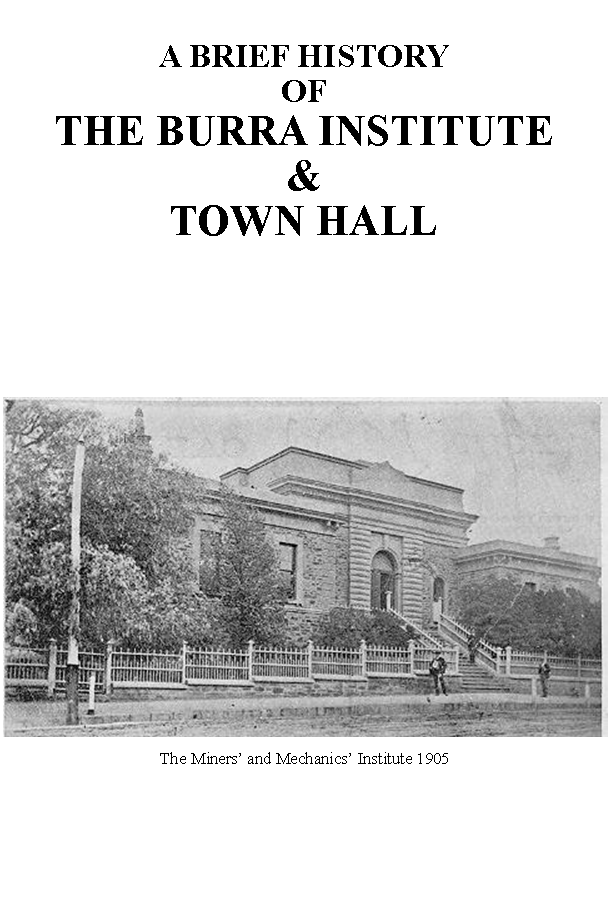
This historic building situated in Market Street and listed in the National Heritage Register began life as a much more modest building, serving as the Miners’ and Mechanics’ Institute. Built by a committee of civic-minded members of the town on land granted on a 99-year lease at ‘peppercorn rent’ by SAMA, it was opened in August 1857. It was given to the people of the town “for the purpose of improving their minds and advancing their social position by acquirement of that information which shall prove most useful to them and which by the help of such Institutes is brought within reach of every man however humble his lot.” This was to be achieved by providing a library with a reading room and by holding lectures monthly.
The Institute drew much criticism from its subscribers for being too small, poorly lit, having inadequate furniture, too few books, too few lectures and a prison-like appearance.
Rowland Rees, an Adelaide architect and the member for Burra in the House of Assembly redesigned the institute in 1874. This much more imposing building, which was built by John Pearce of Burra on the same site, consisted of a main building with two wings. The entrance hall, which was designed to act as a museum had sliding doors that allowed it to extend into the lecture hall with a library and reading room in one wing and a committee room and classroom in the other. The Grand Opening was held on the 14th October 1875, with the hope that it would provide the town with “a well stored library, an instructive museum, educational classes, popular lectures and agencies in every direction whereby the mind might be cultivated and the feelings refined.”
So successful was it that by 1876 it had 135 subscribers and a library of 1300 volumes and tenders were being called for additional rooms. In January 1877 a lodge room was added and by 1880 the library had grown to 2369 volumes, with tenders being called for alterations to the platform of the institute.
In June 1881 it was reported at a general meeting that the main building included a hall, a large entrance and four other rooms the property has been enclosed with a stone walling and front ornamental railing, a cottage has been erected for the librarian, a large room for Masonic and other lodges has been built, and two rooms have been provided in what was the entrance hall, and one of these entirely fitted with shelves which, are fully occupied with books, is the library.
On the 17th May 1889 The Provincial Elite Roller Skating Rink opened at the Institute to a fair house, though with more observers than practitioners. Mr J. Davey’s Burra Brass Band added to the occasion.
More Improvements
On 12th July 1893 The Burra Record reported that “The building is now composed of the Council Chamber, reference library and amusement room, lodge
46
room, library, ante-room and a fine hall with every convenience, consisting of stage, lights, scenery and two large dressing rooms.” The newspaper acknowledged that the public had greatly assisted the work of the committee by attending concerts, becoming members and donating various sums t the building fund.
It is significant that from 1876 until the amalgamation of the Corporation and the District Council of Burra Burra in 1969, besides nurturing the cultural and social life of the community, the Institute became a focal point of civic life with one room devoted exclusively to the Corporation of the Town of Burra.
The year 1891 saw some significant alterations to the Institute. The back wall of the hall was removed allowing for enlarging the stage and the addition of two dressing rooms. The proscenium had decorative pillars added to it and an escape door from the hall was added. The central hanging chandeliers were replaced with six large bracket paraffin lamps on the walls. A water closet has been provided together with a urinal opposite the Institute
On 26th Feb. 1897, Mr. W. Reeve presented Leimiere’s Wonderful Cinematographe at the Burra Institute. It featured two series of 20 pictures with scenes from life of the sea, the street, labour, military pageants, domestic pictures, Royal Pageants, and comic scenes. It showed The Melbourne Cup from start to finish and Episodes in the Czar of Russia’s Coronation.
Les Cloches de Cornville
The Opera Society together with the Burra Orchestra presented “Les Cloches de Cornville” at the Burra Institute on 10th July 1901. The proceeds of this successful event went to the Burra Jubilee Benevolent Society.
Acetylene Lighting for the Institute
Mr Mozart installed an acetylene generator, which will be capable of supplying gas for 40 lights at the Institute in July 1906.
A New Floor, June 1912
As it was unfit for dancing, the Institute floor has been replaced.
“Messiah” at the Burra Institute
A favourable report, in “The Adelaide Mail”, of G.E. Dane’s production of Handel’s “Messiah” on the 10th June 1914, at the Burra Institute, mentioned 71 voices with 7 principals from Adelaide and 26 instrumentalists, as being an artistic and financial success. Apparently every seat was filled and hundreds were turned away.
At the pictures on Saturday night 7th July 1915, someone seems to have deliberately set fire to the scenery. Fortunately it was discovered before doing much damage and the hall was evacuated without panic.
47
January 1919: Because of the high cost of carbide, Parson and Robertson were engaged to install a Delco electric lighting plant in an engine-house at the rear of the building.
In March 1921 the Burra Record reported that;
“The considerably enlarged Institute was finally re-opened on Tuesday evening when the Theatregraph Picture Co. presented a first class program. The audience was large and the takings were given to the Institute. The entire cost of the enlargement with extra lighting and seating etc. amounted to about £2,000. The alterations were as follows
The back wall was moved 10feet out, taking in the present ticket office and portion of what was at one time the library. This added about 100 seats.
A gallery seating about 80 was erected above. This increased seating from 338 to 518
A 90 foot awning was erected at the front of the building and a side door was made to give access to the lodge room
The passage was provided with a new ceiling.
Improvements to the Institute in 1926
Work carried out by contractors T.H. Woollacott and J.E. Pearce at a cost of £2600 made 1926 a most successful year for the Institute. As well as enlarging the stage, dressing rooms with lavatory facilities were added. On the south side of the building, a side entrance to an enclosed kitchen was provided.
Burra Institute is now Burra Town Hall (1945)
History was made at a Burra Town Council meeting held on Monday evening July 2, 1945, when necessary papers were signed for the conveyance of the Burra Institute to the Burra Corporation.
In 1969, the interior of the Town Hall was given a ‘face lift’ with new lighting installed, new carpet on the balcony stairways and a new ceiling above this area. The interior was repainted and the foyer redecorated.
New toilets
New toilets were constructed on the southern side of the hall in 1973
Demolition of the Librarian’s House
In 1977 the District Council of Burra Burra called tenders for the demolition of the house at the rear of the Town Hall.
Major Town Hall Redevelopment
In 2001-2002, under the auspices of the Burra Community Development Programme, the Town Hall underwent an $180,000 redevelopment of its facilities with a view to making it an outstanding venue for conferences and cultural functions. The kitchen was refurbished, a seminar room was fitted out and the stage got a new front of stage curtain. Most of this funding went towards payment of salaries for the management of this development programme. Today the Town Hall, that is open every day of the week, is now managed completely by unpaid volunteers.
48
Historic Photograph Display
In December 2005, with the support of local businesses a display of historic photographs depicting aspects of Burra’s early history was opened and has continued to evolve and attract visitors since its opening.
Interior Refurbishment of the Town Hall
Between May and September 2006, the foyer was enlarged by repositioning the foyer wall and new foyer floor covering was installed. All the walls of the main hall, both foyers and the stage were repainted. The ceiling roses in the auditorium and the proscenium were redecorated in the style of the 1920s and a mural was added to the stage wall. The auditorium floor and woodwork a front of stage were sanded and painted or stained. Damaged ceilings in the balcony, the stage and projector room were repaired and repainted. The sound and lighting equipment for the auditorium was upgraded and insulation was installed in the auditorium. New curtains were provided for the supper room, the civic room, foyer doors and stage windows. A storage area for auditorium chairs was constructed. For the reopening of the refurbished Town Hall on the weekend of 13th-15th October, the Town Hall Committee of volunteers received the Goyder Council’s Australia Day Award for the Community Event of the Year. As part of this event, an historic display was opened depicting early Burra businesses.
References:
The Burra Record
The Burra Broadcaster
The Burra Institute - The First Fifty Years
49
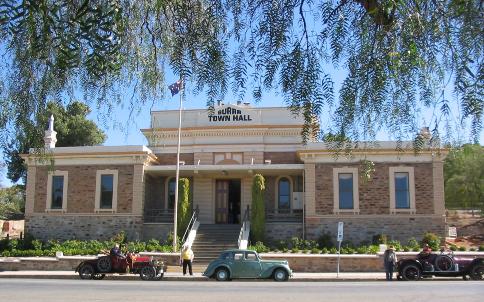
Town Hall 2006
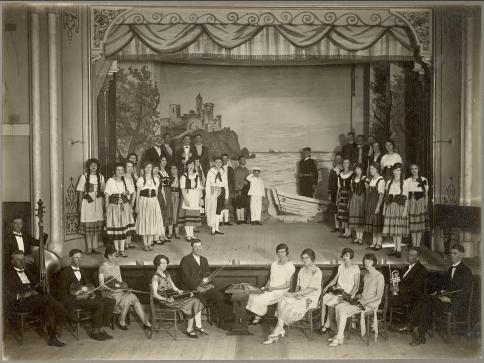
The Bells Of Cornville presented at the Burra Institute in December 1926
50
51
52
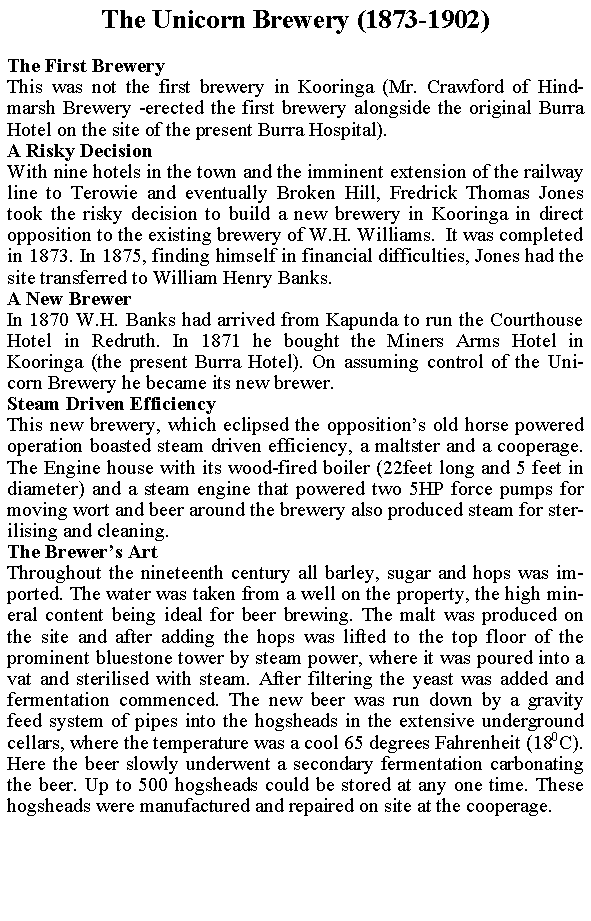
Beer varying in strength from X to XXXXXX was produced during the brewery’s operation as well as porter (stout). It is said that horehound which was a noxious weed around the town was used in place of hops to give the beer its bitter taste. Horehound was credited with being something of a cure-all. There is evidence of the cellars being extended at sometime and also that some bottled beer was produced here.
The brewery ceased production in 1902 and was sold in 1905. The reason for its closure was the introduction of new government regulations controlling the production of alcoholic beverages. The Unicorn found it too expensive to comply with these requirements and transferred operations to the Walkerville Brewery.
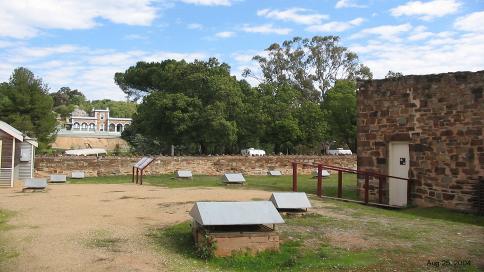
In 1911, the characteristic brewery tower together with most of the other brewery buildings were dismantled for their stone, when cottages were built on the property.
Young lairs finding their way into these cellars years after they had been abandoned were spooked by the eerie silence and the appearance of ghostly shadows. A hasty departure followed.
Acquired by the District Council of Burra in 1987, the cellars were reopened to the public as a tourist attraction in 1989.
References:
“In Cellar Cool” Ian Auhl
Brewery Cellars Conservation Study SA Heritage Branch
53

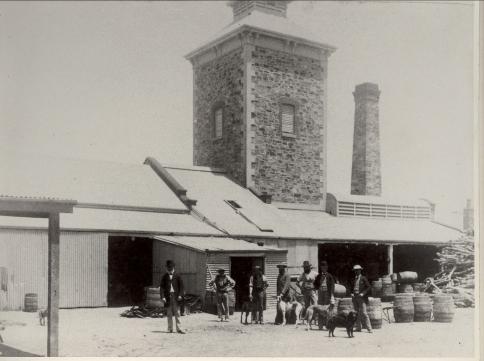
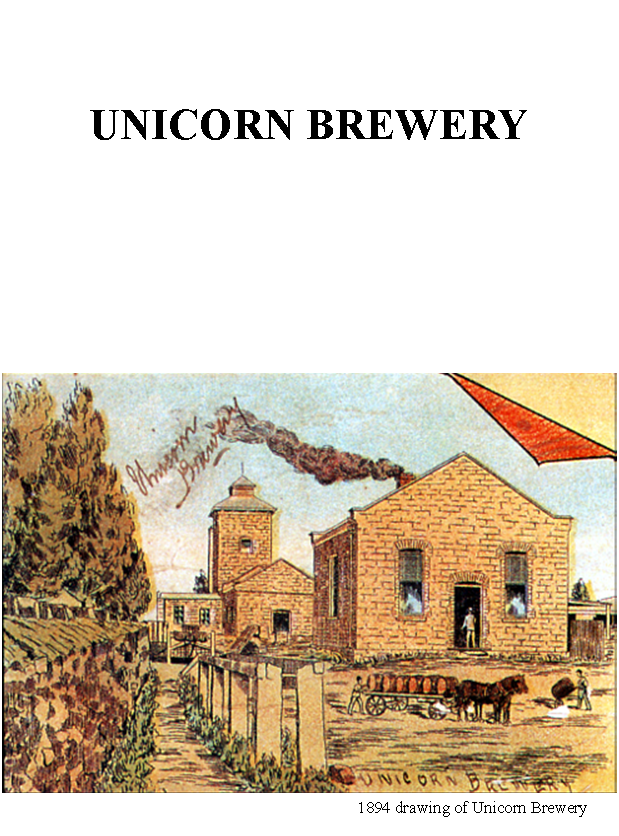
Unicorn Brewery c1890
54
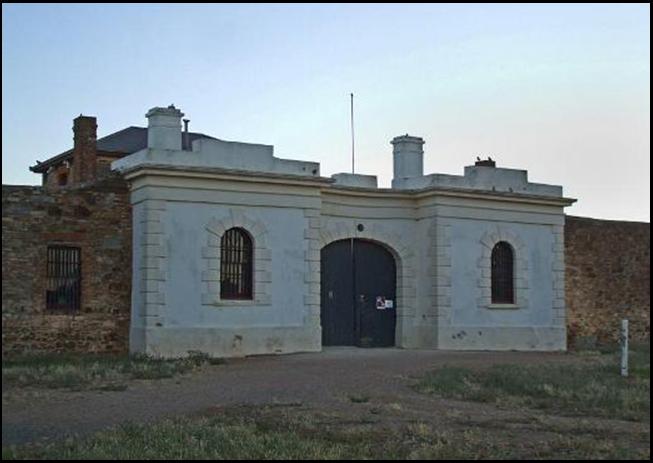
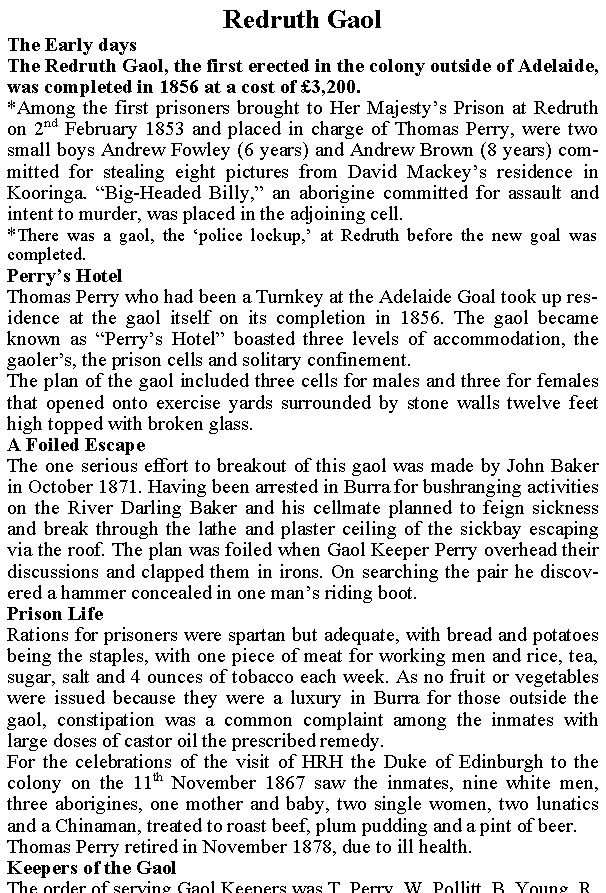
Redruth Gaol
2007
55
56
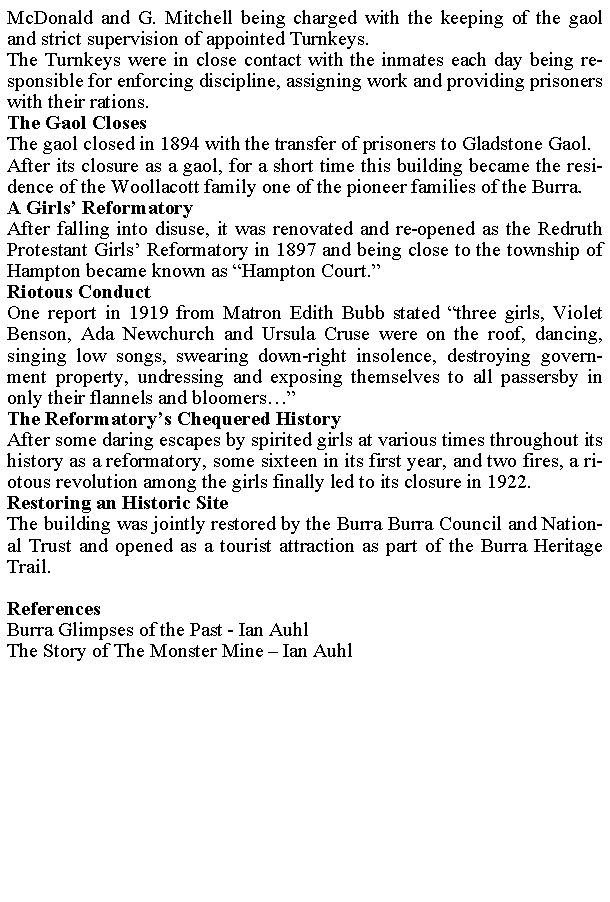
57
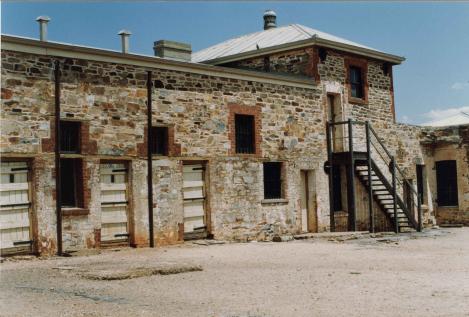

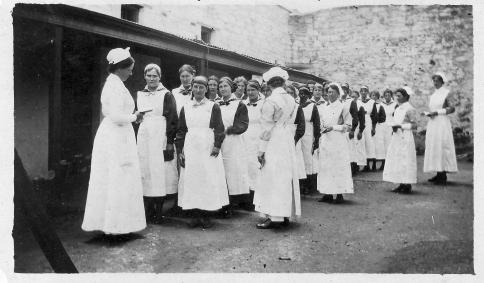

58
BURRA FLOODS
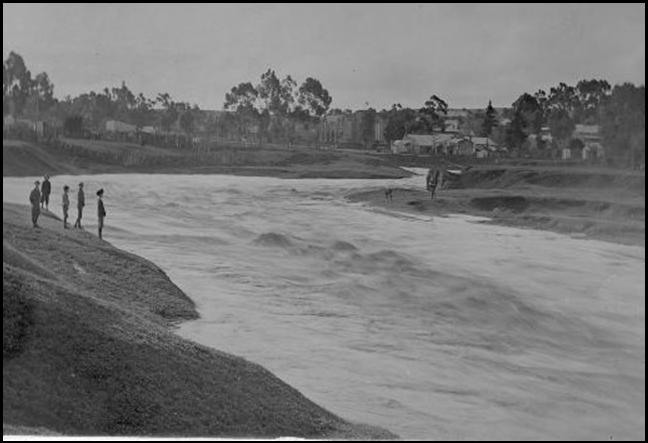
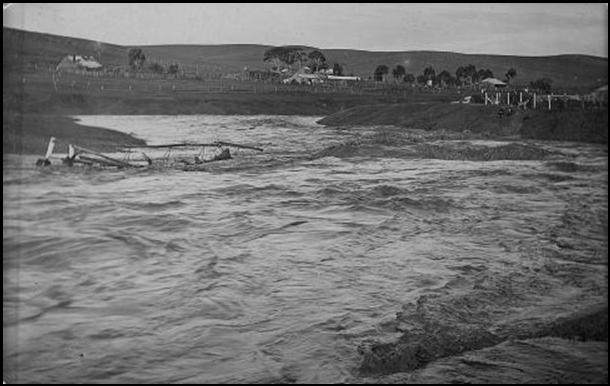
The scene at the ‘Pig and Whistle’ Crossing with the Burra Creek in full flood
September 1910
59
12 May 1848
Heavy rainfall in the district led to a rise of 8 feet in the Burra Creek with some huts flooded the earthy parts of those exposed beginning to scale off in large pieces – sensations of premature burial.
In Feb. 1850 a summer flash flood in the creek destroyed upwards of 80 huts; the furniture floating about in all directions. The water accumulated so quickly that in many instances large sums of money were forgotten to be removed. In one instance a man dived after his money said to be upwards of £100 and succeeded in recovering it. It was a sad sight to see women and children endeavouring to save their furniture from the flood.
There were three major floods in 1851, one in May followed by a second greater flood in June and a third a fortnight later. The first of these destructive floods washed through the township of Kooringa, overflowing a tributary creek in the main street and flooding the town’s stores.
In less than two minutes the streets were full of water carrying everything before it, horses, carts, pigs, fences, empty casks, large logs of wood and even a dray floated down the street.
In the second of these floods an earthen embankment causeway across the creek, carrying the road from the mine to the smelting works suddenly gave way under the pressure of the rising water.
First recorded death as the result of a flood in South Australia occurred in Burra on Sunday 8th June 1851.
The Obsever:
‘I reopen my letter to acquaint you that at 6 o’clock this evening (8th June) we were visited with a dreadful storm of hail, rain and thunder and at this moment (8 o’clock) are swamped and much goods destroyed, the street is again like another ‘Niagara’. It is impossible to tell at this time what damage is done; all is consternation and the elements battle with each other, which adds much to the awful character of this visitation. We are completely drowned up here…….’
Another correspondent from Burra was eager to tell his mine bosses that all was secure, ‘It is with regret that I have to write you the circumstances which took place last evening about 6 o’clock. We were again visited with lightening, thunder, hail and rain to a most fearful extent. I was obliged to press men to watch and keep the drains clear, to prevent the rivers of water from washing away the ore and also from going down the mine. I am happy to say we lost no ore and the mine is all right…. I then started with five or six carts for the township and creek to assist people in removing their families, goods etc. Every place in the shape of a shed or covering overhead is filled with people. One poor man by the name of Box, a lander at Paxton’s shaft, was killed by the falling in of his hut. He has left three poor little children, now motherless and fatherless. I just now sent for one of the children, but the people refused to let him go.’
The inquest into Mr. Box’s death records that, ‘it was clearly shown the deceased came to his death by the falling in of the roof of his hut, in the Burra Creek, whilst in the act of removing his furnishings. It appears that the deceased had previously helped his next door neighbour and his neighbour in return assisted him for the same purposes and was standing within a yard of the deceased when the roof fell in and covered the unfortunate sufferer.’
60
In the third flood on the 10th of June 1851, Commercial Street and many of its shops were inundated.
The Great Flood of 1859
January 25th 1859 was remembered as the Great Flood when it swept all the bridges and fords away with the exception of the company’s stone bridge and flooded the Burra townships. Only two dugouts survived this flood.
Torrential Rain in 1877 and the Loss of the Bridge Street Bridge
On March 19th there was some flooding caused by a thunderstorm and the weather failed to clear as it usually did and on each following day there was some rain until on Thursday 22 March it rained through the night becoming torrential on Friday from midday on. Burra Creek burst its banks near the Unicorn Brewery and formed a second channel parallel to the main one. By 5:30pm it was level with the roadway in Bridge Street and then it broke through to form a channel between the bridge and the Bible Christian Church. Lower Thames Street was flooded as were most houses between Station & Henderson's [Market Square] and the Primitive Methodist Chapel. Fences and outbuildings between Thames Street and the creek were swept away. Houses on the western side of Paxton Square were flooded to a depth of 6-9 inches.
At 7.00pm the Bridge Street Bridge was swept away which allowed the water level to fall quickly by some 2-3 feet. The bridge structure remained fixed to the eastern buttress and both ended up about a mile downstream.
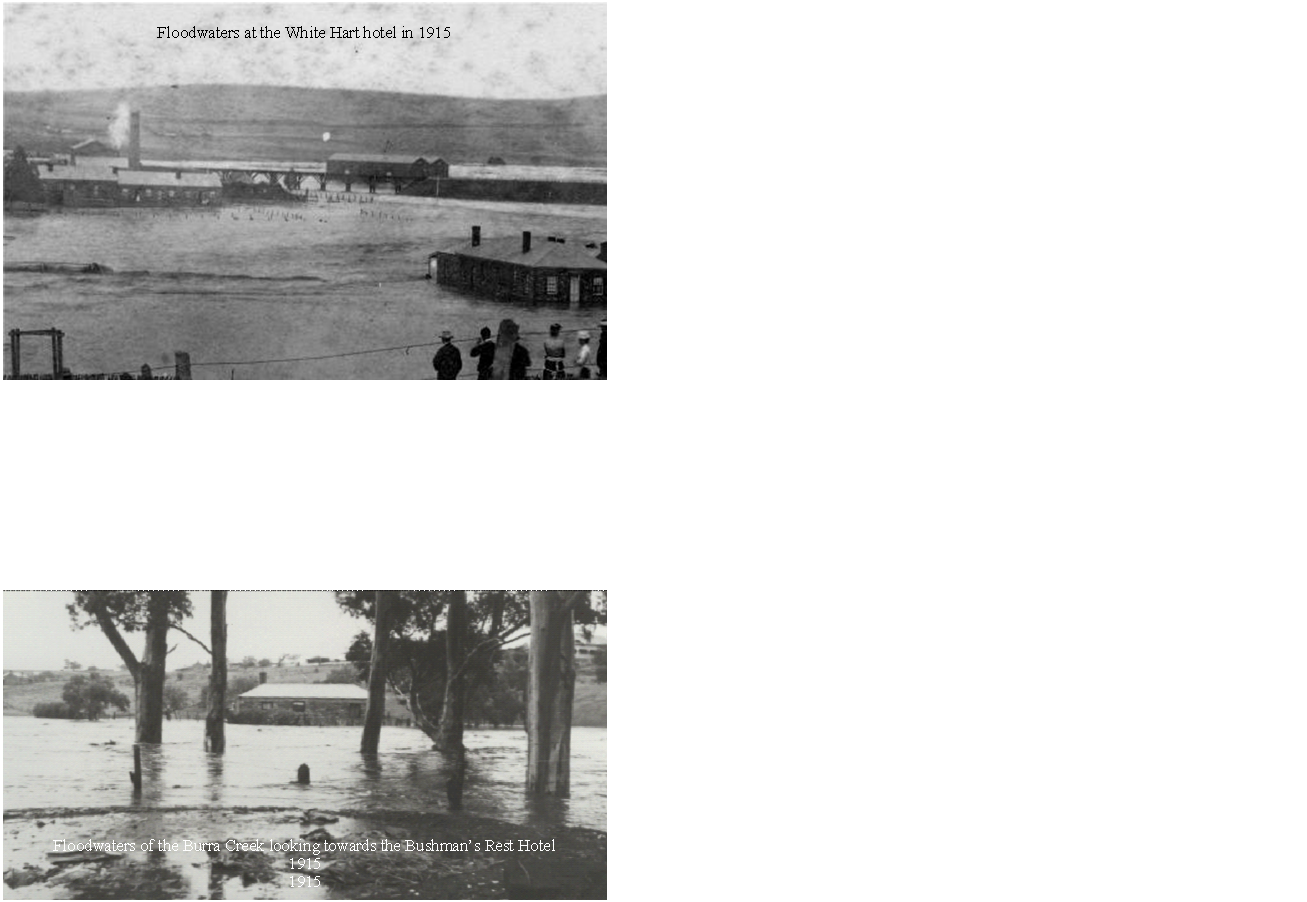
At Aberdeen there was a sheet of water from Opie's Hotel to the new railway embankment and water 2-3 feet deep with a strong current was flowing up the road between the White Hart and the Aberdeen Hotels. Near Tiver's Corner it was 3 feet deep and the Aberdeen Hotel was flooded to several inches. This stream re-entered the main creek between Orchards and the Burra Mill.
7th February 1890 A Thunderstorm
Heavy rain fell at 4.30 a.m. Wednesday in a thunderstorm that delivered 1½inches in about 20 minutes with even heavier falls to the north. Between 8 and 9 a.m. the Burra Creek came down a banker and Mt Bryan Flat was under water for several miles. Low-lying areas of Redruth became a lake and many families were flooded out. The peak came between 10 and 11 a.m. The Temperance Hotel, as well as the Redruth Eating House, the house occupied by Mr Thomas Hall and several others were completely swamped. The premises of J. Tiver and B. Preece were surrounded by water. In Kooringa much damage was done to roads and footbridges. The footbridges opposite the Post Office, behind the Burra Hotel, opposite the Bible Christian Church and near the old Pig and Whistle were all demolished. We have not heard of any personal injury. Ridgways store was flooded as were most houses between Tiver's Corner and the White Hart Ford. The Bank of Australasia was surrounded, but not flooded.
A Summer Storm December 1891.
Last Friday, 11th December, the period of hot dry weather was broken by a shower of rain at noon and then at 4 p.m. thunder, lightning and a severe hailstorm was accompanied by a hurricane wind. Floodwaters threatened many shops. Water entered almost every room in the Burra Hotel and Drew & Crewes large cellar half filled with water. The suddenness of the short downpour caused water tables and gutters to overflow in all directions.
At Mt Bryan Mr Prior’s wheat crop was cut to the ground by hail and wind as if mowed and all surrounding crops suffered badly. (Mr Prior’s crop at Baldina had been destroyed by rabbits.) The Mt Bryan Road was flooded for a considerable distance.
Several houses at Ironmine were unroofed as were several at Baldina.
Mr Forder’s windmill was flattened.
At Baldina, creeks and dams overflowed and saltbush was stripped to twigs, destroying essential summer feed.
J. Morgan lost his roof from three rooms with the iron carried ¼ mile away.
But the storm was very confined with very little rain at Shafton or at Mongolata.
Correspondents reported hail and storm damage as follows:
Mt Bryan – severe with a fall of 1.10 inches in a short time
Hallett – severe crop damage
Koolunga – severe crop damage with hail the size of pigeon eggs.
The Storm of 16th December 1902
The water rushing down the creek near Dr Sangster’s flowed over the Commercial St bridge and then down the street to flood Market Square. The thunder continued to roll and the lightning was the most vivid for years. Footpaths on Market Square were flooded and mud covered the flagstones. Some houses in the lower part of the town were flooded. A washaway on the train line at Yunta delayed the Broken Hill train until late on Wednesday evening. Over 3 inches of rain fell at Springbank.
At Leighton one resident had about 30 turkeys drown and another lost a number of fowls and several settings of eggs. Dead rabbits were left along Burra Creek.
House gutters overflowed into rooms in several places.
A farmer at the west of town lost 20-30 bags of wheat down the creek and another lost several pigs. Around the district the loss of sheep is considerable. Mr Duldig at World’s End had left a plough and scoop in the nearby creek after dam work and the plough was swept 600 yards and the scoop a mile. He lost 6 chains of fencing to rushing water. Over 2 inches fell in the afternoon and another 1inch at night.
A good crop of mushrooms has followed the rain on Flagstaff.
A Storm on 7th September, 1910
A storm on the night of 2nd September began with rain from about 11 p.m. which continued in torrents throughout the night. By Saturday morning the Burra Creek was flowing strongly and by 2 p.m. was the highest for 20 years. The Pig And Whistle footbridge was washed away and a boy who was foolishly about to cross had a lucky escape. About half the footbridge behind the Burra Hotel was swept away. In Aberdeen the waters covered almost the whole of the new oval and much of the country to Mt Bryan was flooded with all traffic suspended. The footbridge at the White Hart was covered and water lapped the doors of Messrs Reed & Gully, but the level soon subsided.
The heavy falls also extended to the east.
At Mt Bryan by the church the flood was over a mile wide.
The Drought Breaks 14th April 1915
After a total of 7.17 inches of rainfall in 1914 and very little more for the first three months of 1915, on the Thursday after Easter a downpour led to all the creeks running a banker and the flooding of premises. The flood began to be compared with the great flood of 1874 and was generally reckoned to be bigger. About 1.70inches fell in the day and by 9 a.m. the next day 1.95inches had been recorded. The flood swept away footbridges at the Burra Hotel and at the Pig and Whistle. The Commercial Hotel cellar was filling up and water was pouring through S. Burns’ shop, through Bagot, Shakes and Lewis’s Office and at E.J. Harris’s they were fending it off with brooms. A number of private bridges also went and Mrs Howell had to be carried out of her cottage. In Aberdeen there was a lake from the railway line to the Racecourse. W.B. Page took a great photo from the railway line near the Bon Accord Hotel, with Mr Robertson’s house in the foreground and Drew & Crewes’ bulk store surrounded and a great mass of swirling water under the Bon Accord Bridge.
Robertson’s was quickly flooded. The two ladies took refuge on the windowsill, feet dangling in the water, till swimming snakes made them turn around and close the window. When their predicament was noticed Mr. Queale was sent for. Mr Shakes tried to get to them, but was almost swept away at the footbridge leading to the house. Mr McKeogh swam out to them. They were eventually reached from the Copperhouse side and rescued on horseback by M.C. Queale, W. Field, C. Rabbich, F. Highett and Shakes. Damage to the house is estimated at £150.
Co. corner, at the foot of Flagstaff were absolutely covered by flood waters.
The Farrell Flat-Clare road was also water covered for quite some distances and some of the holes and washaways were very bad. Early Sunday morning, Burra Badminton players struck ‘mud’ trouble between Auburn and Manoora. It’s not too good at all at that hour of the morning. Many farmers have been bogged in their own backyards. However, a few fine days like yesterday will son dry up the country roads. Many social functions throughout the area have suffered considerably through these wet, cold and rough conditions.
61
A Summer Storm December 1891.
Last Friday, 11th December, the period of hot dry weather was broken by a shower of rain at noon and then at 4 p.m. thunder, lightning and a severe hailstorm was accompanied by a hurricane wind. Floodwaters threatened many shops. Water entered almost every room in the Burra Hotel and Drew & Crewes large cellar half filled with water. The suddenness of the short downpour caused water tables and gutters to overflow in all directions.
At Mt Bryan Mr Prior’s wheat crop was cut to the ground by hail and wind as if mowed and all surrounding crops suffered badly. (Mr Prior’s crop at Baldina had been destroyed by rabbits.) The Mt Bryan Road was flooded for a considerable distance.
Several houses at Ironmine were unroofed as were several at Baldina.
Mr Forder’s windmill was flattened.
At Baldina, creeks and dams overflowed and saltbush was stripped to twigs, destroying essential summer feed.
J. Morgan lost his roof from three rooms with the iron carried ¼ mile away.
But the storm was very confined with very little rain at Shafton or at Mongolata.
Correspondents reported hail and storm damage as follows:
Mt Bryan – severe with a fall of 1.10 inches in a short time
Hallett – severe crop damage
Koolunga – severe crop damage with hail the size of pigeon eggs.
The Storm of 16th December 1902
The water rushing down the creek near Dr Sangster’s flowed over the Commercial St bridge and then down the street to flood Market Square. The thunder continued to roll and the lightning was the most vivid for years. Footpaths on Market Square were flooded and mud covered the flagstones. Some houses in the lower part of the town were flooded. A washaway on the train line at Yunta delayed the Broken Hill train until late on Wednesday evening. Over 3 inches of rain fell at Springbank.
At Leighton one resident had about 30 turkeys drown and another lost a number of fowls and several settings of eggs. Dead rabbits were left along Burra Creek.
House gutters overflowed into rooms in several places.
A farmer at the west of town lost 20-30 bags of wheat down the creek and another lost several pigs. Around the district the loss of sheep is considerable. Mr Duldig at World’s End had left a plough and scoop in the nearby creek after dam work and the plough was swept 600 yards and the scoop a mile. He lost 6 chains of fencing to rushing water. Over 2 inches fell in the afternoon and another 1inch at night.
A good crop of mushrooms has followed the rain on Flagstaff.
A Storm on 7th September, 1910
A storm on the night of 2nd September began with rain from about 11 p.m. which continued in torrents throughout the night. By Saturday morning the Burra Creek was flowing strongly and by 2 p.m. was the highest for 20 years. The Pig And Whistle footbridge was washed away and a boy who was foolishly about to cross had a lucky escape. About half the footbridge behind the Burra Hotel was swept away. In Aberdeen the waters covered almost the whole of the new oval and much of the country to Mt Bryan was flooded with all traffic suspended. The footbridge at the White Hart was covered and
62
water lapped the doors of Messrs Reed & Gully, but the level soon subsided.
The heavy falls also extended to the east.
At Mt Bryan by the church the flood was over a mile wide.
The Drought Breaks 14th April 1915
After a total of 7.17 inches of rainfall in 1914 and very little more for the first three months of 1915, on the Thursday after Easter a downpour led to all the creeks running a banker and the flooding of premises. The flood began to be compared with the great flood of 1874 and was generally reckoned to be bigger. About 1.70inches fell in the day and by 9 a.m. the next day 1.95inches had been recorded. The flood swept away footbridges at the Burra Hotel and at the Pig and Whistle. The Commercial Hotel cellar was filling up and water was pouring through S. Burns’ shop, through Bagot, Shakes and Lewis’s Office and at E.J. Harris’s they were fending it off with brooms. A number of private bridges also went and Mrs Howell had to be carried out of her cottage. In Aberdeen there was a lake from the railway line to the Racecourse. W.B. Page took a great photo from the railway line near the Bon Accord Hotel, with Mr Robertson’s house in the foreground and Drew & Crewes’ bulk store surrounded and a great mass of swirling water under the Bon Accord Bridge.
Robertson’s was quickly flooded. The two ladies took refuge on the windowsill, feet dangling in the water, till swimming snakes made them turn around and close the window. When their predicament was noticed Mr. Queale was sent for. Mr Shakes tried to get to them, but was almost swept away at the footbridge leading to the house. Mr McKeogh swam out to them. They were eventually reached from the Copperhouse side and rescued on horseback by M.C. Queale, W. Field, C. Rabbich, F. Highett and Shakes. Damage to the house is estimated at £150.
63
64
posts, strainers and the harness and lorry at the ford. Sara & Co had their benzine magazine flooded and their chaff shed was 3feet deep in water.
News from Mt Bryan and Hallett is scarce, but falls there were heavy. At Leighton falls were light only and at Baldina only 1.64inches fell, but floodwaters came down the creek. Barker Bros. lost 60 sheep and A.G. Gebhardt of Mackerode lost 40. At Hogback the flooding was severe and at King’s Well the torrent was half a mile wide and 4inches deep. Several miles of the Eastern Telephone line are washed away. Clearly much fencing has been lost. There are also further sheep losses.
Floods. 1st June 1921
Last Saturday steady rain set in with an east wind and on Sunday the wind changed to southwest about noon and very heavy rain followed. The rain was particularly heavy to the west and the creek in West Ward rose rapidly. As in 1915 it broke out near Mrs Howell’s residence and rushed down Commercial St flooding shops and dwellings. C.J. Pearce’s was flooded from the back. In Commercial Street the premises of A.J. McBride, Bagot, Shakes & Lewis, C. Parks, Glenister & Sams, George Lawn and Bennett & Fisher were flooded to varying degrees. Mr Lawn fared worse with a cellar full of water and damage estimated at £40. On the other side of the street only Eyes & Crowle were affected. The water then rushed down Chapel and Thames Streets. The flood in Thames Street was particularly high. Spray rose feet into the air where the West Ward Creek meets the Burra Creek. The only bridge carried away was near Mr Bowen’s residence. Debris including large logs and a 100 gallon tank of Mr Howell’s was found when the water receded. Damage was also done at crossings on the road south. At Koonoona 4.40 inches was registered for the week with similar falls at Leighton. There were also good falls to the east. Varying from 75 points to 210 points. Henry Hopkins, youngest son of Mrs C. Rogers of Bewley’s [The Cactus Farm], was almost drowned when his horse was swept onto its side pinning him and kicking him in the head. He was rescued by his brother and stepfather
Wind, Rain, Hail and Snow (8th -15th August 1960)
During the past week rain fell every day and as well as wind snow and hail storms. Creeks throughout the district were running strongly and many roads made impassable.
On Thursday, accompanied by bitterly cold conditions, a rather heavy hail storm hit the district, followed by a snow fall. Although not particularly heavy in Burra, it was more severe further North at Mt. Bryan, Hallett, Peterborough etc. The temperature at Burra was 36 degrees (2.20C).
The Burra Creek and all its little tributaries were running strongly for the greatest part of the week. This is the fourth occasion this season that the Burra creek has been running. On Friday the water ran over the top of the ford at the Pig and Whistle crossing this being the first time for a number of years.
The majority of the roads throughout the district are in a very bad state owing to the constant wet weather and continual traffic.
Many of these roads were rendered impassable for a period during the heaviest rains. The Burra-Hallett road and Hanson-Farrell Flat road have been greatly affected by stretches of water and potholes. Both district roads are just quagmires.
In the early hours of Saturday morning the roadway and nearby paddocks at Cobb and
65
Co. corner, at the foot of Flagstaff were absolutely covered by flood waters.
The Farrell Flat-Clare road was also water covered for quite some distances and some of the holes and washaways were very bad. Early Sunday morning, Burra Badminton players struck ‘mud’ trouble between Auburn and Manoora. It’s not too good at all at that hour of the morning. Many farmers have been bogged in their own backyards. However, a few fine days like yesterday will son dry up the country roads. Many social functions throughout the area have suffered considerably through these wet, cold and rough conditions.
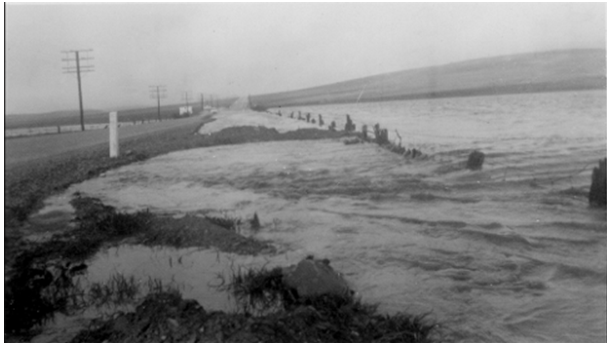
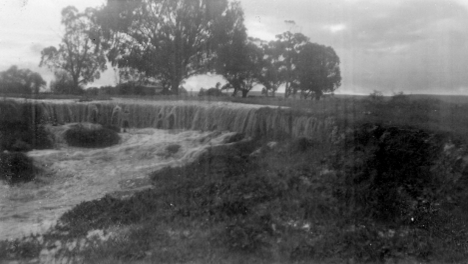
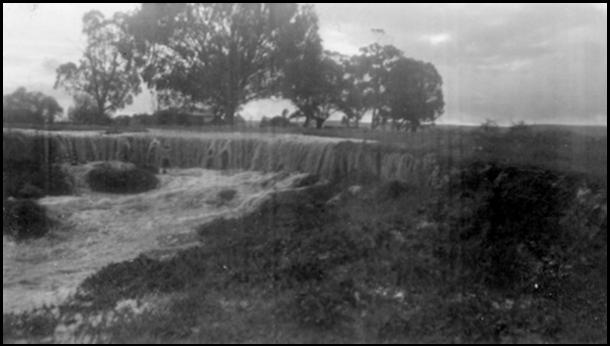
Above and below: Floodwaters crossing the Adelaide Road near Burra
13th September 1960
Above and below: Floodwaters crossing the Adelaide Road near Burra
13th September 1960
66
Flash Flood Inundates Burra 2nd March 1983
Thursday morning saw the clean up operation of the streets and houses begin in earnest. The midday weather report, which predicted further storms to hit during mid-afternoon put police and S.E.S. members on full alert and 250 sandbags were filled in readiness. At 3.00 p.m. a violent tropical thunderstorm unleashed 24mm (95 points) of rain and hail on Burra in 45 minutes. Flooding was extensive throughout Burra and at one stage 25 S.E.S. volunteers were working furiously protecting houses in Tregony Street, Burra
North. During this operation two S.E.S. volunteers were swept down the watercourse suffering minor cuts and bruises.
At the peak of the storm, Police ordered that children were to remain at school until the danger had passed. School was dismissed 50 minutes later than normal. A 1000-gallon tank that had been picked up by floodwaters was smashed against the Ayres Street Bridge and reports of damage to roads including the new bitumenised road to the Redruth Gaol and the new bike track were received. Friday morning saw yet another storm, which hit at approximately 5.30 a.m. Twenty S.E.S. members and Police reported to the makeshift headquarters at the Council Office but only minor flooding, was experienced.
Controller of the S.E.S. in Burra, Des James said that the townspeople had rallied together extremely well to combat the common crisis. Thirty-five townspeople registered with S.E.S. as volunteers giving valuable help to the fifteen S.E.S. members. The response from business houses with food and drink was excellent and much appreciated by the volunteers. The ladies of S.E.S. welfare were hard at work throughout the crisis preparing soup, food and hot and cold drinks.
Burra Broadcaster: 23rd February 2000 Rains Cause Havoc in Burra
Rainstorms which hit Burra on Monday 21st February dropped 26mms. On the town in a relatively short time, causing localised flooding.
The Burra Art Gallery had problems with water coming in, Décor Made Easy had an area flooded when a drain blocked and several residences were also reported to have had water damage.
Peter Harvey, Chairman of the Art Gallery Board said the run-off down the hill behind the Gallery was immense, adding to the problems. The Royal Exchange-Best Place intersection also experienced problems when drains were unable to handle the volume of water. SES and the MFS were both out assisting people and businesses affected by the flooding.
67
Amidst it all, a covered truck and trailer parted company at the intersection of Chapel and Commercial Streets, blocking traffic and requiring assistance in being re-connected before continuing its journey.
Two hours later, the sun was shining and the skies were blue.
Burra Broadcaster: 27th Aug. 2003 Rough Weather Hits Burra
Some wild weather hit Burra over the weekend of 23rd and 24th August, resulting in minor flooding a power blackout to some areas and uprooting of a tree in Queen Street. According to locals, it would be five or six years since the Burra Creek has flowed but over the weekend, it had plenty of brown muddy water flowing through the town and submerging ford crossings.
With the rains being widespread (and generally being in the order of two inches over the past 4-5 days), the Burra Creek was also fed with flows from Springbank Creek in the south and from Firewood Creek to the north.
The power blackout occurred during quite a violent electrical storm early on Saturday morning and involved areas to the north of the town as well as some areas right in the town.
The uprooted tree in Queen Street is a bit of a mystery but presumably blew down during the weekend.
Burra Broadcaster 18th January 1995
New Year Floods Again
Last Saturday Burra and the surrounding districts were deluged with more than 100mm (4 inches) of rain.
Reports of over 150mm have come from the Leighton and Gum Creek areas, which devastated fences and gave farmers plenty to do rescuing stock from the floodwaters.
Burra’s Commercial Street fared worst hit in the town this time, when an inch of rain hit the catchment area feeding the creek that runs past the hospital in a 15-minute period around 4pm. The floodwaters covering the Adelaide Road entrance to Burra were only passable to the biggest vehicles, like road transports.
Businesses along the south of Commercial Street from Dollman’s Garage to Elder’s virtually all had some water inside. Other shops and private residences on Commercial, Thames and Chapel Streets received water damage.
Des James of the Department of Roads and Transport said Burra-Robertstown, Burra-Morgan and the Barrier Highway at Burra-Mt. Bryan floodway and south of Hallett were all closed at various stages.
‘Only last week the extensive storm damage to the Burra-Robertstown Road was repaired,’ he said.
Des congratulated the DRT employees on their non-stop efforts from 9am Saturday to 8pm Sunday night and thanked the whole community for their help and cooperation.
Burra Council is convening a special works meeting this week to deal with repairs and clean-up.
68
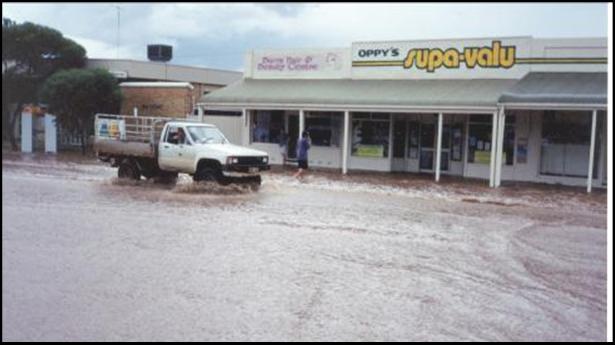
A flood in January 1995 rushes down Commercial Street Burra
Constable Martin Lunn and Des James at one stage had to convey a distressed mother and baby through the floodwaters at the Adelaide entrance to Burra.
Many of those affected by the floods praised the SES, all the helpers and controller Andrew McInnes on their efforts. Many locals pitched in to help with sandbagging in case more floodwaters hit
Someone even suggested there were a lot of potential emergency service personnel helping out who may be considering joining and learning additional skills for the future.
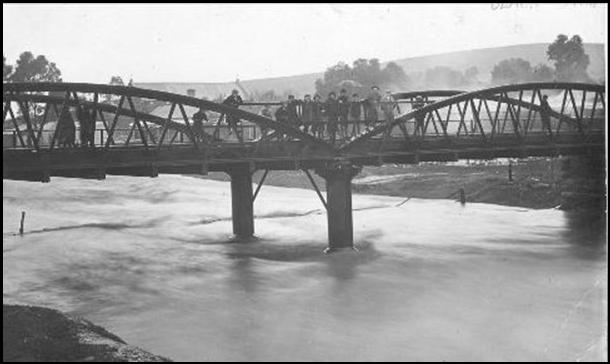
The Kooringa Bridge with the Burra Creek in full flood below
1910
69
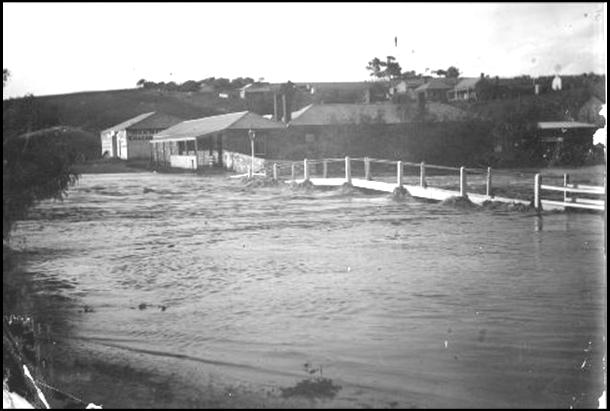
Floodwaters at a Burra Creek crossing with the White Hart Hotel in the background
1910
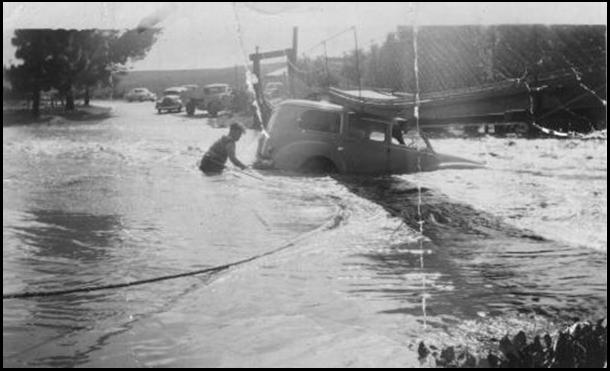
Floodwaters at the same White Hart Ford in the 1940s
Note the swing bridge that replaced the previous footbridge.
70
71
72
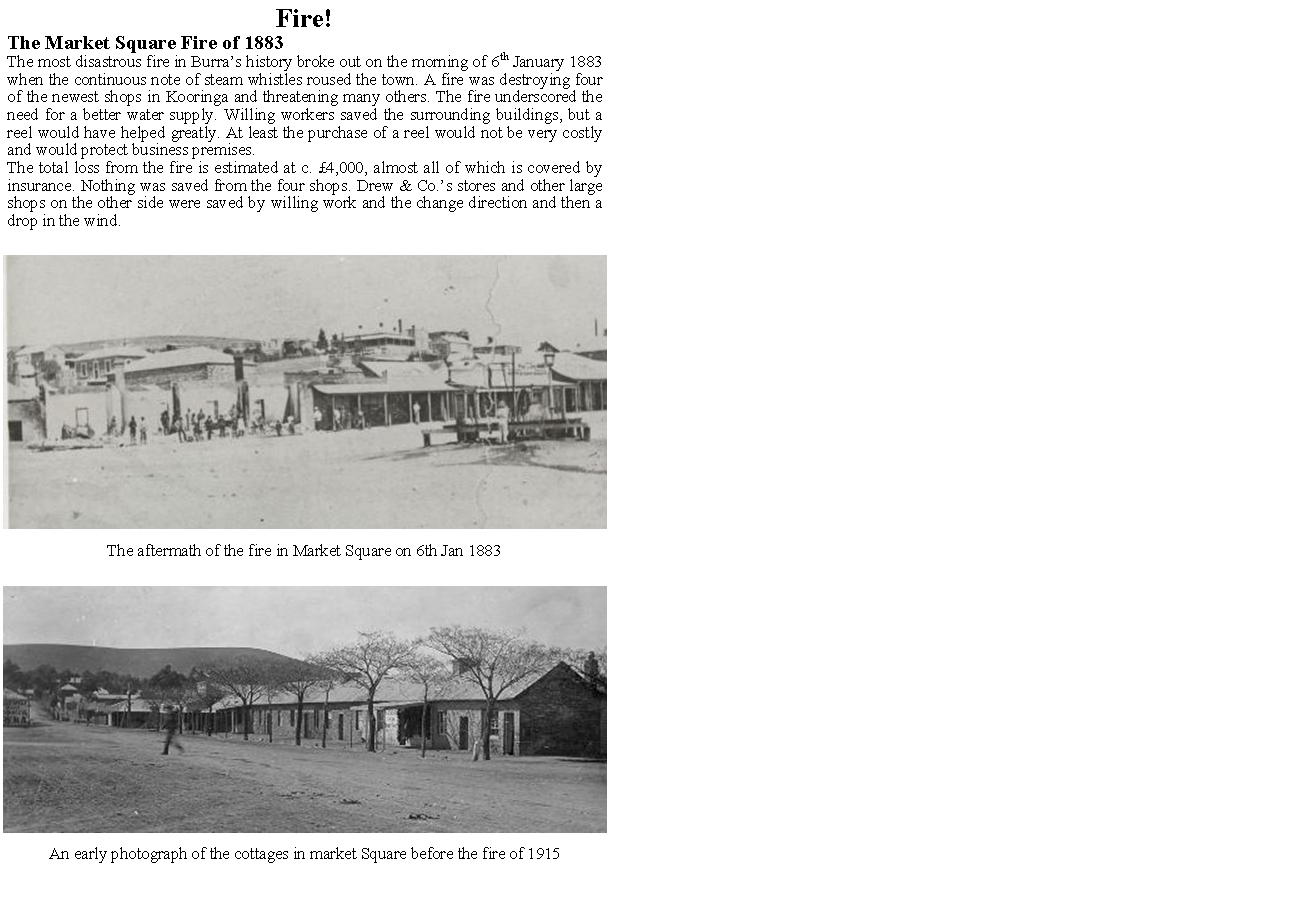
A Serious Conflagration 1915
The most serious conflagration which has occurred in Burra for a considerable number of years took place last week when the row of old stone buildings forming the south-eastern boundary of Market Square and belonging to Messrs Walker & Sons were completely gutted. About 11.30 on Tuesday, night, 2nd March the alarm was given by Mr. Harrap and although assistance was almost immediately forthcoming the flames had so great a hold that, without proper appliances it was impossible to check their advancement.
The fire evidently started in Mr. J. Allen’s office. Mr. G. Lord, who was one of the first on the scene, almost had the fire under control with a patent extinguisher but the machine became exhausted. The flames were practically subdued in the front room, but the back room continued to merrily blaze away. Mr. A. Walker then had a try with another extinguisher with similar success. Then the crowd got to work with buckets but the supply of water that could be pumped was insufficient to keep the buckets going and finally all efforts were directed to two objectives, viz. to save Pederson and Sons’ boot shop at one end of the row and Harrap’s pie shop at the other. Underneath the iron roof of the burning building right along the row was an old paling roof dry as tinder and once this started there was no stopping it burning without some appliances, a hydrant and hose, with very little exertion, would have confined the fire to the spot where it started. Fortunately Messrs Pederson and Sons had taken precautions in view of such an emergency. The fire was kept back from their roof by a high parapet wall, and they also had a 60ft. hose running from the water supply which, with the strenuous efforts of hosts of willing workers; was sufficient to keep the fire from doing more than some slight injury to the wall and scorching the verandah.
Adjacent to Mr. Allen’s office on the other side the place was occupied by the owners, Messrs Walker and Sons. They had a considerable stock of crockery, tinware and linoleums, etc., in it, which was, practically all destroyed. Then came Mr. Harrap’s private residence. There was no saving this so all the furniture was removed, fortunately with very slight damage, as there was no insurance on it. Across a 12ft. right-of-way was the pie shop. Had it caught there would have been little chance of saving Mr. W. Truscott’s butcher shop or the business place of Mr. E. J. Harris. However, with the aid of wet bags on the roof on which a small hose was kept playing, the fire was confined to the original row of buildings. Nothing but commendation can be expressed for the way the crowd worked. At Pederson and Sons’ the toil was strenuous and to save the pie shop those who held the hose on the roof were subjected to the discomfort of dense clouds of smoke, which were met without flinching. M.C. Queale was active in superintending operations. There were so many good assistants that it would be unfair to particularize.
The contents of Mr. Allen’s office were insured for £30. It also contained the records and guernseys and other property of the Burra Football Club, which were all completely destroyed. The buildings were insured for £500 and Messrs Walker and Son’s stock for £300.
As is well known there have been several previous attempts at incendiarism in Burra during the last few months.
Sept. 27th 1914 at the rear of the same row a fire was started.
Oct 2nd 1914 what looked like an attempt to burn down Mr. F. Harris’s place was made.
Oct 25th 1914 a similar attempt was made in regard to Mr. A. D. McLaren’s shop.
73
Nov 29th 1914 a further attempt was made to burn down the buildings, which were finally wiped out last Tuesday.
In connection with the attempt on 29th Nov. it will be remembered that after the fire was fire burning inside one of the rooms.
There is one thing that stands out prominently, and that is the absolute necessity that the Council should take immediate action regarding the formation of a Fire Brigade or at least that some appliances should be procured. If the fire had occurred amongst the business places on the other side of the street, with a favourable wind the damage would have been simply enormous.
Last Friday 24th January a fire swept most of the farms between Booborowie and the outskirts of Burra covering an area 12 miles long by approximately four miles wide. It was a day with a strong, hot wind raising clouds of dust known as a “brick fielder.”
A little after 10am smoke was seen rising over the hills and shortly after clouds of smoke were rolling over the town with calls for help coming from all directions with Drew and Crewes’ bulk store in danger and Elders Smith’s Saleyards on fire. In places the flames travelled at 30 miles an hour generating an enormous amount of heat igniting fires 50 yards ahead. In the darkness of the smoke and dust fire fighters sometimes lost one another and they and women and children in danger of being suffocated or burnt. The fire swept down on people from all quarters farmers who started out to assist their neighbours found their own properties in danger ten minutes later. An agonising telephone call to Burra “Send help or we’ll be burnt out” was answered with “Everybody’s at the fire, but we’ll try.” Shortly after the telephone rang with the message “Don’t send anyone, we’re burnt out.” It leapt roads and the railway quarry 100 yards wide and continued along Firewood Creek never stopping for a moment. Towards evening the wind dropped and the fire was got under control.
Forty miles away Murkaby Dam was covered with cinders from the fire.
Although no lives were lost, there were some narrow escapes. There was comparatively little loss of stock but harness rabbits and foxes were wiped out by the hundred. At night the country as far as the eye could see was a huge illuminated city of haystacks and fences still burning and at sunrise an appalling scene of black desolation.
It started on O’Dea’s property at Booborowie in a small haystack possibly the result of phosphorus poison in rabbit baits, ignited by the heat of the day. Whilst property owners largely saved their stock, the losses of hay, pasture, fencing, sheds, trees, woodheaps, implements and vehicles was considerable. Most homesteads were saved but some were unfortunately destroyed. In all, this disastrous fire had swept over 30,000 cares of farmland and caused great misery.
Fire at The Burra Mine The Loss of an Historical Landmark
16th December 1925
At 11am on Saturday morning smoke was seen issuing from the top of Morphett’s small engine house and later that short grass close by was alight. The residents in the vicinity quickly put out the grass fire and not realising the seriousness of the one that raged within Morphett’s shaft, never raised the alarm, trying to put it out themselves. Between 2 and 3pm this fire had reached such proportions that to fight it was out of the question and soon not only the small engine house but also the big one over Morphett’s shaft was in flames. The woodwork of enormous dimensions burned like matches and as there was
74
an immense amount, it took some time to burn. Towards midnight quite a crowd had collected to watch the blazing poppets fall, which supported the platform on which the big pulley wheel was fixed, used when the mine was working drawing stuff up and down the shaft.
On this platform 50 feet high stood a life-sized figure of a miner holding a hammer and chisel that always attracted much attention and looked upon with feelings amounting to veneration from Burraites. Many sincere regrets were expressed when in company with the white-hot 5ft. diameter wheel it crashed to the ground. The wheel broke but the figure was not badly damaged. Morphett’s shaft, which is almost under the large engine house, is 600 feet deep and heavily timbered which was burning fiercely. The sight at night of the flames leaping to a great height was very beautiful. The next day with columns of smoke ascending one could hear the heavy timbers falling away and crashing to the water below. It has been alleged that the fire was caused by lads smoking out pigeons that lived in these old buildings. Old miners believe that it will take many weeks for the fire to burn itself out. The only thing left intact is the famed echo, which is as clear as ever.
5th January 1935 Fire Brigade Saves Huge Conflagration
In the early hours of Saturday morning a fire broke out in Mr. Wohling’s hairdressers shop, one of a block of five premises on the North side of Commercial Street, and before the alarm was given, the flames had got complete hold of the entire building and was threatening the buildings on either side. Mr. Frank Pascoe who was awakened by smoke entering his bedroom, lived two doors away from the fire raised the alarm by sprinting to the nearby Fire Station and roused the man in charge Mr. F. Spencer at 3:35am. By now flames could be seen licking up the verandah and a huge telephone pole in the street was well alight.
The blare of the siren roused the townsfolk and soon a large crowd had collected. By 3:45am three big hoses were playing on the fire,” The Record” office and Bowey’s fruit shop. Fortunately there is a fireplug in front of Mr. Pascoe’s and the water pressure was good. The buildings in danger were built 80 to 90 years ago having wooden ceilings and timber shingles beneath the galvanised iron roof added to the difficulty of fighting the fire. In less than 20 minutes it was seen that they were conquering the fire, but as the breeze sprang up flames could be seen in the adjoining roofs. There was no panic water was forced through under the eves absolutely deluging The Record office. Great damage was done to the roof and ceiling in the composing room at the Record being filled with water and destroying all the newspaper copy for Monday.
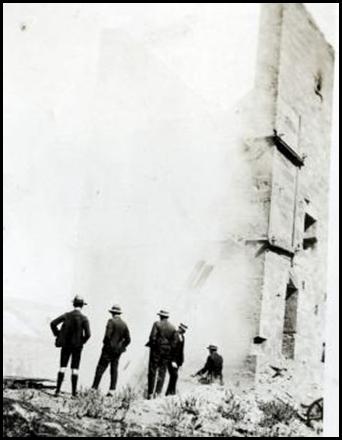
75
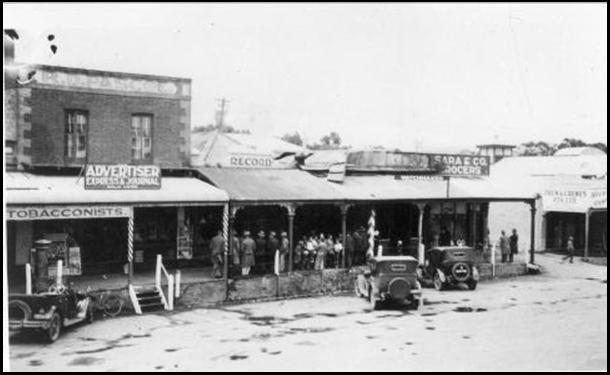
It was while some of the men had a large hose playing on the rear portions of the five shops that Mr. P. Byrne a firemen and Mr. Ron Burt each received severe shocks by coming in contact with live wires and were thrown heavily. The thoroughness of the firemen saved the rear room of Bowey’s although the long room alongside Wohling’s was destroyed Needless to state not a thing was saved in Wohling’s as the front and middle portion of the premises were a roaring inferno when the Brigade was called. The total damage caused is estimated to be £2000. We must reiterate the work of the four local firemen who by their magnificent work and wonderful grasp they got of the situation have caused an intense feeling of confidence amongst residents, especially business folk as this fire was one of the biggest for many years and could easily have ended in a terrific conflagration.
76
Fire in 1910
The photo above shows the possessions that were hastily removed during a fire in Market Square in March 1910. During this fire the office of the Burra Record, the local newspaper was destroyed, putting it out of action for about three months. During 1914 and 1915 a fire bug lit several fires threatening business premises in Kooringa and Redruth and still there was no fire brigade in the town.
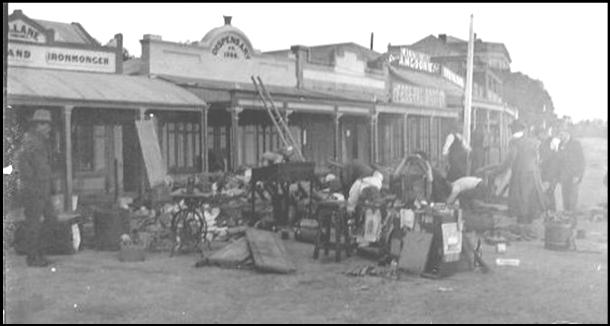
Fire at S M Lane’s Saddler and Ironmonger Shop 1910
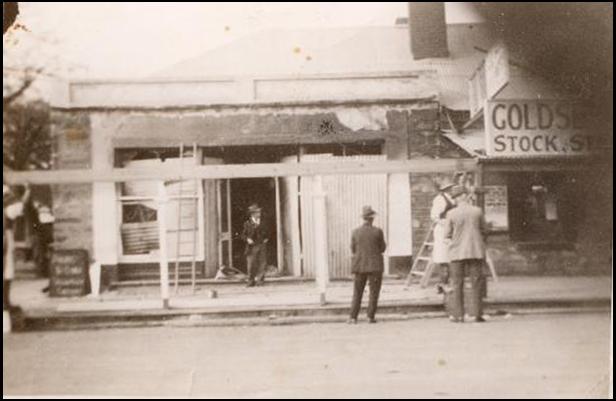
Fire at bakery c1930s
77
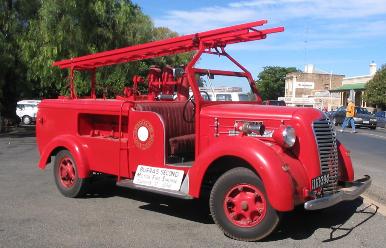
Burra’s second motor fire engine a 1936 Diamond T.
The Fire Station - 1922
As early as 1877 after fire destroyed Mr. Dunstan’s house in Redruth and later in 1878 and 1879 after the loss of The Commercial Hotel and the Miners Arms Hotel in separate fires, there were calls for a town fire station. The Mine fire engine had been called out to these incidents but because it had a considerable distance to travel, arrived too late to be of much use. In 1877, Captain Sanders had offered the mine engine with horses and harness, but wanted the town to provide proper uniforms for volunteers and a small sum annually to maintain the engine and hoses. These calls went unheeded despite the destruction of the Pig and Whistle Inn by fire, a fire at the Aberdeen Hotel, and serious fires in Market Square in 1883, 1910 and again in 1915.
Tenders were eventually called by the Town Council for the erection of a fire station in 1921, and again in 1922, only to see both tenders being rejected because, at a cost just over £300, they were considered to be too expensive. In 1922 after much debate, the Town Council did borrow the money to build this fire station with the fire bell from the Police Station being transferred to this site. The premises were rented by the Metropolitan Fire Brigade at a cost of £18 per annum. The fire engine was a second hand one that had previously been used by them in Adelaide.
References:
The Story of the Monster Mine Ian Auhl
The Burra Record
The Northern Mail
78
SNOW IN BURRA
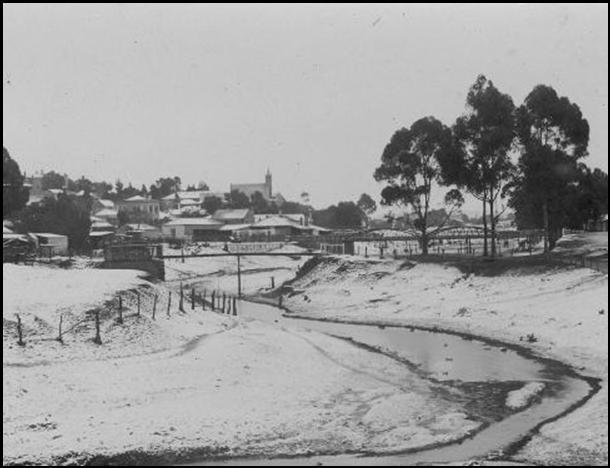
A view of the Burra Creek Kooringa
1901
79
SNOW IN BURRA
Besides its hot dry summers with frequent dust storms and droughts, the Burra district has recorded winter frosts and occasionally snow storms, sometimes at most unseasonable times. The first recorded snowfall being in September 1878. Here are a few examples from reports in The Burra Record, the local newspaper of the times.
Weather. 13 July 1888
‘We experienced a beautiful fall of snow this morning which clad everything in whiteness. Such a sight is rarely, if ever before, seen here.’ [sic]
There was some nice rain yesterday, but it was not general.
24 July 1895
Snow began to fall about 9.40 p.m. on Friday last and soon covered the surface. Few saw it, as the night was very dark. The fall was preceded by boisterous weather and rain. On Saturday a second fall at about 6.30 a.m. was generally seen and many a snowball fight ensued. A heavy fall was reported from Mt Bryan.
White Sunday - Burra’s Greatest Snowstorm 27th July 1901
Snow began falling at 9am on Saturday 27th and continued all night and fell intermittently until mid-day on Sunday, when the sun peeped through and the snow melted. Snow was three feet deep up against some of the buildings and walls and the whole country is described as having looked like a Christmas card. ‘Every man, woman and child could be seen either snowballing or participating in the fun provided by others.’ At one time fully fifty persons were engaged in Market Square. A local disapprovingly reported that ‘a prominent citizen allowed himself to be buried in snow on a neighbouring mountain’ and that Sabbath decorum was ‘at a discount’, religious services were poorly attended and one of the collections was the smallest on record. The highlight of the day was when some of our grandfathers collared one of the local policemen and gave him a thorough rolling in the snow.
In Redruth near the reserve Messrs Lowe, Goodwin and company produced a ball about 10’ in diameter and some 15’ high. Alongside some buildings drifts 3’ deep accumulated. Snow continued to fall at intervals – the largest flakes about midday, but from then on the ‘great and glorious sight’ commenced to fade away. Some snowballs remained till rain on Monday afternoon. The fall was widespread and the creek was flowing strongly on Saturday night. The shade temperature on Sunday was 34-40°F.
Snow. 24th June 1908
It was bitterly cold on Sunday with a heavy fall of snow on Monday morning. Small fry indulged in snowballing and so did old fry. Snowmen were manufactured. One misdirected snowball broke a window of Stan Lane’s shop in Market Square. Many horse baulked completely at the white surface. By about 9 a.m. the thaw was general, though some remains on the hills in places yet. About 2 p.m. a very heavy fall occurred, but by then the ground was too warm to retain it.
80
Tues. 30th June 1908 – Snow on the Burra hills with a record fall at Mt. Bryan. Burra Creek froze over in the town sufficient to support children
A.J. Cousins’ Funeral, 3 Oct. 1923 was a most unenviable experience due to the appalling weather. On Sunday 30th Sept. when the hearse arrived at Booborowie snow was falling heavily. The cortege, comprising 22 buggies and 11 motorcars, left for Burra, twenty miles away, at 9.30 a.m. and had to endure snow and then fiercely driving hail and rain. Twice the horses stopped and refused to face the elements. In all, the journey took five hours. Amazingly, to the east of Burra the country is still enveloped in dust with no rain of significance having fallen.
Inch of Rain, Hail and a Fall of Snow 22nd July 1969
It certainly gave one the impression yesterday that winter is with us. An inch of rain with some hail and fairly heavy snow falls were reported throughout the district.
Rain commenced at about 5pm on Sunday afternoon accompanied by heavy hail at about 3am
At 7.10am yesterday snow began to fall and by 7.30 had become quite heavy. The fall continued until 8.15, when the whole countryside was blanketed in white.
The Burra township surrounded by snow-covered hills, looked like a picture against the dark cloud formation at the time.
At Hallett a two-three inch covering of snow reached as far as the eye could see and the same applied to Mount Bryan where snow still topped the mountain late into the afternoon.
Snow falls were also reported from Clare, Mintaro, Whyte Yarcowie, Booborowie and Farrell Flat where a further light fall was seen at about 2.30pm.The earlier fall here melted fairly quickly but along the hills on the Farrell Flat – Booborowie road it remained solid for sometime.
The main street of Burra carried a 3-4 inch covering which, when churned up by the vehicular traffic looked quite a mess until it gradually disappeared.
Mr. George Fairchild, travelling via Leighton on his Booborowie mail run, said the snow was very thick on the road between Leighton and Burra and it was still packed tight along the bumper bar of his utility when he reached the town.
This would appear to have been the heaviest fall of snow for many years. Some say for at least 40 years and others are prepared to argue that it is the heaviest since the great fall on July 28th 1901.
81
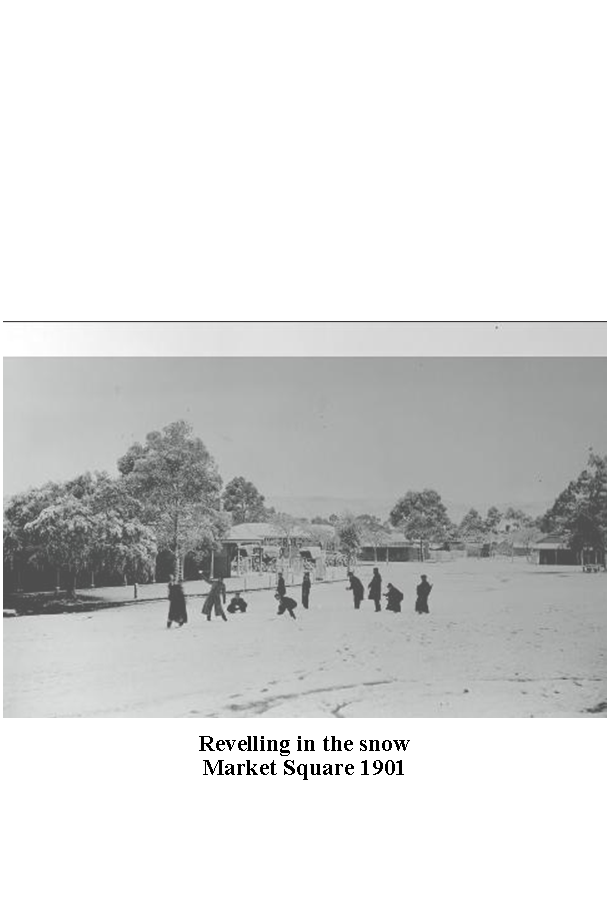
82
BURRA’S HOTELS
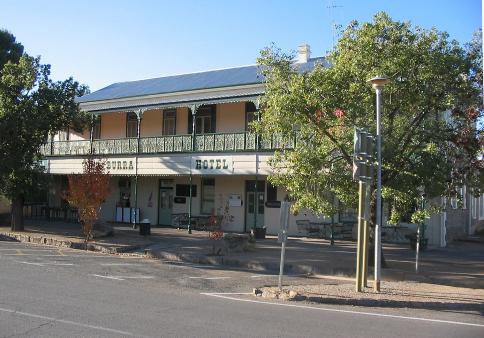
Burra Hotel formerly the Miners’ Arms
2007
83
84
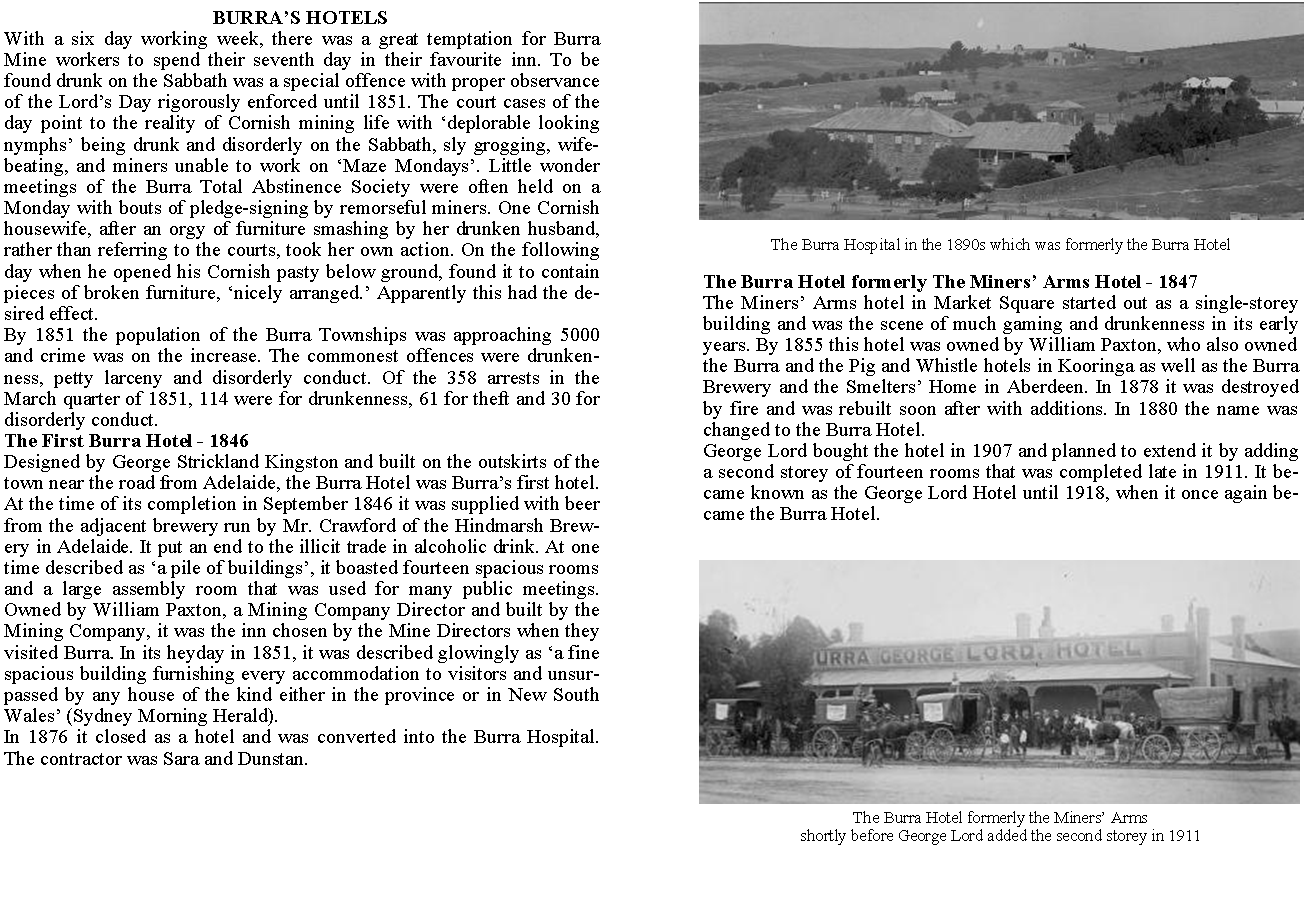
85
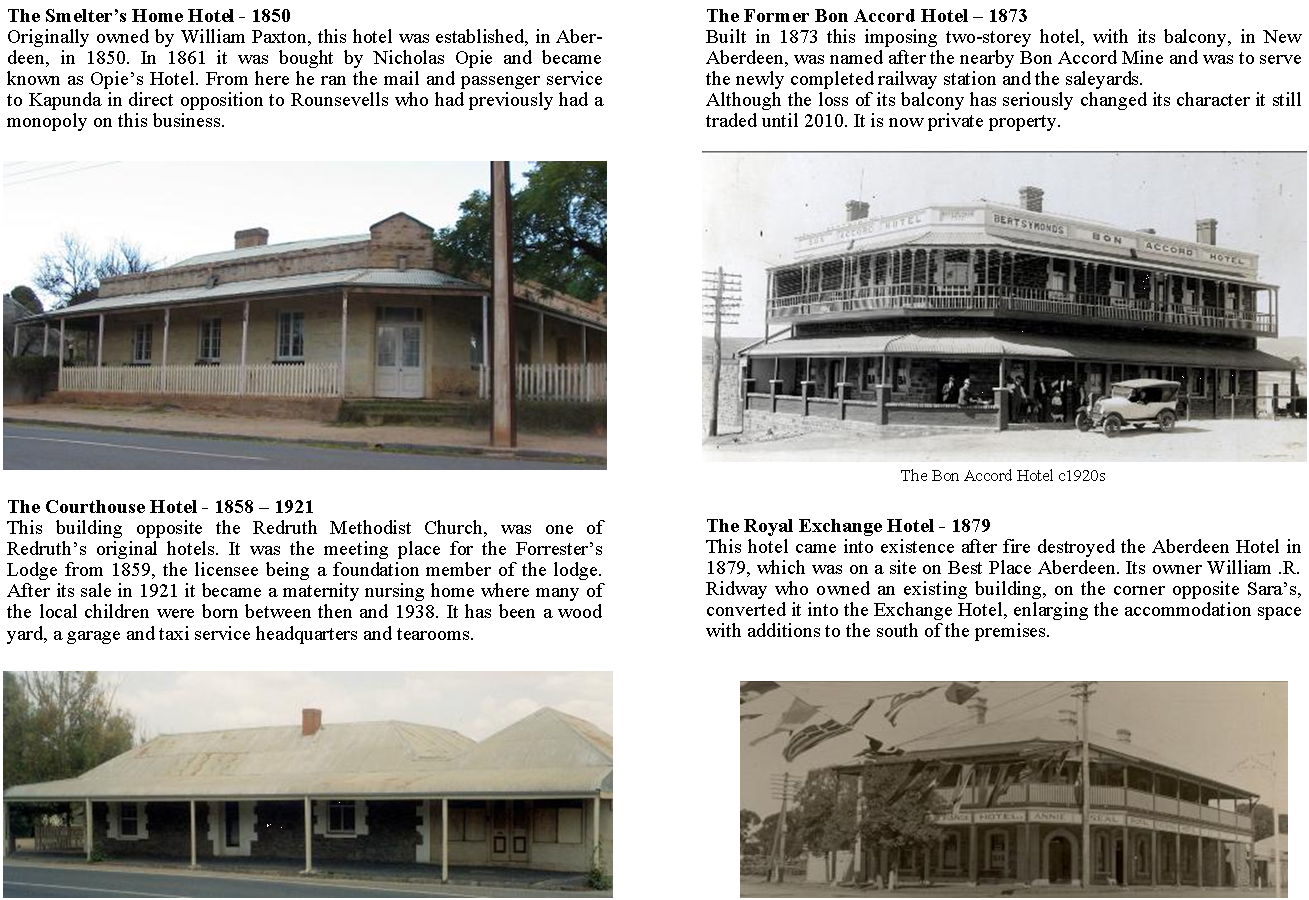
86
87
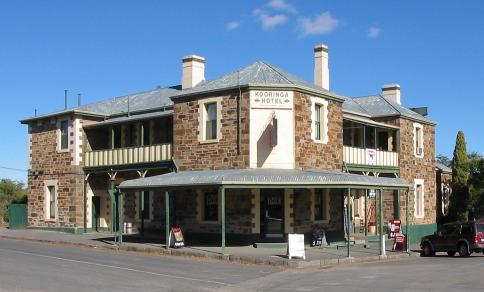
The Former Kooringa Hotel – 1884
This building, on the corner of Welsh Place and Kingston Street, was built by the owner of the Unicorn Brewery, Edward Lockyer. It is built on the site of the Church of England Grammar School from 1864 to 1873, which took over what had formerly been the Welsh Chapel, built in the 1850s. The old Welsh Chapel was demolished in 1884 to make way for the hotel. The exterior of the building, as seen today, has changed little since its completion in 1884 and it is a fine example of the architecture of that time. It closed its doors as a hotel in 2012.
The Vanished Hotels of Burra
The Aberdeen Hotel - 1850
This hotel built in 1850 was destroyed by fire October 1879 and although it was not replaced, its owner purchased a building nearby in Best Place and established the Royal Exchange Hotel.
The Bushman’s’ Home
This hotel in Redruth, next to the Redruth Wesleyan Church, was owned by Nicholas Opie from 1857 to 1861.
The Kooringa Hotel
2006
88
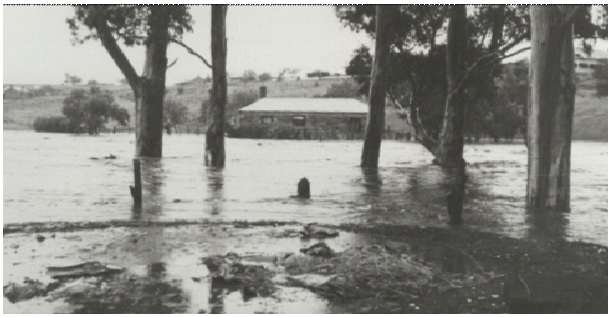
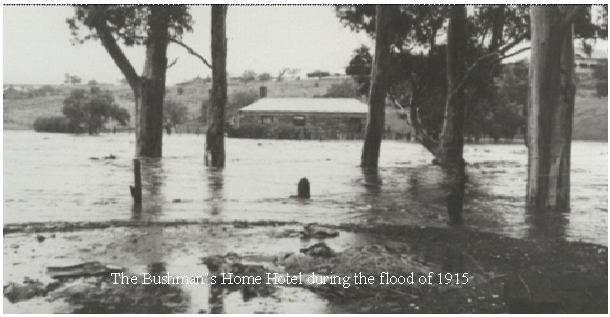
The Bushman’s Home Hotel during the flood of 1915
The Racecourse Hotel 1859 - 1896
This hotel in Lostwithiel, one of the small townships to the west of the Burra Mine, was as the name suggests close to the racecourse.
The White Hart Hotel – 1851
This hotel, in Aberdeen on the eastern bank of the Burra Creek, was built in 1851. It comprised 22 rooms and was a booking office for the North Eastern Coach Line for several years around 1876. It became the Temperance Hotel in 1887 and was a boarding house in 1891. In 1916 when it was destroyed by fire, it was owned by James Reed, used as the home of Mrs. A. Sara, who had allowed the Boy Scouts to use some of its rooms for their meetings. It has since been demolished.
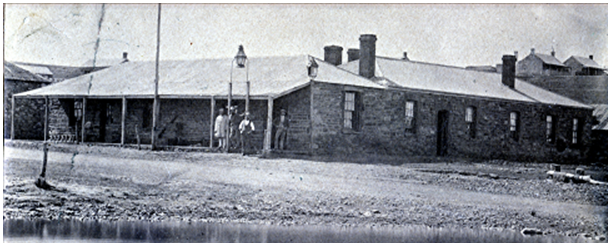
The White Hart Hotel after the flood of 1910
89
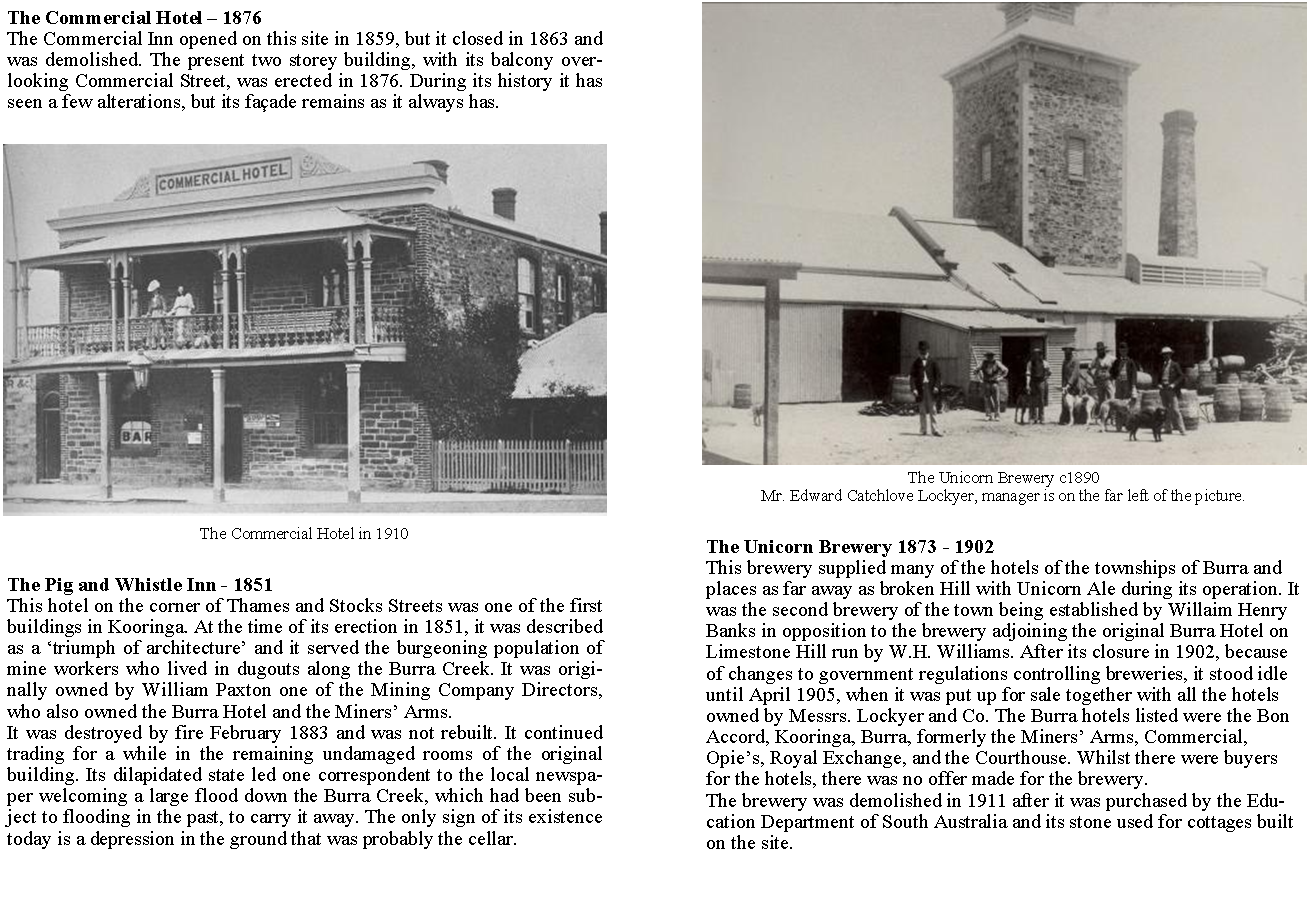
90
91
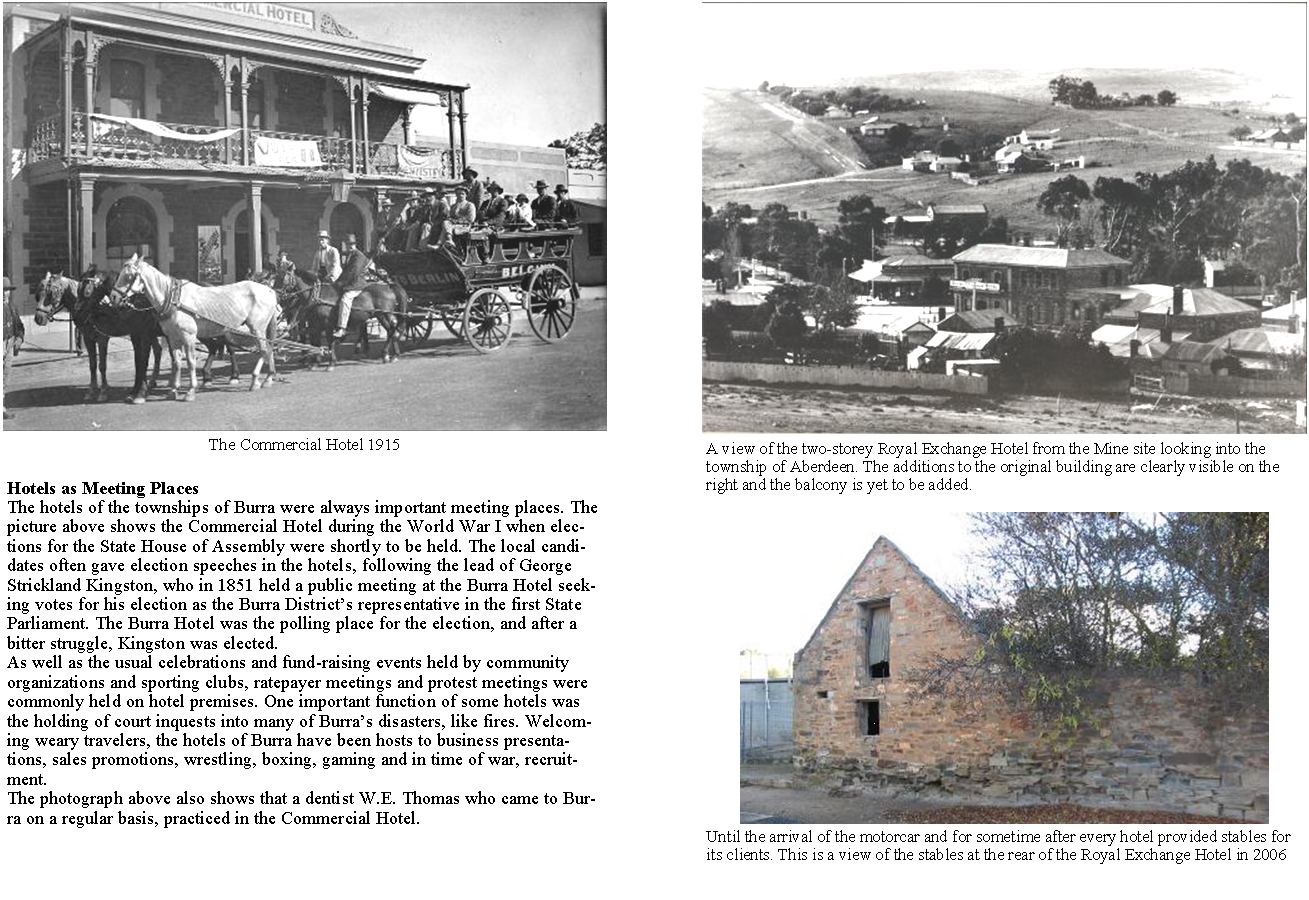
92
93
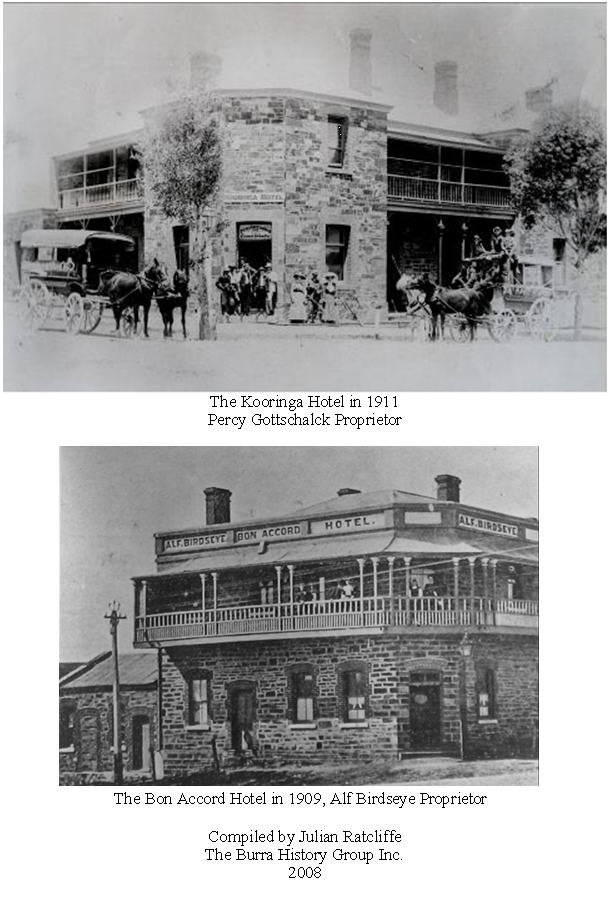
94
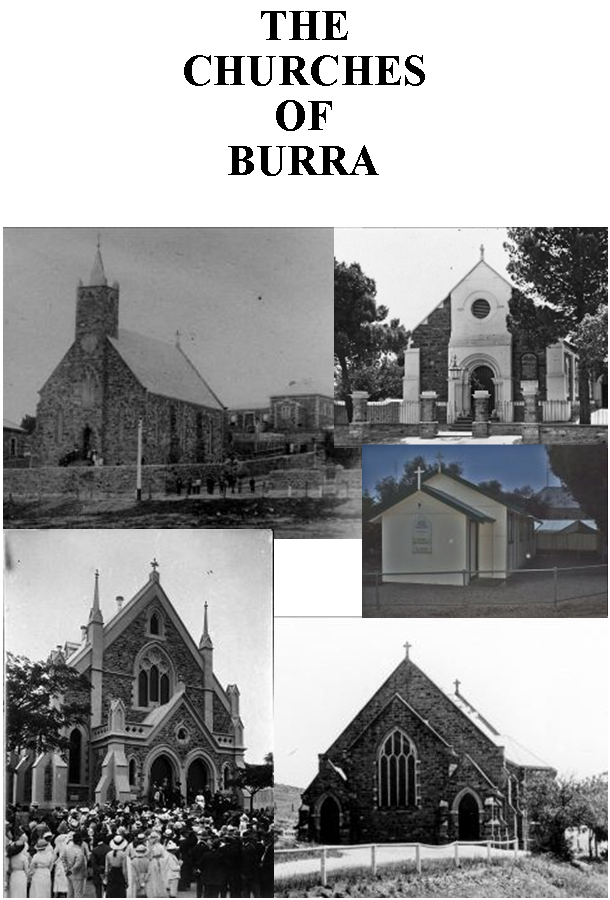
95
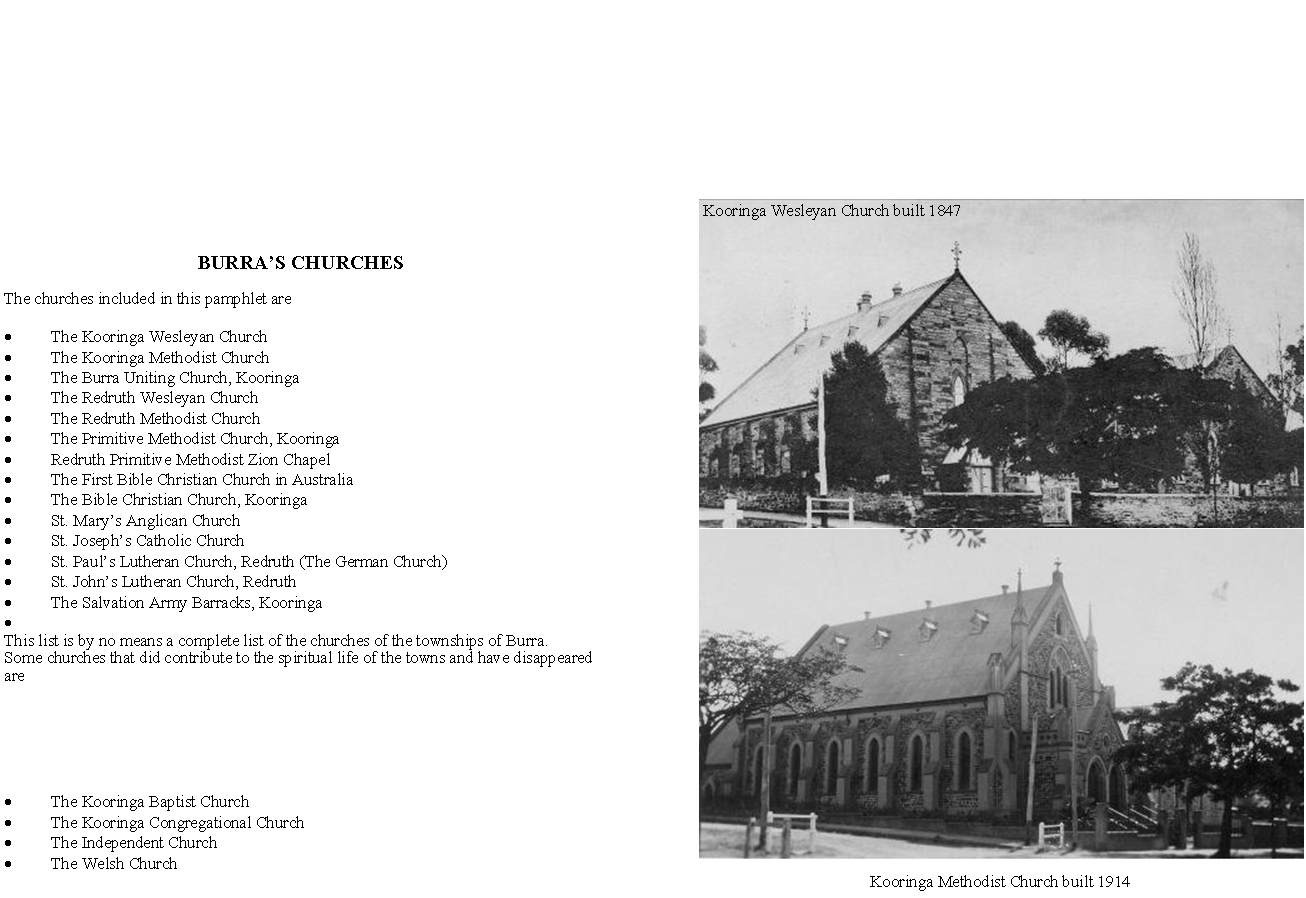
96
Burra Uniting Church - The First Church in Burra (1847)
Formally the Kooringa Wesleyan Church
The first Wesleyan chapel and schoolroom was built on this site in 1847 and was the first church in Burra. It was demolished in 1914 and the existing building, opened on 12th December 1914, was erected in its place. It has been used as the only Methodist Church in Kooringa since 1900, when the Bible Christians, the Primitive Methodists and the Wesleyans combined as the Methodist Union.
97
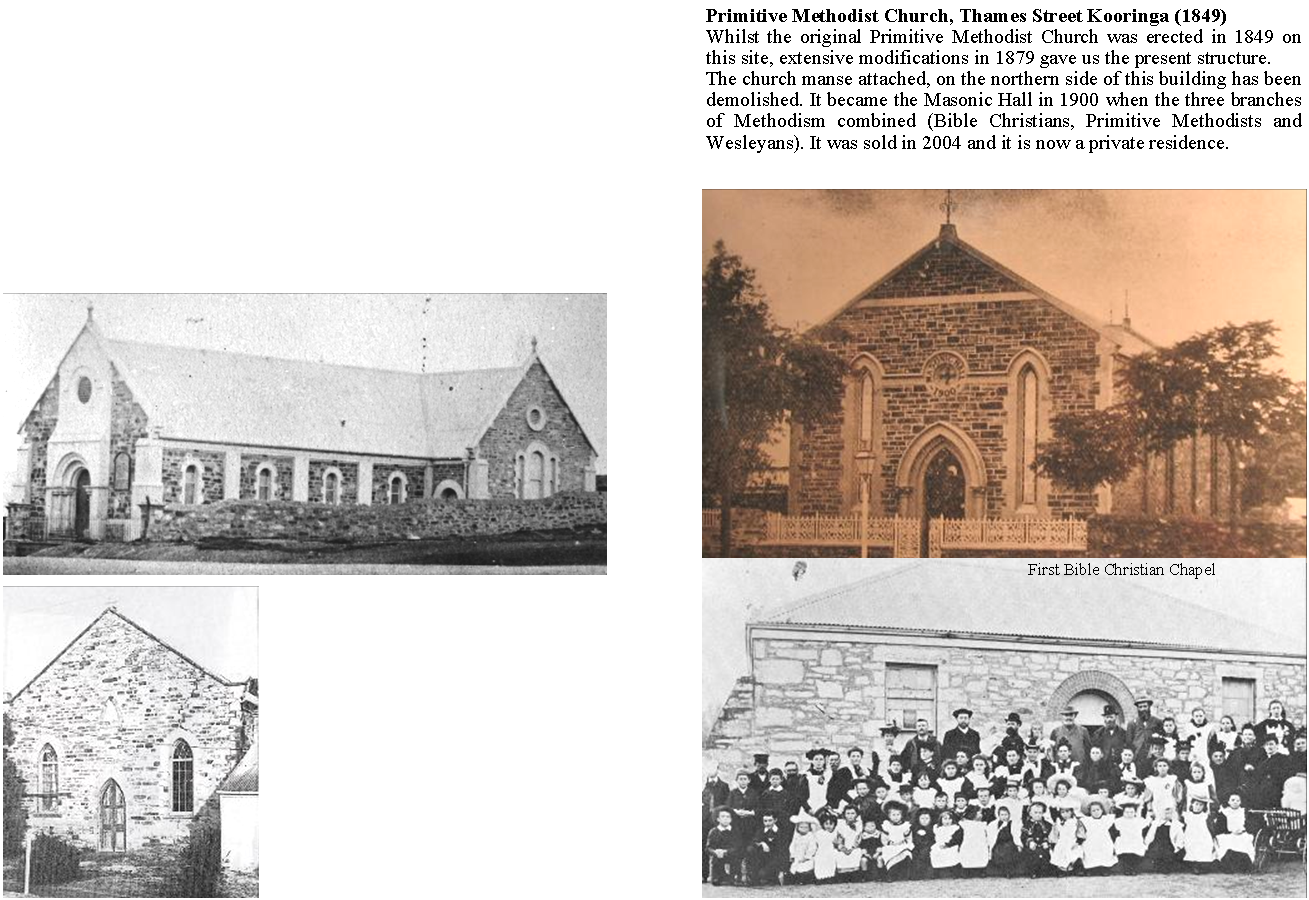
Wesleyan Church - Redruth
In 1850 there was a grant of twenty acres of glebe land and half an acre in the town with the foundation stone of a chapel being laid in February 1851. Because of the gold rush this chapel remained empty and was closed in 1854 and the Kooringa trustees dismantled it taking the roof, floor, windows, door, pulpit and seats for use in a new chapel at Spring Farm, near Clare. During 1857, the Kooringa trustees restored the Redruth chapel by using the old windows, seats, pulpit and part of the roof from the Kooringa chapel at a cost of £150.
In August 1873 the trustees decided to build the existing chapel at a cost of £1,340 and a foundation stone was laid with its construction completed soon after.
Opening of the Jubilee Hall,
Redruth
Redruth Primitive Methodist Zion Chapel dates from 1856. After the Methodist Union in 1900 it was extended to become the Methodist Sunday School. The Wesleyans had used the Lutheran Church for this purpose for over 20 years previously. The Jubilee Hall was used by them until 1925 when they moved to their new Sunday School building, next to their church.
98
99
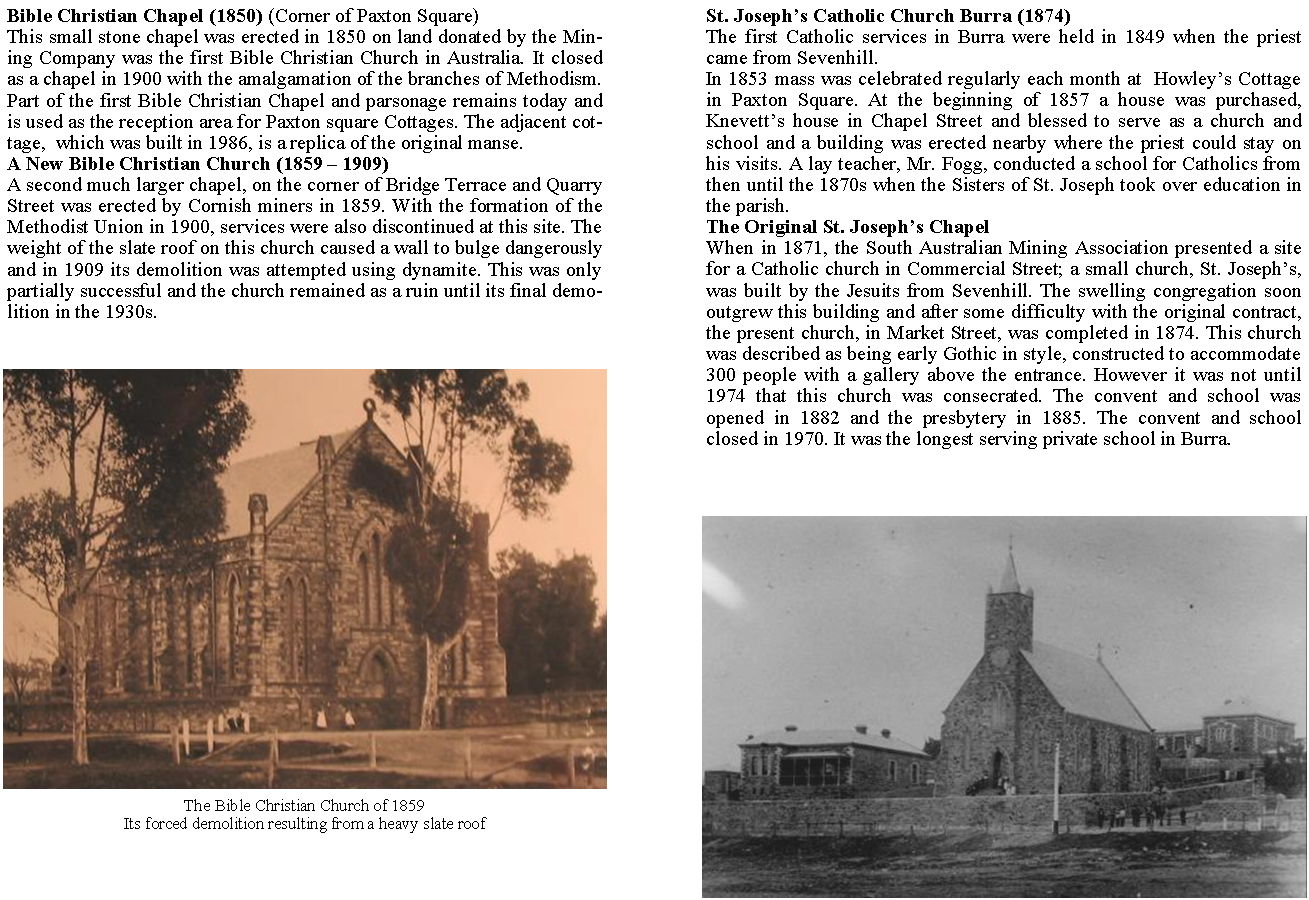
100
101
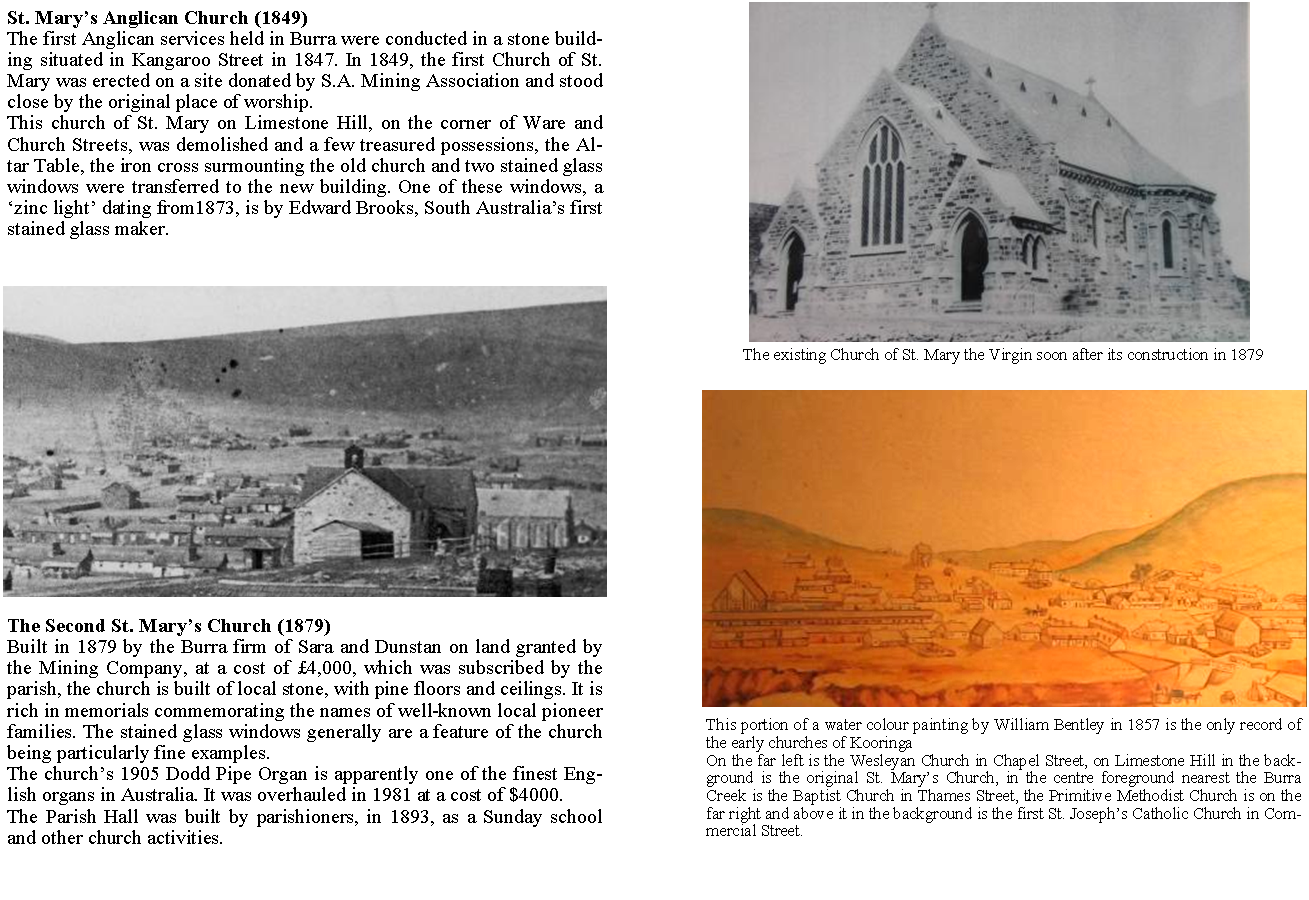
102
103
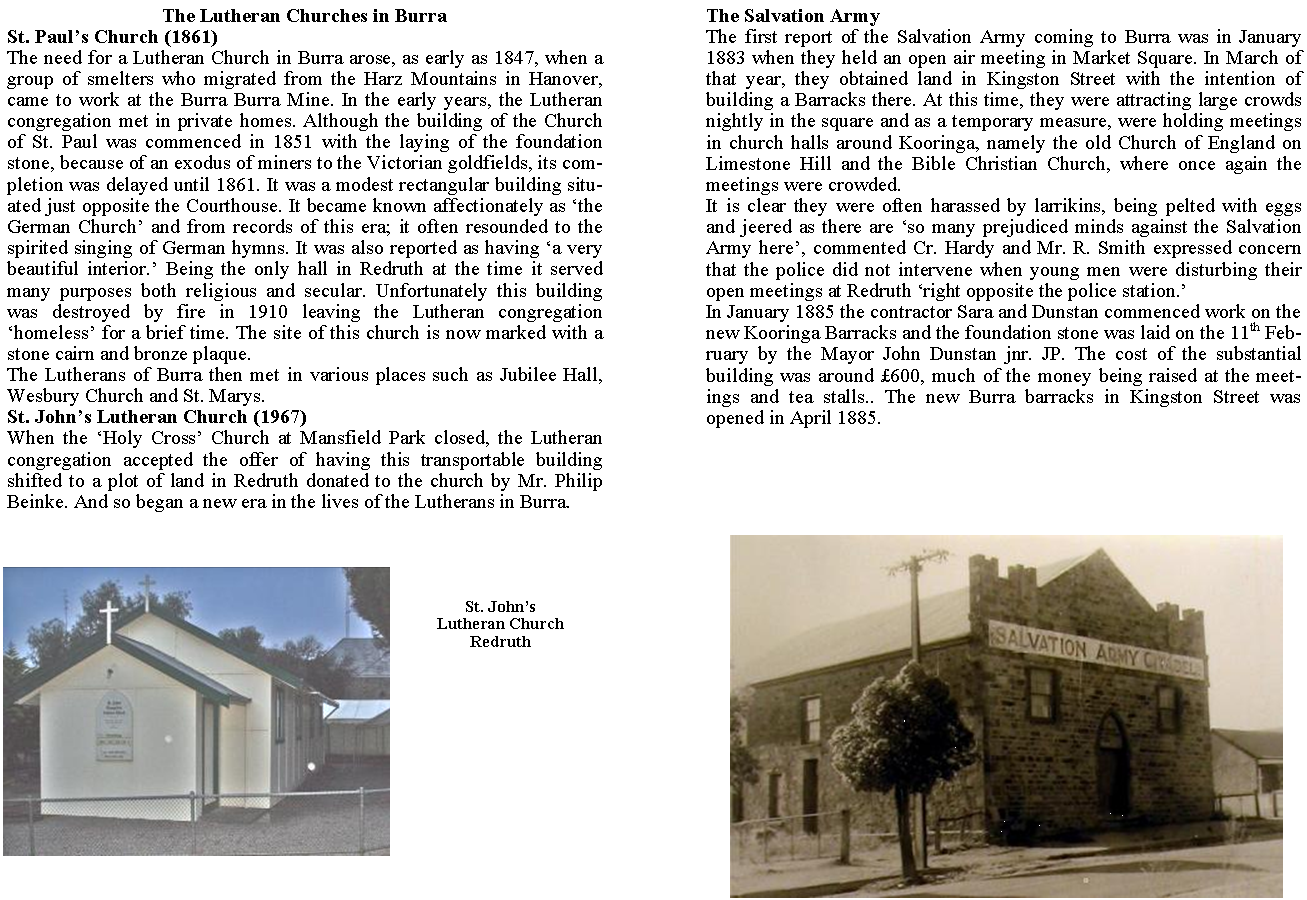
104
105
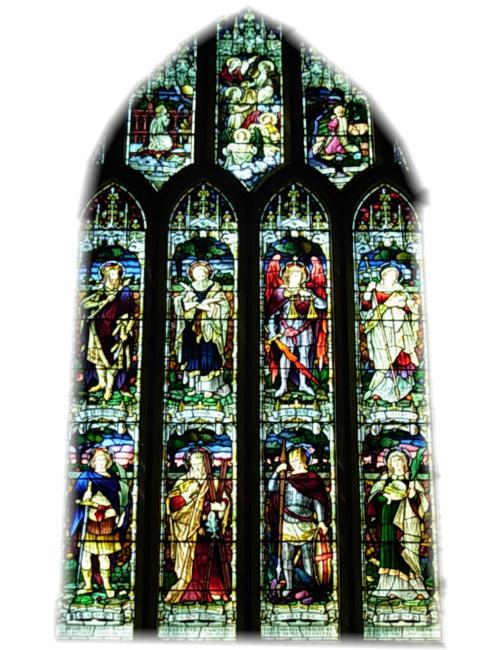
The West window of St. Mary’s Church 2007
‘The grace of the Lord Jesus be with all the saints. Amen.’
106
Compiled by Julian Ratcliffe
The Burra History Group Inc.
2008
107
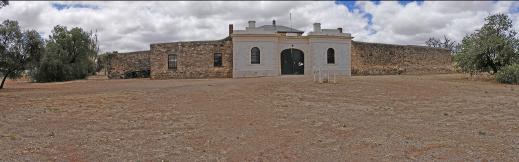
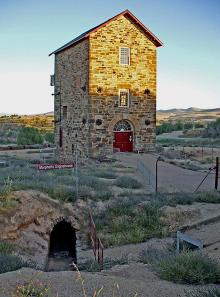
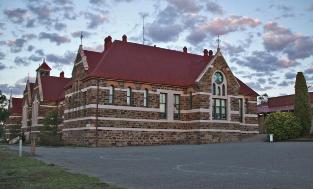
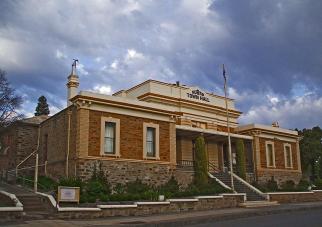
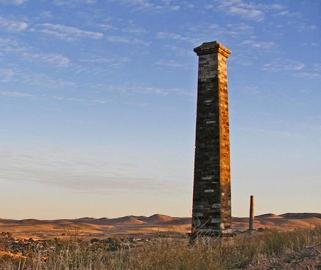
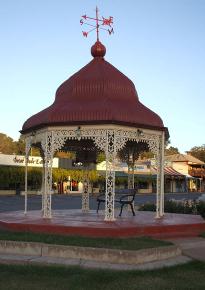
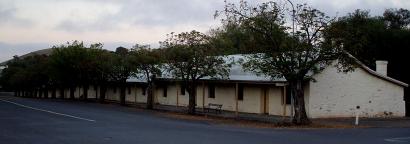
108