BURRA’S CORNISH
CONNECTION
BURRA
SOUTH AUSTRALIA
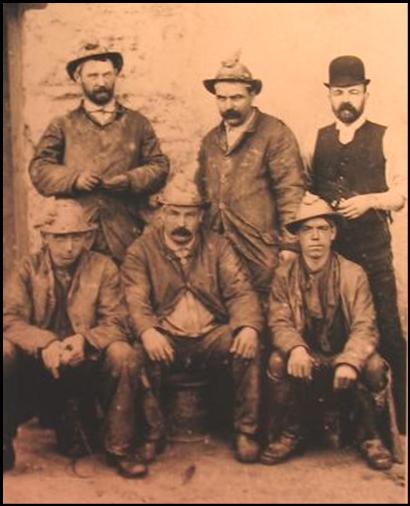
Cornish Miners
The Burra History Group Inc.
2008
Introduction
This publication celebrates the link between South Australia and Cornwall from 1842 when copper deposits were first discovered in the new colony. It pays tribute to the courage and fortitude of Cornish emigrants who left their homeland to sail across to the other side of the world seeking a new life. For many of them the sea voyage was a very trying experience, one they did not wish to repeat. They found themselves in a harsh, strange land that provided them with other hardships and despite this they endured. We wish to acknowledge their knowhow, perseverance and the enormous contribution they made to the struggling colony, saving it from financial ruin. Besides the miners there were among them carpenters, carters, woodcutters, blacksmiths, masons, mechanics and saddlers. From Cornwall came the mining methods and the technology of steam engines manufactured at the Perran Foundry Co. together with their Cornish boilers. The Industrial Revolution was literally shipped across the seas and then hauled to the mine bit by bit on jinkers. Today rows of cottages and the ruins of the engine-houses and other mining buildings identical to those in Cornwall still remain as a testament to Burra’s Cornish heritage. Whilst the Burra Burra Mine is the focus of this pamphlet, the connection with the Kapunda and Copper Triangle mines of Kadina, Wallaroo and Moonta are an important part of this heritage. It is hoped that this publication will have significance for the many Australians whose ancestors originate from Cornwall.
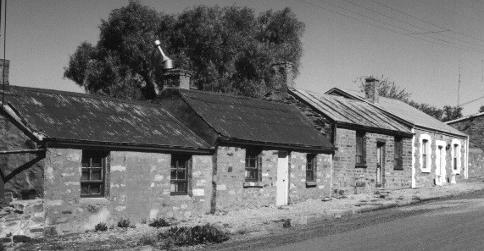
A Row of miners’ cottages built in the Cornish style
Truro Street, Redruth, Burra South Australia.
2
Burra’s Cornish Connection - Voices of the Past
A Cornish Miner’s View of the Burra Burra Mine (1917)
By James Thomas Senior
James Thomas was born at Forestgate, Cornwall in 1837 and was baptised in an Anglican Church at Redruth, Cornwall. In 1848 he and his family sailed for Australia in the ship William Money and on arrival came direct to Burra where he was set to work in the Burra Mine, his first job was driving two horses on a water whim, then with horses and a dray and later he was appointed stockman, looking after the mine horses. He then worked for his father driving bullocks carting timber and later ironstone from Ironmine to the Burra Smelter. Eventually after being engaged in various kinds of work, he acquired land at Mt. Bryan, then moved to Banbury and finally settled at Mt. Bryan East where he lived for over 40 years. He died on 21st Dec. 1922.
Here he sets out some of his reminiscences in articles published in the Burra Record between June and August 1917
The Mine
During the first three years after its discovery, it is not very important, as that period was uneventful – simply quarrying rich copper ore from the surface outcrop at very shallow depths and loading it into bullock drays and sending it to Port Adelaide and thence to Europe, just unskilled labour. But there were problems ahead which were more difficult of solution and which had to be grappled with. It was found that by going deeper and extending operations there would be an increased inflow of water and that special provision must be made to cope with it and while water is essential in a mine for the purpose of washing and dressing the ore, yet too much of it becomes a formidable hindrance to progressive mining and an expensive and ever-increasing worry to the management.
At this time four water whims1 were kept running day and night to keep down the water to enable the men to work in the lower levels. This increased the working expenses of the mine, a new experience for the company, who up to then suffered no falling off in dividends, so they took it with a bad grace. In the meantime an engine was ordered which in due course arrived with great display. It took forty bullocks to drag the parts of that engine up the mine. The engine shaft, long ago prepared for its reception, and the house over it, were there to suit the engine. This shaft was named after the head captain2 to perpetuate his memory most likely, but in any case it was a very unfortunate site for the purpose and it was just here that the real trouble began.
Burra in 1851
1 Water whims were used for hauling water from mine shafts by winding the hauling rope on a drum or ‘whim’ driven round by a horse.
3
I may say now up to the present time, 1851, there was no diminution of dividends. The three years following its discovery, the output of copper was 10,000 tons realising £700,000. The mine was equally productive up till 1851 when it got the first setback in history. Nearly all the men left the mine to go to the Victorian gold diggings, so that all mining operations were suspended and the engine, which had now been working for sometime, was idle so that the mine became full of water and remained so till the men returned in sufficient numbers to restart the mine, Even then it was found to be in a bad state and to make matters worse, the engine shaft and house were found to be crushing the shaft out of perpendicular and twisting it and the house to be cracked, so that it became necessary to get another shaft and engine.
Schneider’s Engine
Seeing that the first engine failed through being built on rotten ground which had been honeycombed and undermined, one would have thought common prudence would have suggested the selection of a solid foundation on which to build a second one. But no, the management seemed to ignore the fact that tributers were working in dangerous proximity to the new structure and continued to work until engine No. 23 began to show signs of collapse and had to be succeeded by another which was to be placed on solid ground and being the third attempt was supposed to be lucky. That engine is Morphett’s4 which is, I think, standing intact ready for any emergency.
The Engine Houses
We had Morphett’s engine fixed up, but even that could scarcely keep the water down for the men to work at the bottom levels and this necessitated making other provisions for keeping down the water. A fourth engine was then provided and as rotten ground was found to be unsuitable for the purpose, it was decided to excavate a site for the new engine house5 on solid ground which caused a considerable outlay of money. The spoil for the excavation was dumped into the big depression on the ‘skimps’ and low price ore, thereby making it more difficult to utilise the stuff which, with the present price of copper, would well pay for dressing.
The erection of the engine-house was started and was built by day-work – the masons would put up several stones each day – and it was finished at last, but the engine was never put in it.
I don’t think it ever transpired exactly; how or why these works were stopped just on the eve of them being made useful, but people made shrewd guesses. All those people felt aggrieved at the sudden untimely closing down of such an extremely rich mine.
The mine employed 1,100 hands6 when in full working order. The surface men, of whom there were hundreds, were paid 21 shillings per week, 1/-
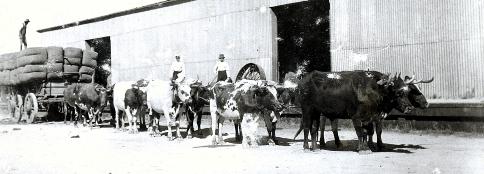
A bullock team at Burra Railway Station
2 Captain Henry Roach
4
kept back for the doctor and club, leaving 20/- for their labour. One might wonder how the men lived on that pittance and kept their families, but they had no rent to pay as they lived in dug-outs in the Burra Creek, which at that time, was ten or twelve feet deeper than it is today and from Aberdeen to the Kooringa7 cemetery every yard of bank on each side of the bank was utilised for dug-outs. The necessities of life were about the same price as obtained before the war, excepting butchers meat and that was 1 penny and 1½ pence per pound. The miners who worked underground were supposed to get 30 shillings per week, but they were generally paid by results, so much per fathom called ‘tutwork’ or on ‘tribute’ which means a percentage of the value of the ore raised, so that their earnings might be anything from subsist up to hundreds of pounds – if they catch a rich patch of ore, that sometimes happened, but not often. It will be remembered that the labour trouble such as employers have to reckon with in these times did not exist. Therefore the water difficulty alone was the insurmountable obstacle with them and they therefore decided to shut down the mine, rather than attempt what they considered the impossible. If they had retained the first engine (Roach’s which was scrapped and which I carted away to Karkulta8 on ten bullocks) and used
3Schneider’s Cornish beam pumping engine erected in 1852 and named after John Schneider, Director of the Patent Copper Co., the Burra Smelter.
4Morphett’s Cornish pump engine installed in 1860 and named after John Morphett a Director of the South Australian Mining Association which owned the Burra Burra Mine.
5Graves’ engine house built atop Graves’ shaft, named after Thomas Graves a Burra Mine director, and completed in 1877.
6The number rose to 1,208 in October 1859.
7Aberdeen and Kooringa are two of the Burra Mine townships along with Redruth, Llwchwr, Copperhouse, Lostwithiel and Hampton.
5
it in connection with Morphett’s the water could have continued to work the mine and kept up the supply of copper and consequently their dividends, but they could not rise to the occasion and therefore succumbed to what might be called a phase of hydrophobia.
The Social Life
We of the early days are often twitted with the remark, ‘Oh, ‘twas good to be you, here in the good old times,’ almost envying the golden opportunity that we had for the accumulation of wealth. Well let us see about this matter! I have previously explained that the surface labourers on the mine got a pound a week and the underground men were allowed to earn 30 shillings that was if they worked the whole time, but wet weather sometimes prevented this, in which case they were ‘docked’. Fortunately they had no rent to pay as most of them lived in dugouts in the banks of the creek.
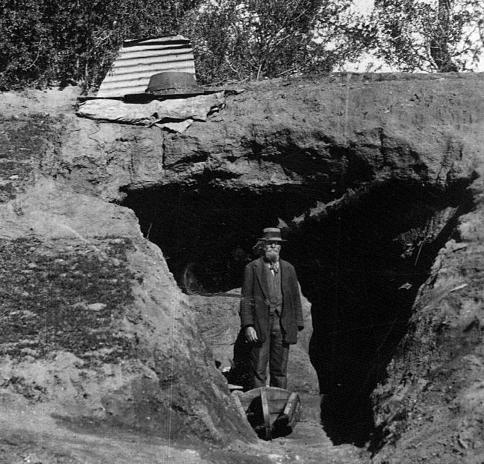
Now just imagine the life lived by the women with children to be immured in these holes, with the light penetrating through the open doorway only, and the ventilation confined to the same source. These were not the only inconveniences. The inaccessibility of the huts made the work of getting the necessities of life to them strenuous. The fuel, water and all that was required had to be brought down those rough hewn steps; the butcher, baker, grocer, all had to shout down the chimney to the inmates and then the women would climb to the surface to be served.
The chimneys were all alike, surmounted by a flour barrel, so it was difficult to know one from another. But the tradesman called down each barrel and then the women learnt of their presence. Then to find room for the woodheap, the clothes line, the water barrel and other outside matters would tax their ingenuity, as outside the doorway was a drop to the bottom of the creek. Their only view from their door was the creek bed and the opposite barren hills. That is one phase of the good old times and the one bright spot in their outlook was the Sunday when they with their husbands would go to church, or visit their friends, up or down the creek. They had little furniture to polish, all made out of old cases and their light was either a slush lamp or a tallow candle. To stand in the front rank of creek society they must burn candles (slush lamps were used by bachelors) and a candle mould was a necessity ranking with the camp-oven in importance. The husband was expected home a little after three o’clock coming from underground to again go underground in his dugout, but he too, anticipated his weekend and Sunday, when they could get out into the sunlight together with their children if any.
The Burra was represented by all colours and nationalities, even a few Negroes, so all had their own ideas of pleasure and followed their own peculiar taste. Some would fancy cock-fighting and might be seen with a
8Although this was intended, Roach’s engine was sold to the adjoining Bon Accord Mine in 1859. A smaller winding engine was carted to Karkulta Mine, 10 miles south of Burra near Black Springs, an iron and copper mine worked in conjunction with the Burra Mine.
6
rooster under their arm going to some secluded spot to meet another by appointment. Others again, fancied dog-fighting and they would cut ears and dock the tail of a mongrel to make a bull-dog of him. But they were soon to have places to spend their leisure hours and spare cash.
A Mr. Paxton,9 one of the mine directors, in order to show his faith in the stability of the mine, built four hotels. These hotels were the Burra Hotel (on the site of the present hospital), Lords Hotel and the Pig and Whistle in Kooringa proper. There was a little hotel at Aberdeen called ‘Southhampton Arms’ to be strangled to secure the monopoly of the drink
A ruined dugout in 1925
7
traffic, so he built Opie’s Hotel on the north boundary of the mine property and just across the chain road from Mr. Stacey’s Southampton Arms. Now these hotels were soon in full blast and Burra was soon transformed from a peace-loving, law-abiding community to a drunken, wife-beating rabble. This applied to the rowdy element. Of course there were many quiet respectable people who never went to an hotel.
Strike at the Mine
We have now entered into the year 1851, which was the most stirring and eventful time in its whole history. But we must look back and review one or two events which we have previously omitted. The strike of the miners and labourers was entered upon in the year ’4710 and it was clumsily carried out. The men got all together and decided that they must strike to secure higher wages, so they made their demand known to the managers, who refused to accede to their request, and the strike was a result. The men, however, were not unanimous, so a few continued to work and were forcibly removed, and wheeled about in barrows and branded as blacklegs (now called scabs) but as the men were not organised and had no Lundie to champion their cause, it ended ignominiously and each man was a law unto himself and crept back to his work as necessity arose. The only consequence was that two or three of the ringleaders got the sack and the others were made to feel their helplessness. The company knew there was no other work for the men in the colony, excepting the Kapunda Mine, which was full-handed, so the miners worked on for the pittance although discontented.
Black Thursday
Now having entered upon ’51 the first event of importance to chronicle is Black Thursday! I cannot hope to do justice in a literary sense to this, the most wonderful phenomenon that has occurred in this country. How very few are alive today who remember that awful visitation; so I will try to give your readers some idea of its cause and its effects.
It was usual in the early days before the country was taken up or stocked, for the blacks to set fire to the dry grass and herbage, to secure new grass in the coming spring, so that the kangaroo, emu and wallaby would come to feed, when they could spear them. That had been done on this occasion in many places. The fires so started were tremendous and widespread and this happened on a day when the wind came from the north, a full hurricane and directly from the fire, so this added to the ordinary ‘brickfielder’ (as we used to call the hot windy days) and the black ashes from the burnt grass, picked up by the storm and lashed into black dust and mixed with the sand and gravel that was hurled along with the storm, accounts for the blackness of the visitation. Now I will try to give the effects it had on all who were above ground on that day. The storm wind
9William Paxton an original shareholder of the South Australian Mining Association, the Burra Mine owners.
10 ‘47. This date is wrong. The Burra miners’ strike began in Sept. 1848
8
was travelling 90 to 100 miles an hour and was laden with black ashes, sand and gravel as large as peas. All delicate and sensitive persons were prostrated and helpless and the strong and robust were lying about or wetting their heads and faces and crawling anywhere out of the fury of the gale, but the worst of it was the difficulty breathing, the cause of this not being understood, at the time, by the sufferers. I too being a lad aged 13 only knew that it was hard to bear. The day was so dark both indoors and out, that candles had to be used to do the household duties and even with that aid we could see no better, the lighted tallow candle would only look like a tiny blue speck on the table. Very many nervous and superstitious people thought the end of the world had come; others got away to the pubs and got jolly! Well it was a thirsty time and it made them oblivious and careless, as some were allowed to get down the cellar out of the blast. But in the light of the after events, the phenomenon was easily explained. The wide-spread bush fires being ignited at the time a north wind was blowing a hurricane, the conflagration consumed a good deal of oxygen and generated carbonic acid gas at the same time and the violent storm brought the vitiated unwholesome mixture for us to inhale and hence the difficult breathing. And if that noxious gas had increased a little more it could not have been breathed at all. The candles that were lighted that could only just live showed clearly how perilously near we had been to suffocation. However the whole event passed off without any casualties.
Floods11 and Gold
The violent torrential rain began in the afternoon and continued most of the night, but it took some time for the flood waters to reach the creek, coming from Mt. Bryan, Springbank12 and other places, embracing as it did about 150 square miles of catchment area, so that it was early morning before the flood reached the dugouts. As the waters were still rising the alarm was given, and there was a general rush of people to get all their belongings out and up on the bank, out of harm’s way. Of course the furniture was of a make-shift, home-made kind. I didn’t notice any rosewood suites, but it had served their purpose in these primitive times and would have been a distinct loss to those poor people. It was fortunate that it happened in the summer time as it would have been terrible for the women and children on a cold winter’s night. The sight was a pitiable one in the morning, to see lines of furniture dumped down by the flour barrel chimney stacks and the women and children mounted guard over their
9
valuables. The men had gone to arrange for some kind of shelter for their families and had soon succeeded in securing cover. Every available place was brought into requisition, churches, school-houses, engine houses, sheds of every description and those who lived in cottages extended their hospitality.
The Cornish are proverbial in their kindliness in cases of distress, - they will cheerfully share their pasty with a needy one – so all were temporarily accommodated and every available vehicle was requisitioned to carry the homeless to their new domicile. On visiting the creek when all was over, guided by their particular flour barrel the people found that they had not vacated the creek any too soon, as nearly all their ‘huts’ had caved in and nothing was left for them but to remove their flour barrel.
The excitement of these stirring times had scarcely subsided when the startling news of the gold discoveries in the eastern colonies reached Burra and then the excitement really did begin. Every man and many women were seized with gold fever and began to realise on everything that could be spared to raise the price of the passage to the diggings. Cows, horses, pigs, poultry, everything that would sell were sold and at a sacrifice. Cows at 12 shillings and 15 shillings each! We ‘bought’ many at that price, of course there were few buyers. Having squared their affairs and got ready, the exodus began. Every kind of vehicle was used by the overlanders. Many went by boat and some had to walk (having deposited their spare cash in the four hotels) and in a month after the news reached Burra, there was scarcely a man to be seen, women everywhere and children galore. A few old men were left, being too old to undertake the journey, so that the ‘grass windows’ had ‘protection’. Each man intended to remain on the diggings until they secured enough gold to retire but they could not stay on the diggings sufficiently long for that purpose. When they got £200 or £300 worth of gold, they could only resist the temptation to come back for a rest which really meant a spree. Of course there were many exceptions. Some remained until they really got sufficient to retire on, but the majority were only absent from Burra about four months and then the revelry began. Parties at homes, hornpipe dancing, drinking and general jollification and the ladies became ‘gorgiss’, silks, satins and red Garabaldi blouse ribbons everywhere, regardless of expense or harmony of colours. The chief aim was to show that they were lucky diggers’ wives and they were happy. But unfortunately hundreds of hard-working men wasted the chance of their lives in going and coming from the diggings, when any unskilled labourer got an ounce of gold per day for drawing the dirt for the diggers with the windlass, while the men below were getting much more. This four month trip was repeated a second time with some success and with a repetition
11Three great floods in May and June of 1851 washed the creek-dwellers out of their homes in the banks of the Burra Creek.
12Springbank is a hilly area just southwest of Burra from which tributaries to the Burra Creek flow.
10
of the same folly. This going to the diggings became a habit with the Burra miners so they went the third time, but lo, when they got there they found that thousands of men from Europe, Asia, and Africa had reached there too and the place was turned upside down, so that they could not locate the spot they had previously worked and all the alluvial gold had been worked out, so the only thing left to them was deep sinking on the reefs. This necessitated procuring machinery and suitable appliances for that work and the outlay of more money than they could raise. It then dawned on them, the folly they had been guilty of in rushing away home and leaving the rich patches of ground to be exploited by others. They had been expecting to find the place as they had left it, but now they must either leave the place and seek pastures new or work for others who by forethought and care were able to secure those appliances to suit the altered conditions.
So to sum up, it is doubtful whether the gold fields did any good for South Australia on the whole. A few did well and saved their money, many did well and spent it, a few left Burra and never returned to their friends; it caused the dislocation of our local industries and estranged lifelong friendships and accustomed some to a luxurious habit of living which they could not sustain.
Early Burra - The Experiences of a Cornish Miner’s Son
By Solomon Williams (1846-1948)
Solomon Williams, of Cornish descent, was born at sea aboard the barque Hoogly bound for South Australia in 1846. He and his family came directly to Burra and lived at the Mine, where his father was a miner, and later in a dugout in the Burra Creek. Although at age 21 he moved to Clare, he often returned to Burra and had many early memories of the town. He died in Glenelg, Adelaide in 1948 at the age of 101 years.
Here is an extract from articles he wrote for the Burra Record from April to June in 1934
Cornish Pastimes
Among the attractions for the Whitmonday holiday13 was occasionally the roasting of a whole bullock. I witnessed it on two occasions. It took place on the level ground just beyond the Burra Hotel. The carcase was prepared at the slaughter-house, leaving the head with horns complete. When it arrived, a strong iron bar on spit was passed through it and the
11
head tied to the spit with a chain. Two strong iron skewers about half an inch thick were passed through the sides and through holes in the spit and then the whole was lifted on to two forked posts, which were ready in position. Then a cranked handle was fixed on each end of the spit so as to be able to turn the carcase. Now the wood was laid and soon the flames were melting the fat into the fire and the toasting commenced with fizzling and smell of burning flesh. The bullock was never properly roasted, because the appliances were too crude to get a uniform heat to properly cook the meat right through. There was always more or less wind and the flames and heat were driven away from the carcase and after hours of treatment no proper use could be made of it.
On one occasion there were a number of Aborigines there who took great quantities of half raw beef away to their camp nearby. Besides the bullock roasting there were games and sports going on at the same time; jingling in the ring, bobbing for apples and treacled buns, a greasy pole to be climbed and a greasy tailed pig to be caught. This latter caused much mirth and excitement as the animal ran among the people amid yells of boys and screams of the girls and women, whilst the men were diving down to get hold of a leg as no one could hold it by the greasy tail. Presently it came out into the open and raced for dear life followed by a trail of pursuers and it was by no means certain that the fleetest would be the captor as the dodging porker might be captured by one less fleet of foot. Sustained squeals generally denoted the end of the race.
Foot races were also promoted for small prizes among the boys and here please excuse a little personal experience. A course was set from the ground down the incline and around the excavation at the foot of the steep hill opposite the sports ground. For this race a number of boys entered including a school-fellow of mine, Chris Moody and myself. Now Chris could always beat me at running. The race started all right and Chris was first to round the quarry and I was a good second. When coming up the slope to the baseline I found I was gaining on him and finally I came in the winner, which rather surprised me. The explanation of this was that when coming up the slope Chris’ braces had given way and he was thereby seriously handicapped.
Cornish Wrestling
The old Cornish game of wrestling was promoted at Christmas time and was held in the stable yards of the Miners’ Arms Hotel,14 where there was plenty of manure and sawdust. The Cornish game was not like the brutal exhibitions now witnessed under the name of wrestling, where each contestant tries his best to maim his opponent and where hate and venom plays such an important part. It was I believe quite a friendly game, the contestants standing on their feet and if they came to ground the hitch was
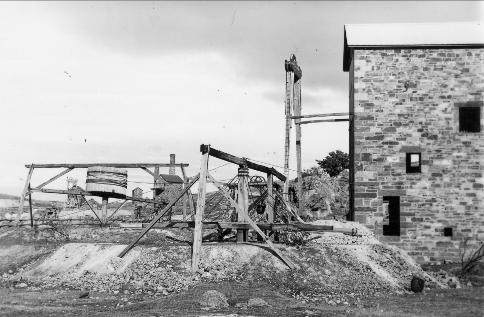
Graves’ Enginehouse with a horse whim that was used to haul material from Graves’ Shaft. Peacock’s Firewhim and chimney are in the background.
12
broken and they rose to their feet and took a fresh hitch, unless the fall was a fair backfall, in which case the contest was settled between the pair. Players were matched together and the defeated retired until the champion was left.
Strength of course played its part, but feet and leg dexterity was very important. Umpires (called sticklers) walked around the contestants and they were judges of the falls. When these umpires stood still and obstructed the view of the onlookers, ‘Walk around stickler’ was the signal to keep them moving. Ginger beer was supplied free by the lessees of the hotels, for lubrication of the dry throats of the contestants and one frequently heard the call ‘ginger’ at the commencement of a contest when no lubricant was needed. On entering the ring the wrestlers removed their coats and waistcoats and put on wrestling jackets made for the purpose of strong canvas and having strings instead of buttons. These contests took two or three days during the holiday season. I think the lessee of the hotel was well paid indirectly for his ‘ginger’.
Mining Methods
13Whitmonday holiday is a traditional Cornish holiday following Whitsunday, the seventh Sunday after Easter.
13
The mine was mainly worked on the tribute system. That means that they were paid a percentage of the value of the ore they produced. The mine found the power and appliances for raising the ore to the surface, as well as timber for the underground work, water and appliances for dressing and the miners found the labour. The ground was surveyed into blocks at various levels underground. These blocks were called pitches. The tribute was controlled by the richness of the ore contained therein. If it were rich perhaps 4/- or 5/- tribute would pay the men fair wages, whereas if it were poor 10/- or more would be required. It was a piece-work system and the harder the men worked the better they were paid.
Every pitch was numbered and contracts or takes as they were called, extended for two months and then another take had to be entered into. These short term contracts gave the mine authorities the opportunity of altering the tribute should developments warrant it. Underground captains visited the pitches regularly and if rich ore was discovered during the take down would go the tribute. There was a day appointed for letting contracts or takes; it was called ‘Servaday’. The men worked in companies of two, three or more in each pitch. So when ‘servaday’ came one or more attended to accept a new take.
The procedure on ‘servaday’ was somewhat peculiar, the manager, Captain Roach, acted as an auctioneer standing where all could see him, he would put up the pitches by number with the tribute in this way. ‘Number 50, seven and sixpence,’ and then picking up a pebble from a dishful on his table he would toss it away and when the pebble came to ground and no objection had been raised the contract or take was let at the tribute named. If tribute was reduced to an amount which would not pay the men the take could be refused.
Handling the Ore
It may be interesting to follow the working and dressing of stuff to the point where it is ready to be taken to the Smelting Company.15
Firstly it had to be broken down with the pick from the end of the level in which they were working, and then wheeled to the ‘plat’, which means an opening out of the level so as to form a room, timbered all around and overhead. This room or ‘plat’ opens into the shaft and where there is sufficient stuff, deposited there; for a day’s hauling the whim is put to work to raise it to the surface. Then it is carted to the ‘stakes’ and ‘jigs’. It is dressed or concentrated and placed in a ‘pile’. These ‘piles’ were only about two and a half feet high with flat top and by the end of the take might be, say thirty or forty feet square. It was now necessary to take a sample for assaying to see the percentage of copper, because the miners
14Miners’ Arms Hotel originally a single storey building constructed in Market Square in 1847; now the Burra Hotel.
14
were paid on that basis. One would think it easy to take a sample anywhere from the pile, but you can see that if the miners were fraudulent (which of course they were not) they could put the richest ore on the outside. So to be sure a fair sample was taken, then men had to cut the pile and this is the way it was done. A man at each end of the pile would shovel the ore up on the top on each side until they had cut a path through. Then an officer would be present and one man would with the shovel slice a little ore in several places on the inside of the cut and shovel it in a small heap in the middle of the cut. The officer would then produce a small ore bag and place in it a ticket on which the number of the pitch from which the ore came and then these two shovelfuls of ore were bagged. This bag was then carried under the strict observation of the officer to his office and then men had the right of watching him first to dry a sample to see the percentage of water it contained, because the Company did not pay for the water weight, but the nett weight.
One early reminiscence of the Burra Mine described the pumping engines.
The most important machine on the mine was the pumping engine. When I was only a small boy I was taken in the boiler-house of Schneider’s
engine16 and was awe-stricken to see the three great boilers with their terrible fires into which they were cramming still more wood. But I got a proper scare when the firemen suddenly turned on the steam and water taps, they made such a noise. Morphett’s engine17 was erected later and I was older when I was shown over it. The mighty balance “bob”18 seemed to have irresistible force behind it and the big cylinder encased in wood and packing impressed one as being wonderfully powerful. I liked seeing the bright ironwork with moving rods, up and down movements of handles, the turning of other parts which I cannot name, all seemed perfect in their rhythm and time. And I was told all these movements were necessary to control the valves for steam or control the ingress or egress of steam to the cylinder. It was a marvel of ingenuity and force.
Then we went upstairs and here we saw the top of the encased cylinder with the immense piston rod being forced up and moving the great bob up and down. The bearings and axles on which the bob moved were of great size and strength. Watched from outside the bob came down steadily but rose more rapidly bringing up a great quantity of water, which ran through wooden flumes or launders as they were called, into the engine
15The Patent Copper Company, was the Burra smelter, which became the English and Australian Co., after 1851.
15
pool, filling it up during the night and by a sluice gate it was run out during the day for dressing purposes.
During the summer this pool was used for swimming, but the water was very cold. Nevertheless I have seen many bathers there on a hot evening. I did not like this pool as much as I did the smaller one near the engineer’s workshop. This was a warm pool from the engine condensing water. This warm pool was not so deep either and it swarmed with boys who played about for hours with planks and rafts floating therein.
Solomon Williams
Water power
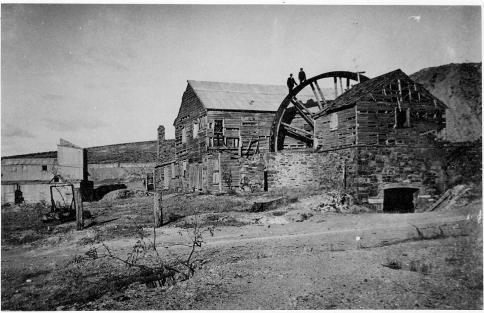
A waterwheel to operate the giant lathe and drilling machinery of the engineer’s shop was turned by this water. The largest waterwheel on the mine was that used for the rock crusher and sawmill. It was a magnificent structure I am afraid to hazard a guess at its diameter, but from memory of so long ago I should say it was fifty feet in diameter. The water which operated this wheel came from the engine pool on its way to the dressers. There was a tram line and truck which carried the rocks of ore to the crusher. They were tipped into a sink in the floor of the house, went through the crusher and dropped into a revolving screen and from that into a dray which carried them off to the dressers. On the other side of the wheel was the saw mill and carpenter’s shop. They had a large machine to hold a number of upright saws and I have seen the trunk of a gum tree, say four feet in diameter at the large end and say thirty feet long, fixed on the iron framework of the machine and six vertical saws ready to start cutting.
The Fire whim
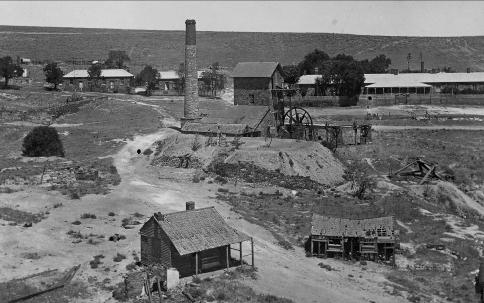
Another spectacular piece of machinery was the steam power hauling engine or as the miners called it ‘firewhim’.19 This was a tall engine house with a large iron wheel outside upon which was wound a great length of thick flat rope. From this wheel to a shaft were a number of thick posts carrying pulleys on which the rope and chains worked. The kibbles used for hauling were much larger than those used for the horse whim and was interesting to see them arrive at the surface. The landing was much the same as with ordinary whims but on a larger scale.
Landing the Ore
The buckets or ‘kibbles’ were made of strong iron sheets riveted together and they were egg-shaped so that their bulging sides would prevent the top rim from catching in the timbering of the shaft or from fouling each other when passing in the shaft. There was a strong iron loop on the outside of the bottom and a signal was necessary to tell the engine driver when to turn backward so as to land the kibble.
16This 80 inch diameter Cornish beam engine installed in 1852, replaced Roach’s engine and was used to pump water from the mine.
17Morphett’s engine an 80 inch Cornish beam engine was installed in 1860 and was supplied four boilers greatly increasing the pumping capacity of Schneider’s engine.
16
When the kibble was nearing the surface, the lander pulled a rope which in turn pulled a wire raising a weight a few inches from the floor near the driver in the engine house. The lander places one foot on the end of this rope so as to hold the weight suspended in the engine house. The kibble is now arriving slowly and as soon as it is high enough above the shaft, he seizes the loop at the bottom of the kibble with a strong pair of pincers which is hanging by a chain from the poppet heads, then lifts his foot off the signal rope and the weight drops to the floor, giving the signal to slack off and the kibble is turned upside down, being suspended by the pincers and chain. Its contents are emptied into a barrow ready to receive them. The kibble is now swung over the shaft, the pincers are unlocked and the kibble drops into the shaft. The wheels are again in motion and the other kibble is ascending, but presently the speed is lowered and you ask the lander the reason for this. He tells you the kibbles are passing each other
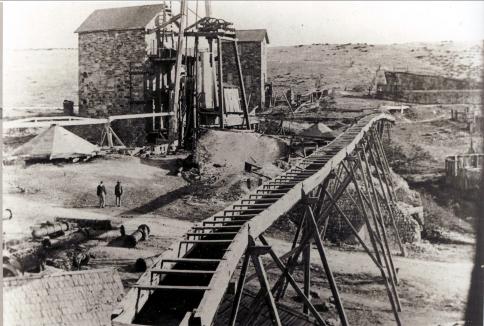
Morphett’s Pumping Enginehouse with Morphett’s Winding Enginehouse to its right. The massive cast iron bob or beam can be seen with the balconies protruding from the stone house. In the foreground is the launder that carried the water recovered from the mine to the Crusher Waterwheel and on to the buddle pits where the ore was washed.
18The balance bob was a 32 ton steel beam that connected the piston of the steam engine to the pumping rod in the shaft outside. This beam was pivoted on one very strong wall, the bob wall, of the engine house.
17
in the shaft in the middle of their journey. Burt how does the driver in the engine house know this?
Let us go and see. We enter and see a man sitting down near the wall with two iron levers in his hands. His eyes are on two small weights suspended by cords which are moving quite slowly one up and one down the wall. They are now passing each other and are moving quite slowly and now they are off again, much faster. They represent the position of the kibbles in the shaft. ‘What an ingenious contrivance’, you say. Yes and how useful it is.
Stories from the mining days of the 1850s
One day I witnessed the breaking of a chain when the kibble was nearly up to the surface and its weight as it descended pulled the loose chain so fast that it was entangling itself about the posts and pulleys breaking timbers and making a great clatter. Men were running in every direction except in the line of the posts. Much damage was done to the gearing, but I have wondered whether the men below could find a safe place when they heard the kibble coming down the shaft. They must have realised that the law of gravity was in its worst mood.
Solomon Williams
Underground
On one occasion I saw a man kneeling beside a roadway and knocking on a piece of wood with the head of the pick and then listening intently for a reply from below. After shifting his position once or twice he commenced digging a square hole but when about a foot down, he holes through and revealed a man dripping with perspiration who had been digging his way up to the surface. This was ‘rising a pass’ which was needed for ventilation and other purposes.
Another day I saw a number of men running toward a certain point and I ran too. On approaching I saw the head of a horse just above the surface of the ground. It was harnessed to a loaded cart which broke through the ground. The horse was not hurt and seemed unable to move, being held by the harness and the earth around him. A tripod with block, tackle and winch were produced and the horse was hoisted to terra firma again. The men dispersed leaving the dray to be salvaged by the mine authorities.
Church-going
No reminiscences of Burra would be complete with out some reference to its religious institutions and activities. The community was largely made up of Cornish people and they were well known for their regular church going habits and their adherence to one or other of three sections of the Methodist Church. Consequently each of these sections was in a flourishing condition and although there may have been some petty jealousies between Wesleyans, Bible Christians and Primitive Methodists,
18
there was never any serious disturbance amongst them, but the rivalries only stimulated their efforts in recruiting adherents to their particular section. Special evangelistic meetings were usual by each section during the winter months and much enthusiasm was manifest therein.
Peacock’s Firewhim
19Possibly Peacock’s beam rotative engine installed in 1858, was the longest serving engine at the Burra Mine. It was used to haul ore from a number of shafts and even in the later stages of the mine it pumped water from the mine and hauled the ore trucks up an inclined railway during the first open-cut operation between 1870 and 1877. It was named after William Peacock one of the South Australian Mining Association Directors.
19
The discovery of copper at Moonta and Wallaroo caused the migration of so many people from Burra that all sections of the Methodist Church were much weakened and with the closing of the mine the attendance became smaller still.20
Creek huts
In these reminiscences there is no doubt some readers will expect me to say something with reference to the huts in the bank of the creek…….there may be something to hear from one who actually lived in one of these places over 80 years ago…… some would think it ‘infra dig’ to mention the fact……People lived in these huts either from choice or necessity. We know they were far from rich and the wages in 1850 were very low. Whatever the reasons, I am told that these dwellings were made quite comfortable being cool in summer and warm in winter.
My parents arrived in Burra early in 1847 when I was under six months old. We settled down on the mine property, where we lived for three or four years, when a fiat went out from the mine authorities forbidding miners the right to live on the mine. We then came to Kooringa and found a new hut excavated by one who wished to go to the Victorian gold diggings So we were duly installed in this hut and my father had also caught the gold fever and started off to pick up his share of nuggets. Our hut consisted of two rooms, lime-washed throughout. It was situated under the bank south of Mitchell’s Flat21. I do not know how long we lived there, nor can I remember our tragic exit, suffice to say that ‘The rain descended and the flood came’ and we were ‘washed out’. Many others shared the same fate as ourselves I have many times seen the flood marks covering the lime-washed around the rooms two or three feet up. There was a hole high up in the inside of the chimney breast and I was told this is where our little horde of money was truly banked and then the hole was plastered up with clay and lime-washed over so as to appear the same as the rest of the wall and would be hard to find by any burglar.
In a later flood a boy named Reed was drowned. He lived in a row of brick cottages down in Thames Street. He slipped into the smaller creek at the back of the house and was carried into the big creek. His body was found near the slaughter house some days afterwards.
Looking Back
20
By Frank Treloar
Frank Treloar was born to Cornish immigrants in North Adelaide in 1852. He was a prominent figure in the Burra District being the manager of Gum Creek Station, a Town Councillor, Secretary of the Burra Hospital and a member of local lodges. He was also a frequent contributor to the local newspaper, the Burra Record and is particularly remembered for his articles entitled ‘Looking Back’. He died in September 1934.
Below is an extract published in the Burra Record of March, 1931.
Folk Tales from the Mining Era
The first three hotels opened in Burra were the Burra Hotel, Pig and Whistle and Smelters Arms22 and were built by the Mining Association.
Many good stories have been told from time to time of the happenings around those three early hotels, most of which have been forgotten long ago but memory lingers on [two] that happened within the halo of the Pig and Whistle worth repeating.
Among the men working on the mine was one considered a good worker, his greatest fault being that he was easily led at times. That often meant that too much of his earnings drifted to the ‘Pig’. Coming home from there one night under the influence, in an irritable mood, ready to find fault with anything and everything, his wife knew by experience it was no use trying to reason. On some impulse he turned on the furniture and started breaking it up. Next morning there was the usual headache, dry throat and in addition, broken furniture staring him in the face, so he went to work a sad and sorry man. Through the day his wife, as was her usual custom, sent him up his lunch or dinner (a Cornish pasty) which on being opened was found to contain pieces of broken furniture nicely arranged, instead of the usual good things. Others sitting nearby saw what happened which added to his momentary resentment against his wife. But there was one among them who shared his lunch with him and took advantage to point out, in a few chosen words, that perhaps the wife was prompted by his own actions to send him the ‘Furniture Pasty’.
The second story – two boys full of fun used to meet of an evening after work for their little amusements. Meeting one night they decided to go up to the Burra Hotel (present Hospital). It happened to be a quiet night there so they went to the ‘Pig and Whistle’. On the way, after passing the Methodist Church near the creek, they came across a man down on his hands and knees holding on to the ground mumbling to himself. The truth was he had left the ‘Pig’ shortly before, well primed up and was heading
20The Methodist Union in 1900 saw all branches of the church meeting in the Kooringa Methodist Church in Chapel Street and the Redruth Methodist Church in Ludgvan Street, both formerly the Wesleyan Methodist Churches.
21
for home, but the air was too overpowering and shortly after he rolled over to sleep off the effects. Boys are not long at coming to a decision and this is what they did. They went back to the butchers, saw everything was quiet, took his cart noiselessly away down conveniently near ‘His Nibbs’, let down the tailboard and rolled him in, leaving him to enjoy his new cot. They then vanished and decided to keep away from the “Pig’. A little further on they came across some goats lying in the shade, busily chewing their cud, a pastime they are fond of when not in mischief. They caught one and put it in Mrs……… garden. Again they vanished quickly and went home satisfied with their night’s work. Bright and early next morning the master-mind of the two boys was up to see results and reached Mrs………in time to hear her well keyed up on the loud speaker, going off about goats generally and that people kept them. He then went on to the butchers who had just missed his cart. Quiet naturally the boy suggested having seen one as he came along near the creek. The butcher then took his horses down and brought it back. On letting the tailboard down to his surprise out rolled ‘His Nibbs’ looking a sorry figure and wanting to fight.
A Cornish Dialogue
By two old original Burra Cousin Jacks23
An extract from the Burra Record of 19th December 1928
After nearly half a century George and Harry met in Aberdeen and a conversation reported by ‘Eavesdropper’ an aged son of a Cornish Burra pioneer went like this.
Jarge: ‘Ello, ‘Arry, dusen mean say tha’s thee, doan’t believe I’ve seed ‘e nigh on 40 ‘ears or more. Well, how are ‘ee getting’ on in all this?’
‘Arry: ‘Well, none too bad in a way, coorse us ‘ave seeds some ups and downs and been most round the world. Come away out ‘ere when I were a young fella and put in a few ‘appy ‘ears ‘pon stations and one place and nother and all of sudden took into me ‘ed to go back ‘ome agen. Well to make a long story short, waden ‘ome long before I found a fitty med and after coortin’ for a while got spliced and settled down like as they call it for a good few ‘ears. We ‘ad two lads and wen they growed up like we let they go out to Orstralia. They tuk it into they ‘eds ‘earin’ me sayin’ so much bout it. So then mother and me tuk it into our ‘eds to come after ‘em, s’pose cause they were ‘ere med all diff’rence.’
Jarge: ‘’Iss, and fancy, ‘Arry, thee a’comin’ back to old Burra.’
21Named after William Mitchell, Mine Surveyor at the Burra Mine 1849-1862
22
‘Arry: ‘’Iss to be sure it do seem a bit funny like, but to ‘ee the truth I always liked t’old minin’ town.’
Jarge: ‘’Iss ‘Arry, and I’se same way, it do seem like ‘ome to I too. Cush ‘a see much differ in now and then?’
‘Arry: ‘Well to tell ‘ee truth it fair knocks I into a cocked ‘at, as they do say, with all they new ‘ousin and way things is kep, to say mawthin’ of all public buildin’s. Look see, Jarge, this be ‘ow I sums it up, theer must of ben some fine fellas in t’village to think it all out and do thicky job so well after the ole place were scat a’most to pieces, as ‘ee may say, wen t’old mine knocked. It seem to I then theer were nawthin’ more t’do.’
Jarge: ‘’Iss ‘t be sure, ‘Arry, theer wor lot o’ people worked on t’ old mine one way and nother and it did seem that theer wore not much else to keep t’ town goin’. Well, t’ be sure they wor ‘ard times after and yet t’ people wot stayed on managed some way or nother. Coorse many of ‘em cleared out to Wallaroo, which wor goin’ full swing ‘bout that time and t’others I s’pose went different ways.’
‘Arry: ‘Oh, I wor goin’ to say anst ‘ee recollec’ ‘bout t’ ole mine when she wor workin’?’
Jarge: ‘’Iss ‘Arry, to be sure, some things cud never forget. Us carried pasties for dinners and figgy ogans for cribs and t’ like and I ‘ust t’ see it all aworkin’ and men comin’ ‘ome fro’ shift and the injuns an’ all workin’, the ole stamps a-rattlin’, horses aworkin’ in drays and t’ blacksmith and carpenters’ and fitten-up shops, all busy as could be and as ‘appy as skylarks in a way. Lots of the men had nick-names. Coorse I was only bit of a kid but I minds ‘bout the smeltin’ works too, a little, Spaniards adrivin’ of the mule teams an’ the black fellas cooroboree nigh the ole stack on smeltin’ works hill. Oh waden that fun for us kids? Why darne ‘ee et do only seem like yesterday, come t’ think of it and us can call all they things to mind even now.’
‘Arry: ‘Thee wust sayin’ t’ old Burra pult through ‘ard times Well can ‘ee tell I all ‘bout it?’
Jarge: ‘Well t’was like this ‘ere. The cockies24 suffered a’ much as most and work, et wor very ‘ard to git and wages was very low, but t’man-oors and ‘igher prices of wool wen they did come along made all t’differ and then agen t’ war and all seemed to change the world, I s’pose. Now look at things. Near everybody go along in motor cars, then t’ ‘lectric lites makes it like day at nite in t’ streets and then come ‘long wireless. Oh, that beat t’ lot. A sittin’ down in your room ‘earin’ things ‘undreds o’ miles ‘way and lots doan’t take a bitty notice. I mane doan’t bother to
22Treloar means the Miners’ Arms in Market Square, now the Burra Hotel.
23
think and others think it signs o’ world commin’ to end. Some of t’ older ones doan’t fall in wi’ the new things, mite be as I ‘eard a chap say – that some older people were born too soon. Howsomever, it’s all very wunnerful and bootiful too and ‘Arry, people wooden like to fall back t’ wot it wor years agone – they do call that last years now. An’ talkin’ ‘bout ‘orses, they be just ‘bout scrapped.
‘Arry: ‘Be theer enny Cousin Jacks ‘bout now?’
Jarge: ‘ ‘Iss, there be Dick Reed.’
‘Arry: ‘ Why thee dosen tell me ‘es alive.’
Jarge: ‘ ‘Iss an’ a straight as a pick ‘andle, an’ goin’ on for a ‘undred, ‘an then theers that ole Bill up ta rail station and ‘es ‘tween 80 an’ 90 and ‘es active as a kid.’
‘Arry: ‘Great chap ’bout elecshuns?’
Jarge: ‘That’s ‘ee same es ever. Then ‘mong t’ ole hands, les see, theers Sam Baker, Dick Bruce, Joe Lee. Louie Grow an’ the ole women too, sum of they very ole an’ still goin’ strong. Can’t beat it t’ ole Burra for livin’ a long while, well ‘Arry idden that summat to be proud about?’
‘By Tre, Ros, Car, Lan, Pol, and Pen25
Ye may know all Cornishmen.’
23All Cornishmen referred any other Cornishman as a ‘Cousin Jack’ and most miners at the Mine were ‘original’ Cousin Jacks.
24
25
24Cockies - farmers
25Tre - settlement or homestead. Pol – pond, lake, pool or well. Pen – hill or headland.
26
Burra’s Cornish Heritage
Below is a list of some of the surnames of Burra’s early folk who are
registered as being born in Cornwall.
Compiled by Julian Ratcliffe
The Burra History Group Inc.
2008
27
| Andrews | Anthony | Bath | Beer |
|---|---|---|---|
| Bennett | Bennetts | Bennetto | Birt |
| Blight | Bodinner | Bone | Boscence |
| Boundy | Branwell | Bray | Brenton |
| Broad | Bullen | Burrows | Carpenter |
| Carter | Cock | Collins | Corin |
| Cundy | Daddow | Davey | Dunstan |
| Escott | Eustice | Ford | Fradd |
| Gray | Halse | Hammer | Harris |
| Harry | Hefferan | Hicks | Hocking |
| Ivey | James | Jenkin | Jenkins |
| Killicoat | Kissel | Knight | Lawn |
| Manhire | Manuel | Marks | Martin |
| Matthews | Montgomery | Nancarrow | Nankervis |
| Nickles | Oates | Oliver | Orchard |
| Pascoe | Peak | Penglase | Pinch |
| Polkinghorne | Prior | Reed | Richards |
| Roach | Roberts | Rogers | Rosewall |
| Sampson | Sanders | Sara | Snell |
| Steer | Stephens | Stevens | Symons |
| Teddy | Thomas | Tippett | Tralaggan |
| Trestrail | Trevilyan | Vivian | Willey |
| Williams | Willoughby | Woolcock |
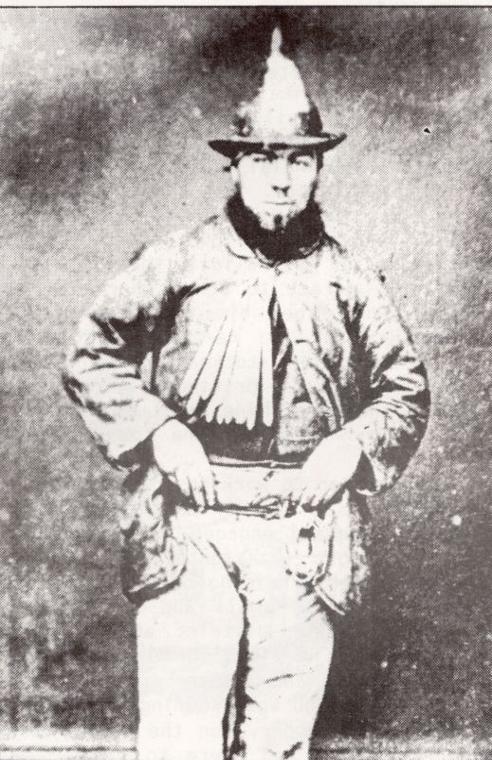
A typical Cornish Miner
28