PAXTON SQUARE
BURRA
SOUTH AUSTRALIA
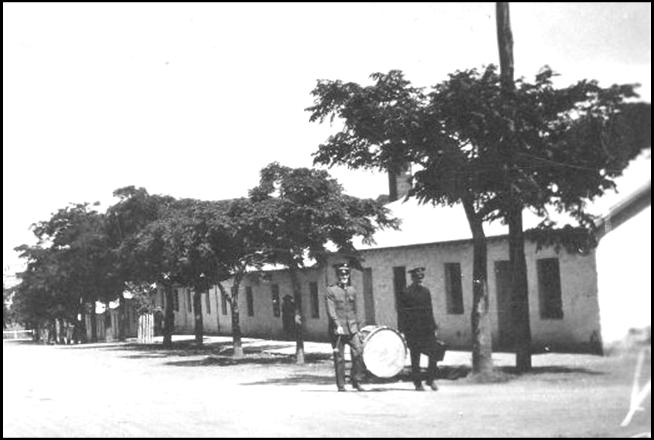
Paxton Square on Kingston Street Burra in the 1920s
Paxton Square
Why Paxton Square?
Paxton Square is a square of cottages built by the S.A. Mining Association in Kooringa for miners and named after William Paxton a director of the company.
The Early History
In 1846 the South Australian Mining Association laid out its private town of Kooringa to provide for its miners and artisans. Two-room stone cottages were built by the company to be leased to its employees, but because the life-time of the mine was uncertain, and wishing to avoid the rents charged, the miners preferred to dig houses into the clay banks of the Burra Creek and its tributaries. By 1850 there was close to 2000 people living in dugouts along the banks of the creek.
As early as 1848, floods had washed people out of these homes and in an attempt to entice families out of the dugouts, the company laid out a square of cottages known as Paxton Square. By 1850, the company had built over a hundred, two and three-room cottages in Kooringa as well as Paxton Square. They were to be leased to miners for three shillings a week out of an average wage of one pound five shillings. Although only a few of these company cottages survive today in Thames Street, Paxton Square remains in its entirety. There is evidence that some of the Paxton Square cottages had been completed as early as 1849. The original stone cottages had roofs of split timber shingles but these were covered with galvanised iron in 1873. There is evidence that a well was sunk within the boundary of the square to supply water for the tenants. Later, miners moved to the new town of Redruth, a government town, outside of the company’s town of Kooringa, where free title was available.
Construction of the Bible Christian Chapel, on the corner of Bridge Terrace and Kingston Street, commenced in 1850 and was completed in 1852. This little chapel was the first Bible Christian Chapel in Australia. Alongside this chapel was a manse that has been demolished. Together they formed part of the original Paxton Square.
When the mine closed in 1877, the 33 cottages of the square housed 161 people, an average of five people to each two or three-room cottage. By 1912, these cottages were nearly empty and the Mining Association offered them for sale, but they were passed in at auction.
In 1913 John Lewis purchased the cottages for £500. He then offered them to the Burra Corporation along with a further £500 for immediate repairs. The Lewis Trust cared for Paxton Square carrying out maintenance and refurbishments.
In December 1939 the Lewis Trust was granted permission by the Burra Council to add verandahs to the frontages of the cottages. During its tenure, the Lewis
Trust rented these cottages to many families who often maintained small gardens in their backyards much like the one on show at the Malowen Lowarth Cottage, a tourist attraction at Paxton Square.
Paxton Square is now owned by the Regional Council of Goyder. The integrity of the cottages has remained essentially intact. As well as the addition of the verandahs, the outdoor privies have been removed from the backyard. Lean-to kitchens and bathrooms have been added at the back of each cottage to cater for tourist accommodation, but the outward appearance of the Square has been maintained.
William Paxton arrived in the colony of South Australia in 1840 aged 22 and set up business in Hindley Street as a chemist and druggist. In 1843 he married Mary Cowper. Seven children were born to the couple in the twelve years they remained in S.A. He was present at the formation of the S.A. Mining Association in April 1845, subscribing £140 for the purchase of 28 shares. The value of each £5 share reached £225 by 1851 and was returning 200% quarterly.
With the discovery of copper near the Burra Creek and the purchase of the Special Survey in August 1845, Paxton increased his holding and became a Director of the Mining Association. He also invested some of his new found wealth in the mining township of Kooringa, building its first hotels.
In 1846 he began building a residence, designed by George Kingston, for himself on North Terrace Adelaide. This residence was later acquired by Henry Ayres, secretary of SAMA.
Paxton and his family left South Australia in July 1855. By that time he was the possessor of considerable property. Besides pastoral holdings, he owned four hotels in Burra – The original Burra Hotel, The Miner’s Arms, The Pig and Whistle, and the Smelter’s Arms (Opie’s). William Paxton died at his residence in Brighton England in 1893 aged 74, leaving a wife, 3 sons and 2 daughters.
References:
Paxton Square Cottages Feasibility Study Lester, Firth and Murton (1979)
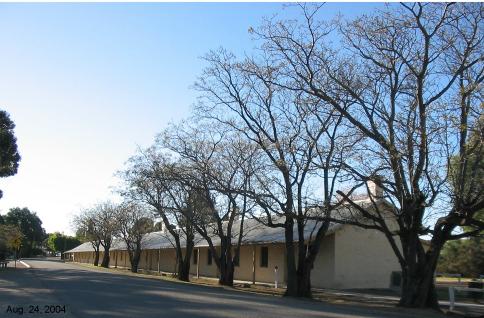
A view of Paxton Square from Bridge Terrace
Visit Malowen Lowarth Cottage in Paxton Square and get an insight into Burra’s early history
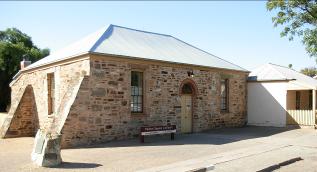
The First Bible Christian Church in Australia
Compiled by Julian Ratcliffe
The Burra History Group Inc.
2007