Redruth Gaol
2005
©The Burra History Group Inc.
2007
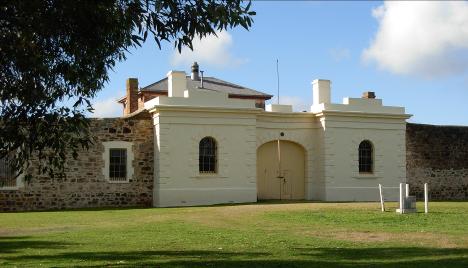
The police lockup and stables at Redruth
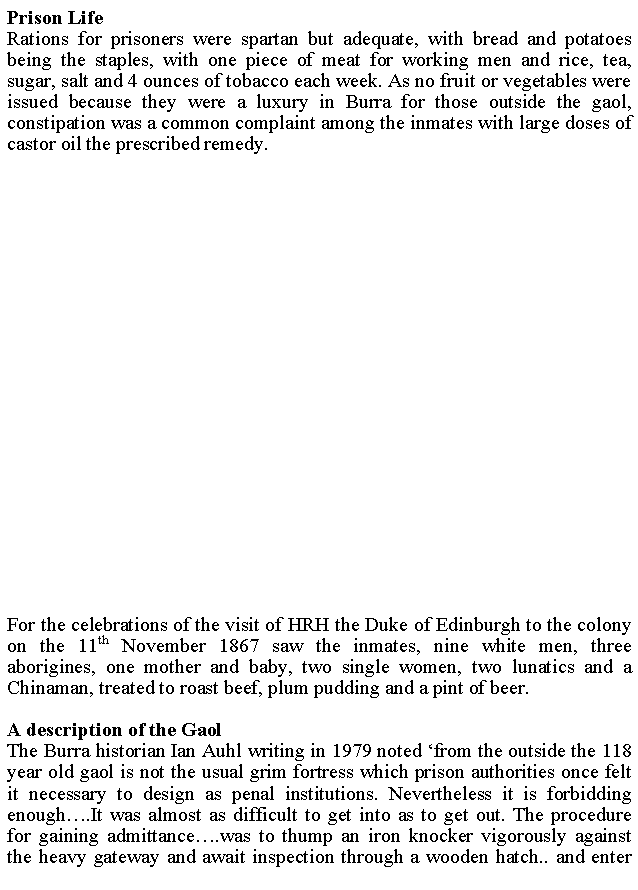
through a cut-out door.
Once inside, the building becomes more formidable. The walls seem higher. Your chances of escape seem less. They become almost non-existent when you step into one of the cells and the heavy doors close behind you. Gloom envelopes you.’
The end of an era
The first goalkeeper, Thomas Perry retired in November 1878, due to ill health. He died a year later.
The gaol closed in 1894 with the transfer of prisoners to Gladstone Gaol.
After its closure as a gaol, for three years, this building became the residence of the Woollacott family one of the pioneer families of the Burra.
After falling into disuse, it was renovated and re-opened as the Redruth Protestant Girls’ Reformatory in 1897 and being close to the township of Hampton became known as “Hampton Court.” It was originally ‘home’ to thirty girls transferred from the Edwardstown Girls Industrial School. Although they were some of the ‘more intractable’ girls from Adelaide they were suddenly in a depressing prison. Believing that escape would be impossible, the authorities soon learned they were wrong, with 16 absconding in the first year. The girls complained that although they liked Matron Holden, they didn't like being shut up by high walls.
Following subsequent escapes, W J Davey the editor of the Record wrote, ‘once a girl is placed behind prison walls, she loses hope, her heart becomes callous and she leaves gaol more stubborn, more wretched and more downcast.’ Some of the girls were there for trivial offences for as little as being beyond their parents control; some because they were pregnant out of wedlock.
A New Matron
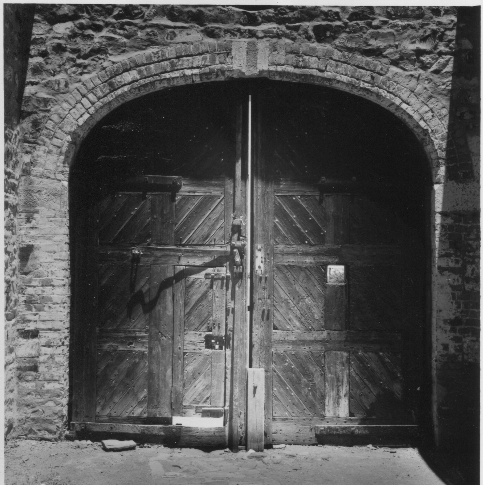
In 1916 with the appointment of Miss Edith Bubb as the matron, there were some important changes made with new and more becoming dresses for the girls, incentives for good behaviour, excursions, picnics and occasionally a visit to a picture show at the Burra Town Hall.
One report in 1919 from Matron Edith Bubb stated “three girls, Violet Benson, Ada Newchurch and Ursula Cruse were on the roof, dancing, singing low songs, swearing down-right insolence, destroying government property, undressing and exposing themselves to all passers-
The rather forbidding gaol entrance gateway with wooden hatch and cutout door.
by in only their flannels and bloomers…” Given its remote location, there may not have been many who saw it.
After some daring escapes by spirited girls at various times throughout its history as a reformatory, especially in its first year, and two fires, a riotous revolution among the girls and Miss Edith Bubb’s resignation, finally led to its closure in 1922.
In 1977, the building was jointly restored by the Burra Council and Burra National Trust and opened as a tourist attraction on the Burra Heritage Trail. Since then its has undergone several restorations.
Contact the Burra Visitor Centre for entrance with a “Burra Passport Key”
Burra Glimpses of the Past - Ian Auhl
The Story of The Monster Mine – Ian Auhl
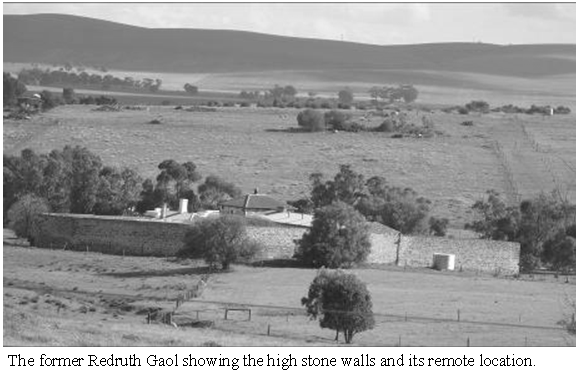
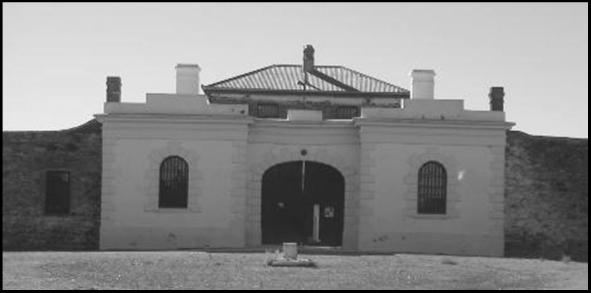
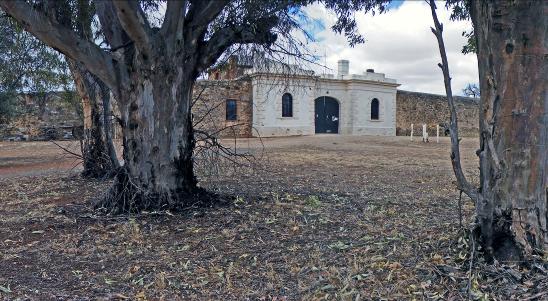
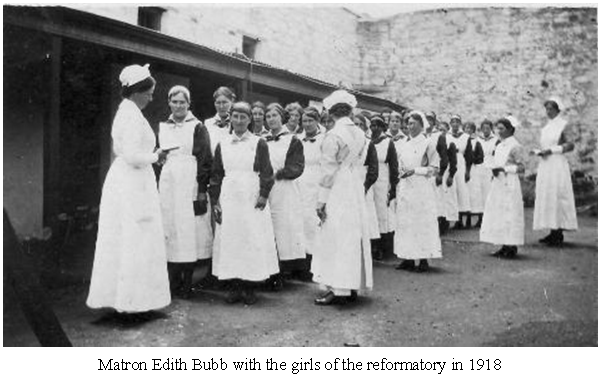
The former Redruth Gaol and Girls’ Reformatory in 2007

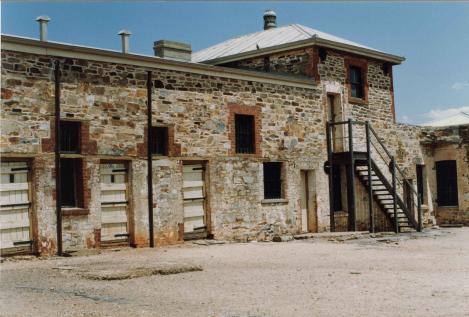
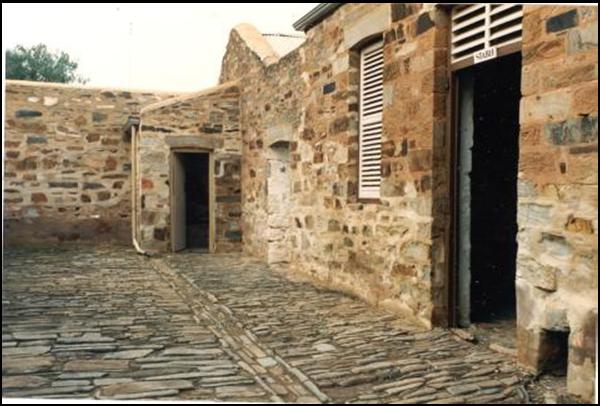
Inside the exercise yard of the gaol and showing the prison cells.
