SNOW IN BURRA
BURRA
SOUTH AUSTRALIA
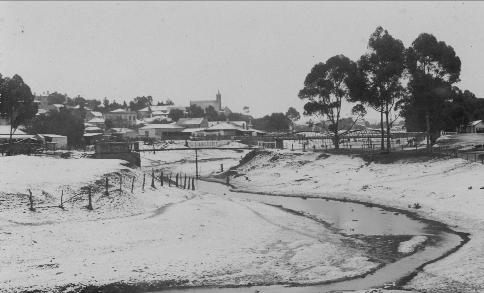
A heavy snow storm in June 1908 blanketed the township of Kooringa
turning the Burra Creek into fascinating scene.
© The Burra History Group Inc.
2008
SNOW IN BURRA
Besides its hot dry summers with frequent dust storms and droughts, the Burra district has recorded winter frosts and occasionally snow storms, sometimes at most unseasonable times. The first recorded snowfall being in September 1878. Here are a few examples from reports in The Burra Record, the local newspaper of the times.
Weather. 13 July 1888
‘We experienced a beautiful fall of snow this morning which clad everything in whiteness. Such a sight is rarely, if ever before, seen here.’ [sic]
There was some nice rain yesterday, but it was not general.
24 July 1895
Tues. 30th June 1908 – Snow on the Burra hills with a record fall at Mt. Bryan. Burra Creek froze over in the town sufficient to support children.
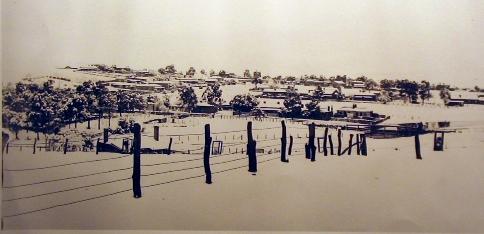
A view of Aberdeen from Redruth on ‘White Sunday ‘1901
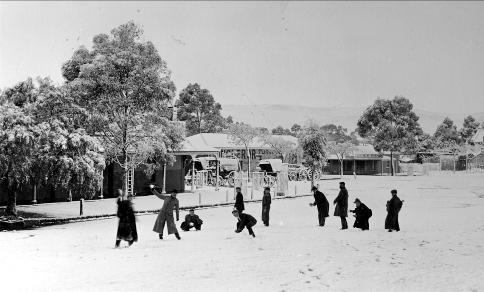
Revelers in Market Square, Kooringa on ‘White Sunday’ 1901
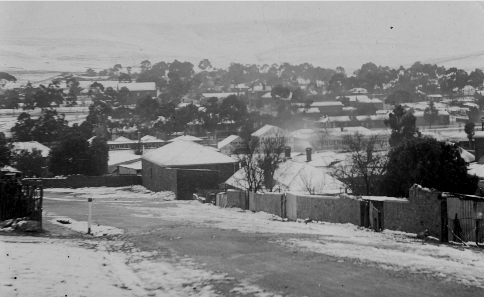
The view from Mt. Pleasant, Kooringa on ‘White Sunday’ 1901
4th Aug. 1909 Snow fell last Thursday for about half an hour and there was enough for snowball fights. A little more fell on Sunday evening among rain. The Burra Creek flooded on Monday and rainfall for the week was about 1 inch. Burra’s heaviest snowfall in Redruth 1901
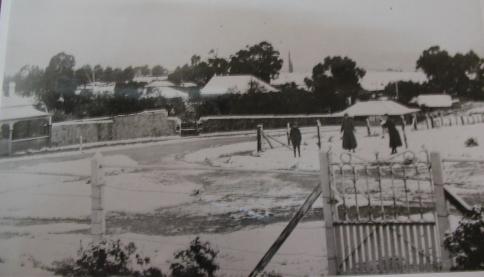
A.J. Cousins’ Funeral, 3 Oct. 1923 was a most unenviable experience due to the appalling weather. On Sunday 30th Sept. when the hearse arrived at Booborowie snow was falling heavily. The cortege, comprising 22 buggies and 11 motorcars, left for Burra, twenty miles away, at 9.30 a.m. and had to endure snow and then fiercely driving hail and rain. Twice the horses stopped and refused to face the elements. In all, the journey took five hours. Amazingly, to the east of Burra the country is still enveloped in dust with no rain of significance having fallen.
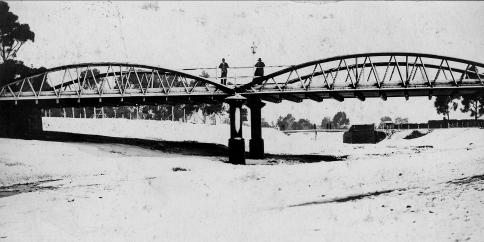
The Kooringa Bridge and Burra Creek shrouded in snow, 1901
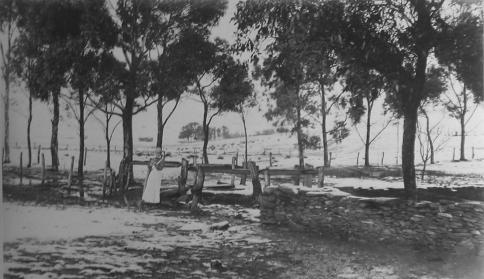
Florence Gillett at ‘Mornillo’in the snow, 1908
Snow scenes at Redruth Gaol, 1917
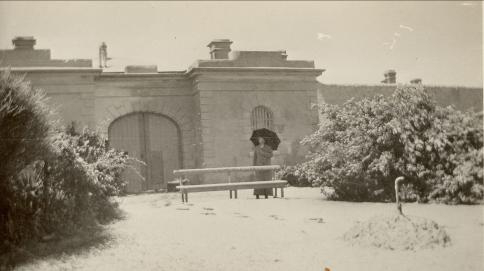
Snow at the Protestant Girls’ Reformatory, formerly the Redruth Goal in 1917
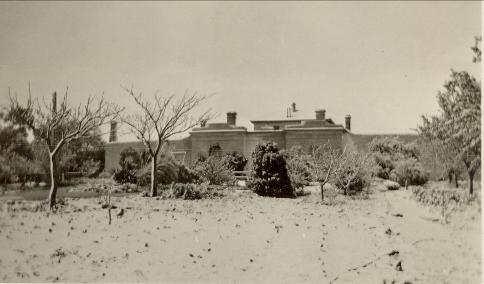
This photograph shows the Girls’ Reformatory at Redruth after a snow storm in 1917
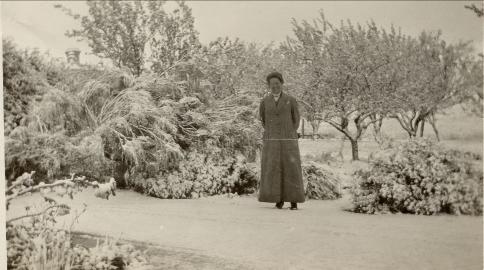
Miss Bubb Matron of the Redruth Girls’ Reformatory, 1917
The Burra landscape transformed by snow.
c1920s
Snow fell early on Tuesday and during the morning there was a further heavy fall. The young had snowball fights. It had largely melted by midday, but remained on the distant hills.
29 June 1922
The weather has been very cold with keen winds and hail. Snow fell on Thursday 29 June quite heavily and snowballing was common. There were also heavy falls at Hallett, which persisted into Friday in gullies and on Razorback Range.
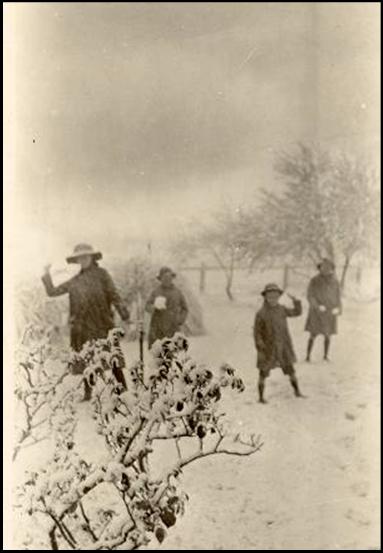
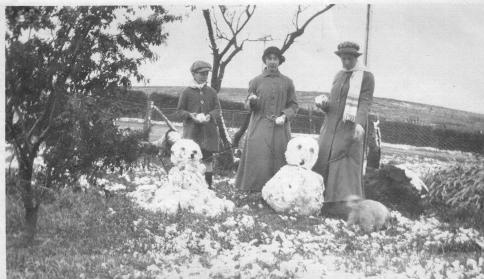
Snowballing in
different eras
Early 1900s on the left
1920s below
Above right
A street scene in the 1920s
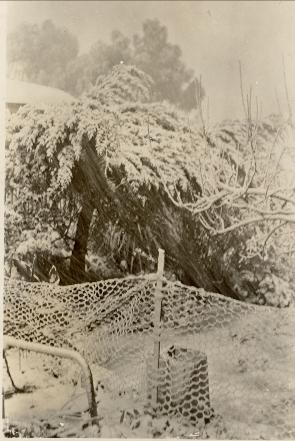
A picturesque winter
garden in 1901, below
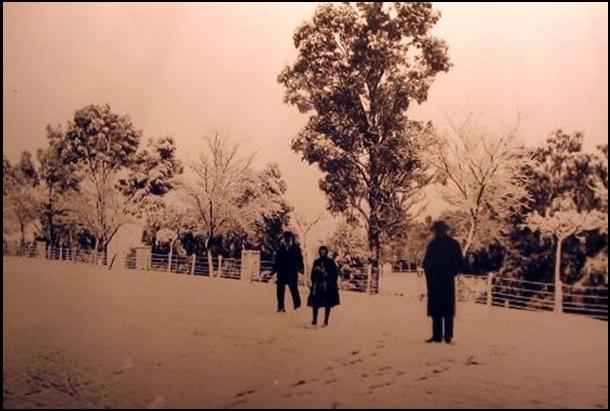
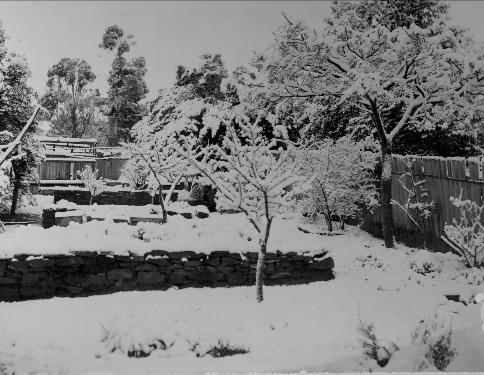
Burra at its bleakest, possibly October 1923
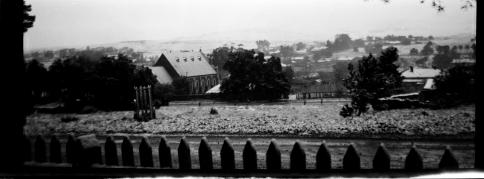
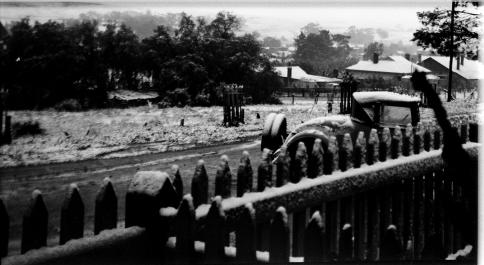
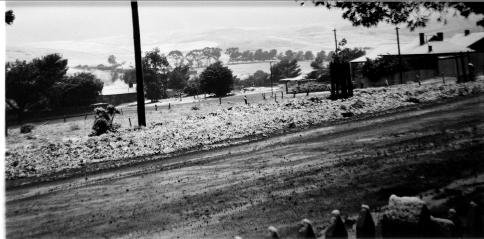
Inch of Rain, Hail and a Fall of Snow 22nd July 1969
It certainly gave one the impression yesterday that winter is with us. An inch of rain with some hail and fairly heavy snow falls were reported throughout the district. Rain commenced at about 5pm on Sunday afternoon accompanied by heavy hail at about 3am. At 7.10am yesterday snow began to fall and by 7.30 had become quite heavy. The fall continued until 8.15, when the whole countryside was blanketed in white. The Burra township surrounded by snow-covered hills, looked like a picture against the dark cloud formation at the time. At Hallett a two-three inch covering of snow reached as far as the eye could see and the same applied to Mount Bryan where snow still topped the mountain late into the afternoon. Snow falls were also reported from Clare, Mintaro, Whyte Yarcowie, Booborowie and Farrell Flat where a further light fall was seen at about 2.30pm.The earlier fall here melted fairly quickly but along the hills on the Farrell Flat – Booborowie road it remained solid for sometime. The main street of Burra carried a 3-4 inch covering which, when churned up by the vehicular traffic looked quite a mess until it gradually disappeared.
Mr. George Fairchild, travelling via Leighton on his Booborowie mail run, said the snow was very thick on the road between Leighton and Burra and it was still packed tight along the bumper bar of his utility when he reached the town.
This would appear to have been the heaviest fall of snow for many years. Some say for at least 40 years and others are prepared to argue that it is the heaviest since the great fall on July 28th 1901.
For quite a number anyway, it was the first snowfall and on the same day as a man set foot on the moon; it should be an easy date to remember.
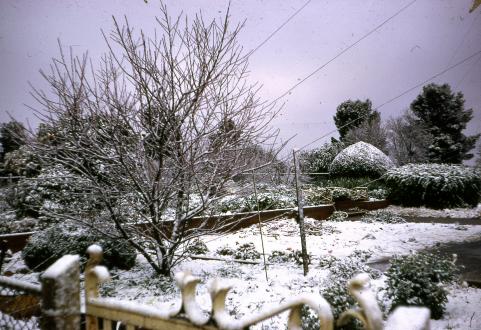
July 1969
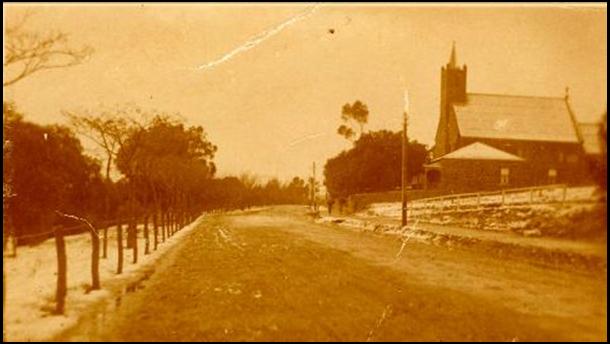
Snow began to fall about 9.40 p.m. on Friday last and soon covered the surface. Few saw it, as the night was very dark. The fall was preceded by boisterous weather and rain. On Saturday a second fall at about 6.30 a.m. was generally seen and many a snowball fight ensued. A heavy fall was reported from Mt Bryan.
White Sunday - Burra’s Greatest Snowstorm 27th July 1901
Snow began falling at 9am on Saturday 27th and continued all night and fell intermittently until mid-day on Sunday, when the sun peeped through and the snow melted. Snow was three feet deep up against some of the buildings and walls and the whole country is described as having looked like a Christmas card. ‘Every man, woman and child could be seen either snowballing or participating in the fun provided by others.’ At one time fully fifty persons were engaged in Market Square. A local disapprovingly reported that ‘a prominent citizen allowed himself to be buried in snow on a neighbouring mountain’ and that Sabbath decorum was ‘at a discount’, religious services were poorly attended and one of the collections was the smallest on record. The highlight of the day was when some of our grandfathers collared one of the local policemen and gave him a thorough rolling in the snow.
In Redruth near the reserve Messrs Lowe, Goodwin and company produced a ball about 10’ in diameter and some 15’ high. Alongside some buildings drifts 3’ deep accumulated. Snow continued to fall at intervals – the largest flakes about midday, but from then on the ‘great and glorious sight’ commenced to fade away. Some snowballs remained till rain on Monday afternoon. The fall was widespread and the creek was flowing strongly on Saturday night. The shade temperature on Sunday was 34-40°F.
Snow. 24th June 1908
It was bitterly cold on Sunday with a heavy fall of snow on Monday morning. Small fry indulged in snowballing and so did old fry. Snowmen were manufactured. One misdirected snowball broke a window of Stan Lane’s shop in Market Square. Many horses baulked completely at the white surface. By about 9 a.m. the thaw was general, though some remains on the hills in places yet. About 2 p.m. a very heavy fall occurred, but by then the ground was too warm to retain it.
St. Joseph’s Catholic Church on White Sunday, 1901
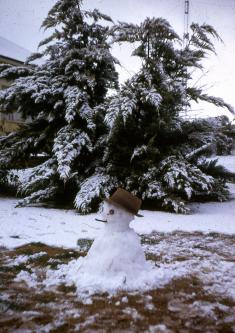
July 1969
Compiled by Julian Ratcliffe
Burra History Group Inc.
2008