THE
CHURCHES
OF
BURRA
BURRA’S CHURCHES
The churches included in this pamphlet are
· The Kooringa Wesleyan Church
· The Kooringa Methodist Church
· The Burra Uniting Church, Kooringa
· The Redruth Wesleyan Church
· The Redruth Methodist Church
· The Primitive Methodist Church, Kooringa
· Redruth Primitive Methodist Zion Chapel
· The First Bible Christian Church in Australia
· The Bible Christian Church, Kooringa
· St. Mary’s Anglican Church
· St. Joseph’s Catholic Church
· St. Paul’s Lutheran Church, Redruth (The German Church)
· St. John’s Lutheran Church, Redruth
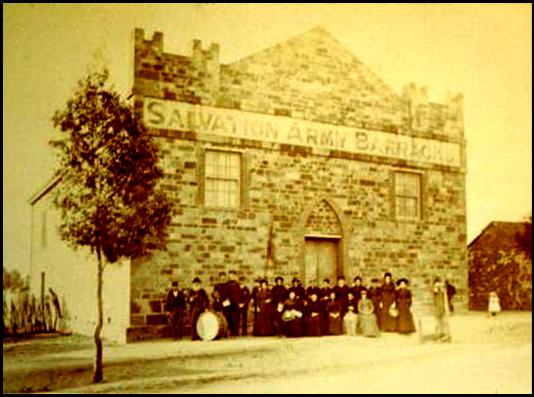
· The Salvation Army Barracks, Kooringa
·
This list is by no means a complete list of the churches of the townships of Burra.
Some churches that did contribute to the spiritual life of the towns and have disappeared are
· The Kooringa Baptist Church
· The Kooringa Congregational Church
· The Independent Church
· The Welsh Church
· The Primitive Methodist Church, Copperhouse
· The Bible Christian Church, Hampton
· The Westbury Church
It is also to be understood that some of the names listed above refer to churches on a particular site that have had name changes throughout their history.
© The Burra History Group Inc.
2008
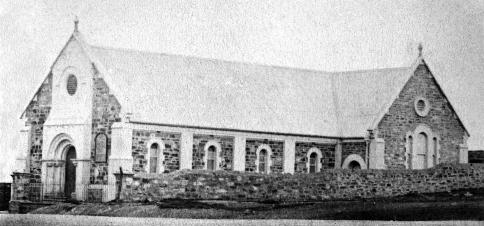
Burra Uniting Church - The First Church in Burra (1847)
Formally the Kooringa Wesleyan Church
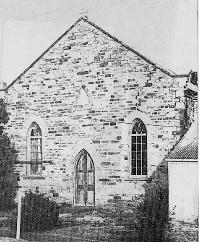
The first Wesleyan chapel and schoolroom was built on this site in 1847 and was the first church in Burra. It was demolished in 1914 and the existing building, opened on 12th December 1914, was erected in its place. It has been used as the only Methodist Church in Kooringa since 1900, when the Bible Christians, the Primitive Methodists and the Wesleyans combined as the Methodist Union.
Wesleyan Church - Redruth
In 1850 there was a grant of twenty acres of glebe land and half an acre in the town with the foundation stone of a chapel being laid in February 1851. Because of the gold rush this chapel remained empty and was closed in 1854 and the Kooringa trustees dismantled it taking the roof, floor, windows, door, pulpit and seats for use in a new chapel at Spring Farm, near Clare. During 1857, the Kooringa trustees restored the Redruth chapel by using the old windows, seats, pulpit and part of the roof from the Kooringa chapel at a cost of £150.
In August 1873 the trustees decided to build the existing chapel at a cost of £1,340 and a foundation stone was laid with its construction completed soon after.
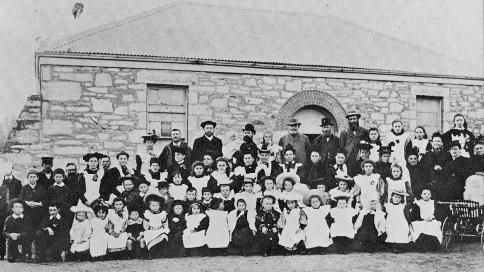
Opening of the Jubilee Hall,
Redruth
Redruth Primitive Methodist Zion Chapel dates from 1856. After the Methodist Union in 1900 it was extended to become the Methodist Sunday School. The Wesleyans had used the Lutheran Church for this purpose for over 20 years previously. The Jubilee Hall was used by them until 1925 when they moved to their new Sunday School building, next to their church.
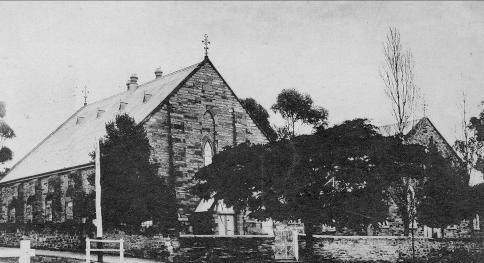
Kooringa Wesleyan Church built 1847
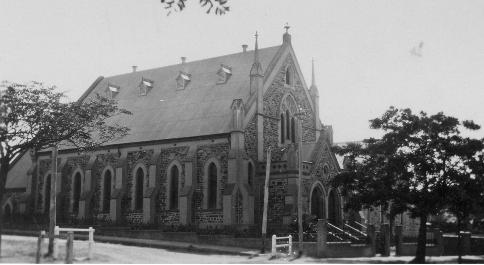
Kooringa Methodist Church built 1914
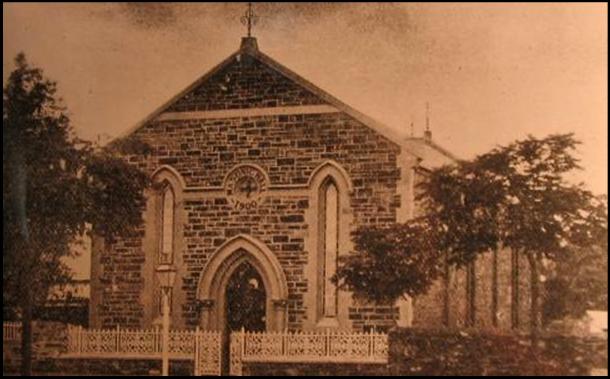
Primitive Methodist Church, Thames Street Kooringa (1849)
Whilst the original Primitive Methodist Church was erected in 1849 on this site, extensive modifications in 1879 gave us the present structure.
The church manse attached, on the northern side of this building has been demolished. It became the Masonic Hall in 1900 when the three branches of Methodism combined (Bible Christians, Primitive Methodists and Wesleyans). It was sold in 2004 and it is now a private residence.
First Bible Christian Chapel
Bible Christian Chapel (1850) (Corner of Paxton Square)
This small stone chapel was erected in 1850 on land donated by the Mining Company was the first Bible Christian Church in Australia. It closed as a chapel in 1900 with the amalgamation of the branches of Methodism. Part of the first Bible Christian Chapel and parsonage remains today and is used as the reception area for Paxton square Cottages. The adjacent cottage, which was built in 1986, is a replica of the original manse.
A New Bible Christian Church (1859 – 1909)
A second much larger chapel, on the corner of Bridge Terrace and Quarry Street was erected by Cornish miners in 1859. With the formation of the Methodist Union in 1900, services were also discontinued at this site. The weight of the slate roof on this church caused a wall to bulge dangerously and in 1909 its demolition was attempted using dynamite. This was only partially successful and the church remained as a ruin until its final demolition in the 1930s.
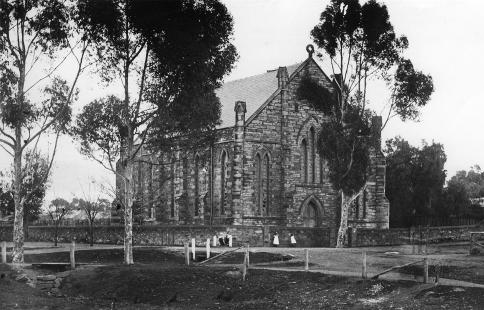
The Bible Christian Church of 1859
Its forced demolition resulting from bulging walls caused by a heavy slate roof
St. Joseph’s Catholic Church Burra (1874)
The first Catholic services in Burra were held in 1849 when the priest came from Sevenhill.
In 1853 mass was celebrated regularly each month at Howley’s Cottage in Paxton Square. At the beginning of 1857 a house was purchased, Knevett’s house in Chapel Street and blessed to serve as a church and school and a building was erected nearby where the priest could stay on his visits. A lay teacher, Mr. Fogg, conducted a school for Catholics from then until the 1870s when the Sisters of St. Joseph took over education in the parish.
The Original St. Joseph’s Chapel
When in 1871, the South Australian Mining Association presented a site for a Catholic church in Commercial Street; a small church, St. Joseph’s, was built by the Jesuits from Sevenhill. The swelling congregation soon outgrew this building and after some difficulty with the original contract, the present church, in Market Street, was completed in 1874. This church was described as being early Gothic in style, constructed to accommodate 300 people with a gallery above the entrance. However it was not until 1974 that this church was consecrated. The convent and school was opened in 1882 and the presbytery in 1885. The convent and school closed in 1970. It was the longest serving private school in Burra.
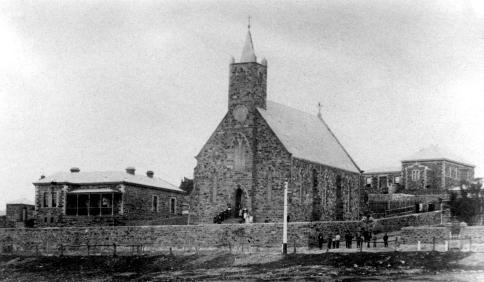
St. Mary’s Anglican Church (1879)
The first Anglican services held in Burra were conducted in a stone building situated in Kangaroo Street in 1847. In 1849, the first Church of St. Mary was erected on a site donated by S.A. Mining Association and stood close by the original place of worship.
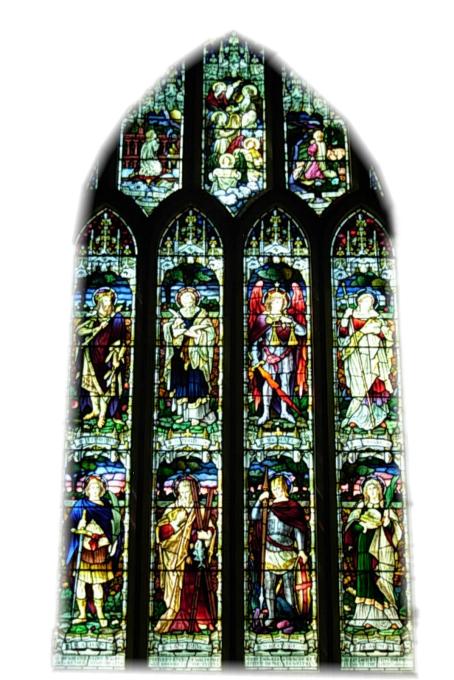
This church of St. Mary on Limestone Hill, on the corner of Ware and Church Streets, was demolished and a few treasured possessions, the Altar Table, the iron cross surmounting the old church and two stained glass windows were transferred to the new building. One of these windows, a ‘zinc light’ dating from1873, is by Edward Brooks, South Australia’s first stained glass maker.
The Second St. Mary’s Church
Built in 1879 by the Burra firm of Sara and Dunstan on land granted by the Mining Company, at a cost of £4,000, which was subscribed by the parish, the church is built of local stone, with pine floors and ceilings. It is rich in memorials commemorating the names of well-known local pioneer families. The stained glass windows generally are a feature of the church being particularly fine examples.
The church’s 1905 Dodd Pipe Organ is apparently one of the finest English organs in Australia. It was overhauled in 1981 at a cost of $4000.
The Parish Hall was built by parishioners, in 1893, as a Sunday school and other church activities.
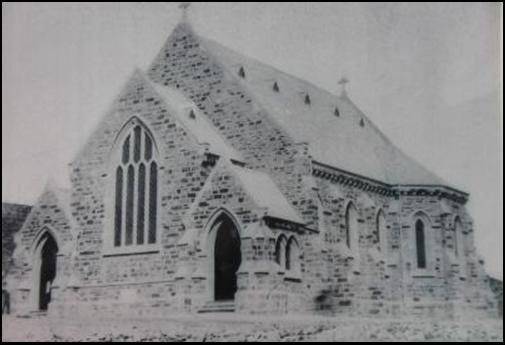
The existing Church of St. Mary the Virgin soon after its construction in 1879
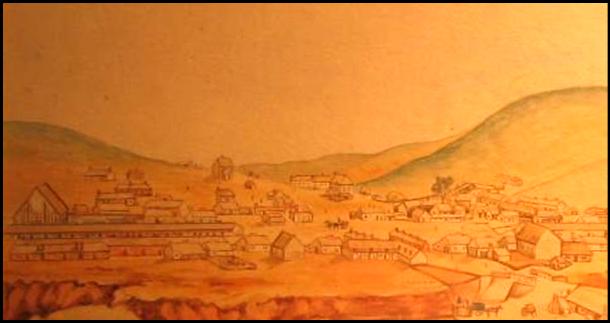
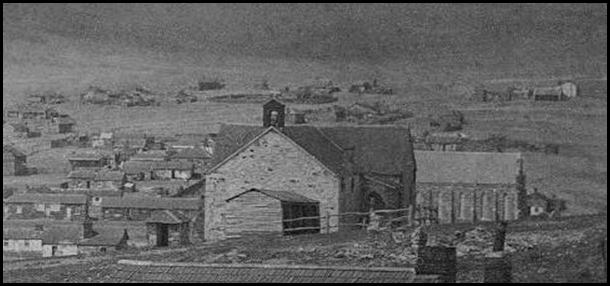
This portion of a water colour painting by William Bentley in 1857 is the only record of the early churches of Kooringa
On the far left is the Wesleyan Church in Chapel Street, on Limestone Hill in the background is the original St. Mary’s Church, in the centre foreground nearest the Burra Creek is the Baptist Church in Thames Steet, the Primitive Methodist Church is on the far right and above it in the background is trhe first St. Joseph’s Catholic Church in Commercial Street.
The Lutheran Churches in Burra
St. Paul’s Church (1861)
The need for a Lutheran Church in Burra arose, as early as 1847, when a group of smelters who migrated from the Harz Mountains in Hanover, came to work at the Burra Burra Mine. In the early years, the Lutheran congregation met in private homes. Although the building of the Church of St. Paul was commenced in 1851 with the laying of the foundation stone, because of an exodus of miners to the Victorian goldfields, its completion was delayed until 1861. It was a modest rectangular building situated just opposite the Courthouse. It became known affectionately as ‘the German Church’ and from records of this era; it often resounded to the spirited singing of German hymns. It was also reported as having ‘a very beautiful interior.’ Being the only hall in Redruth at the time it served many purposes both religious and secular. Unfortunately this building was destroyed by fire in 1910 leaving the Lutheran congregation ‘homeless’ for a brief time. The site of this church is now marked with a stone cairn and bronze plaque.
The Lutherans of Burra then met in various places such as Jubilee Hall, Wesbury Church and St. Marys.
St. John’s Lutheran Church (1967)
When the ‘Holy Cross’ Church at Mansfield Park closed, the Lutheran congregation accepted the offer of having this transportable building shifted to a plot of land in Redruth donated to the church by Mr. Philip Beinke. And so began a new era in the lives of the Lutherans in Burra.
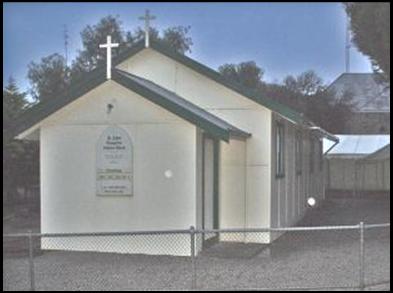
St. John’s
Lutheran Church
Redruth
The Salvation Army
The first report of the Salvation Army coming to Burra was in January 1883 when they held an open air meeting in Market Square. In March of that year, they obtained land in Kingston Street with the intention of building a Barracks there. At this time, they were attracting large crowds nightly in the square and as a temporary measure, were holding meetings in church halls around Kooringa, namely the old Church of England on Limestone Hill and the Bible Christian Church, where once again the meetings were crowded.
It is clear they were often harassed by larrikins, being pelted with eggs and jeered as there are ‘so many prejudiced minds against the Salvation Army here’, commented Cr. Hardy and Mr. R. Smith expressed concern that the police did not intervene when young men were disturbing their open meetings at Redruth ‘right opposite the police station.’
In January 1885 the contractor Sara and Dunstan commenced work on the new Kooringa Barracks and the foundation stone was laid on the 11th February by the Mayor John Dunstan jnr. JP. The cost of the substantial building was around £600, much of the money being raised at the meetings and tea stalls.. The new Burra barracks in Kingston Street was opened in April 1885.